Porto, Portugal
Location
Avenida da Boavista, Porto, on the Rotunda da Boavista public square.
Architect
Rem Koolhaas with the Office for Metropolitan Architecture (OMA).
Completed
2005, originally commissioned for Porto’s year as European Capital of Culture.
Architectural Style
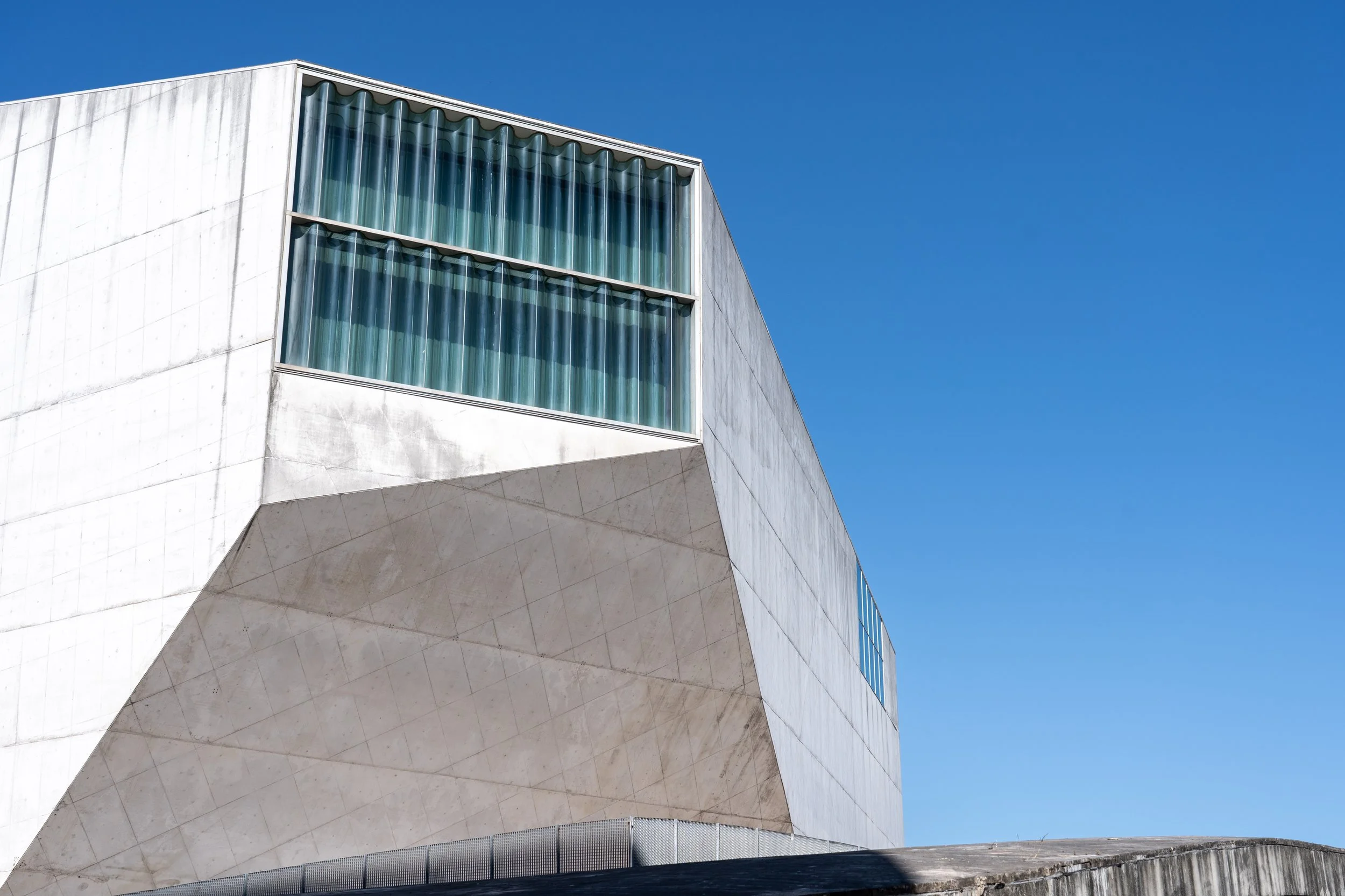
Contemporary experimental architecture defined by a striking faceted white-concrete form that reads like an asymmetrical polyhedron set within an open public plaza.
Photography Tips
Casa da Música is particularly strong for architectural photography because of its sharp geometry and sculptural concrete surfaces. Walk around the surrounding plaza to capture the building’s shifting polygonal form from different angles. Wide lenses work well to emphasise the faceted exterior against the open sky, while the large glass openings reveal glimpses of the interior concert hall and connect the building visually to the city.
Notable Details to Photograph
The angular white-concrete façade and crystalline form
Reflections and views through the large glass concert hall windows
Wide compositions showing the building isolated within the plaza
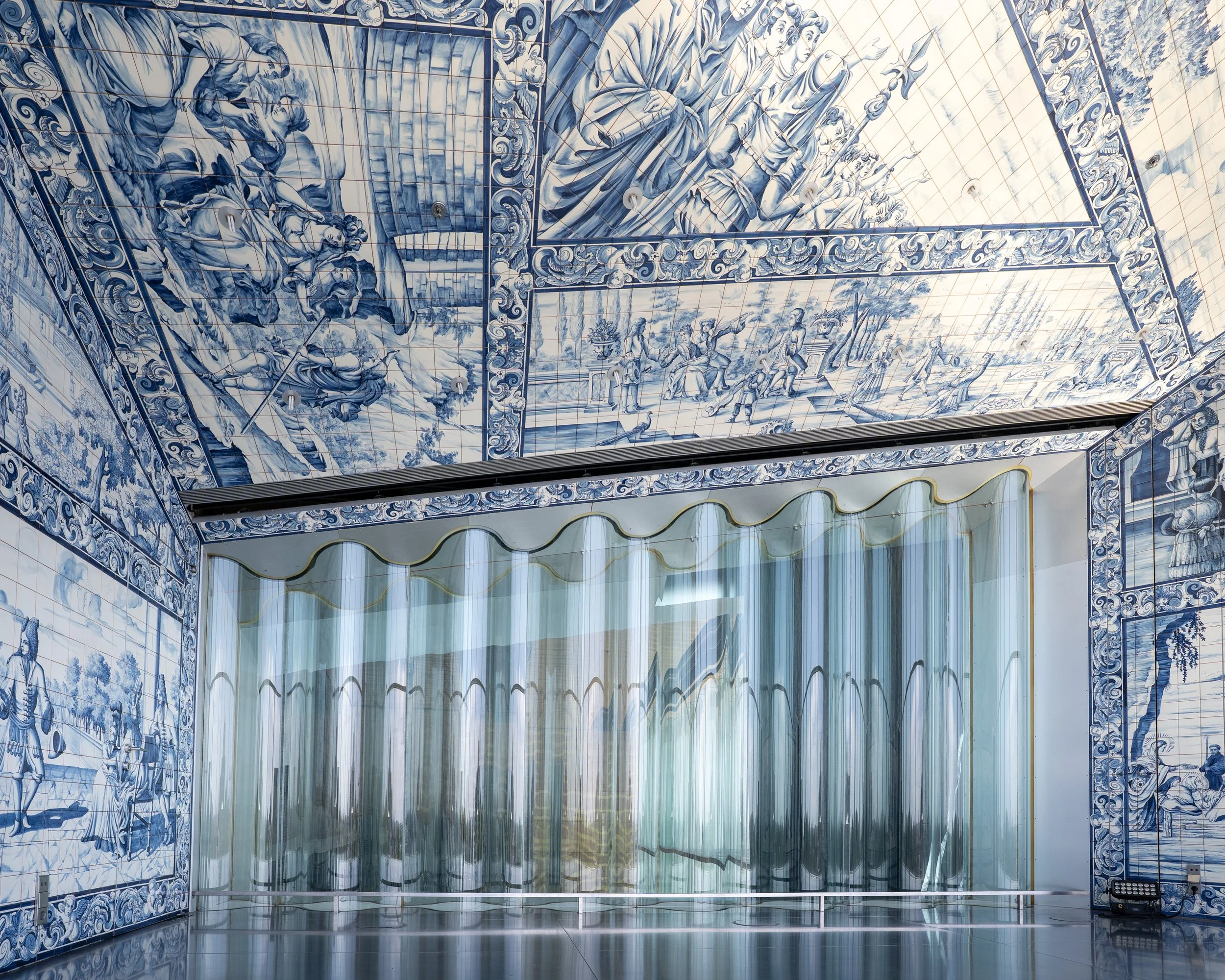
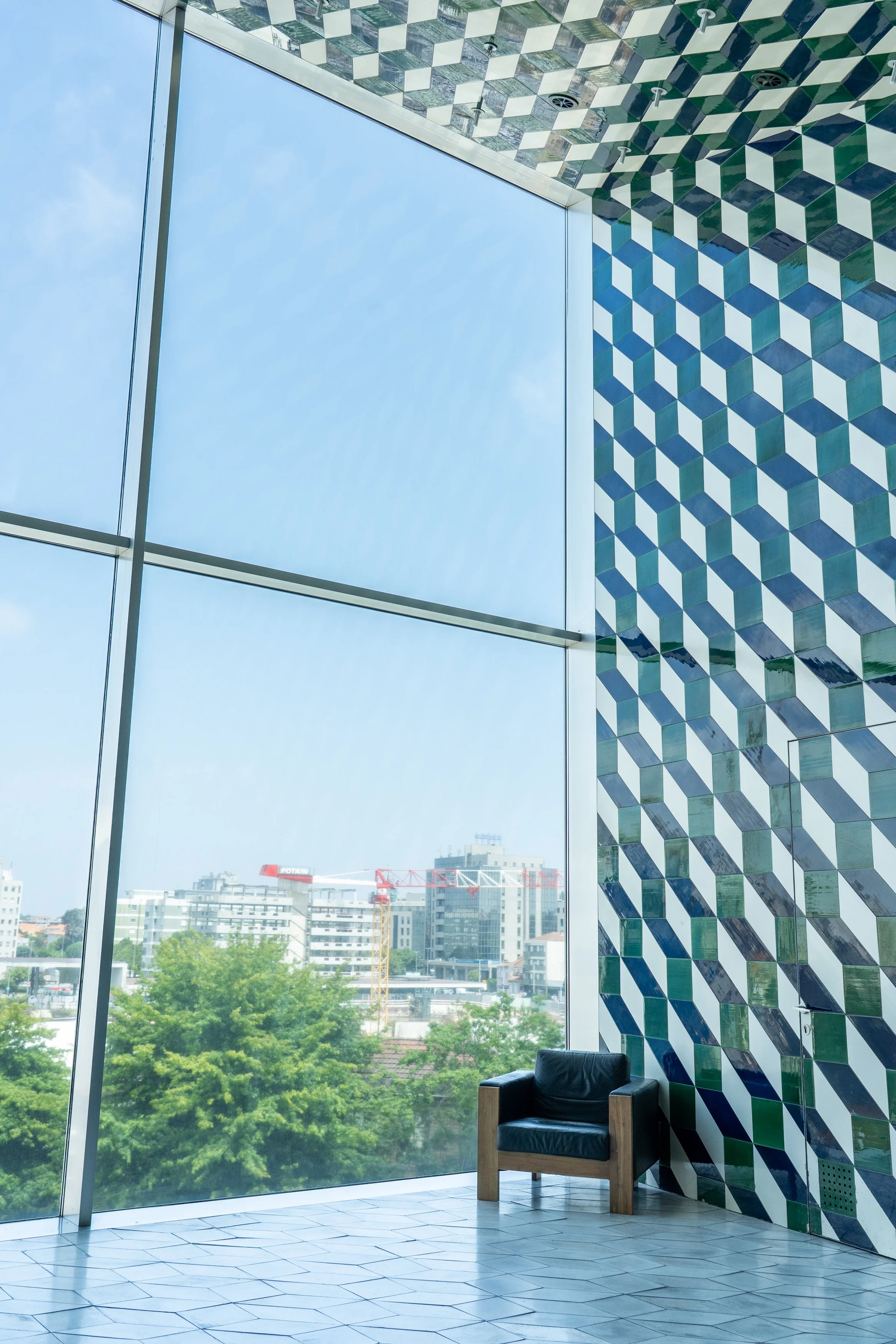
Interior spaces where patterned tiles, gold surfaces and dramatic light contrast with the stark exterior
Casa Da Musica has so many different spaces to discover, all with a specific purpose.
The building was designed by Rem Koolhas and opened in 2005. It is entirely devoted to music, either through public performance or training and conception of new works. It stands on a public square and is designed to break the elitist tradition, to be living infrastructure, open to the public, accessible and connected to the city.
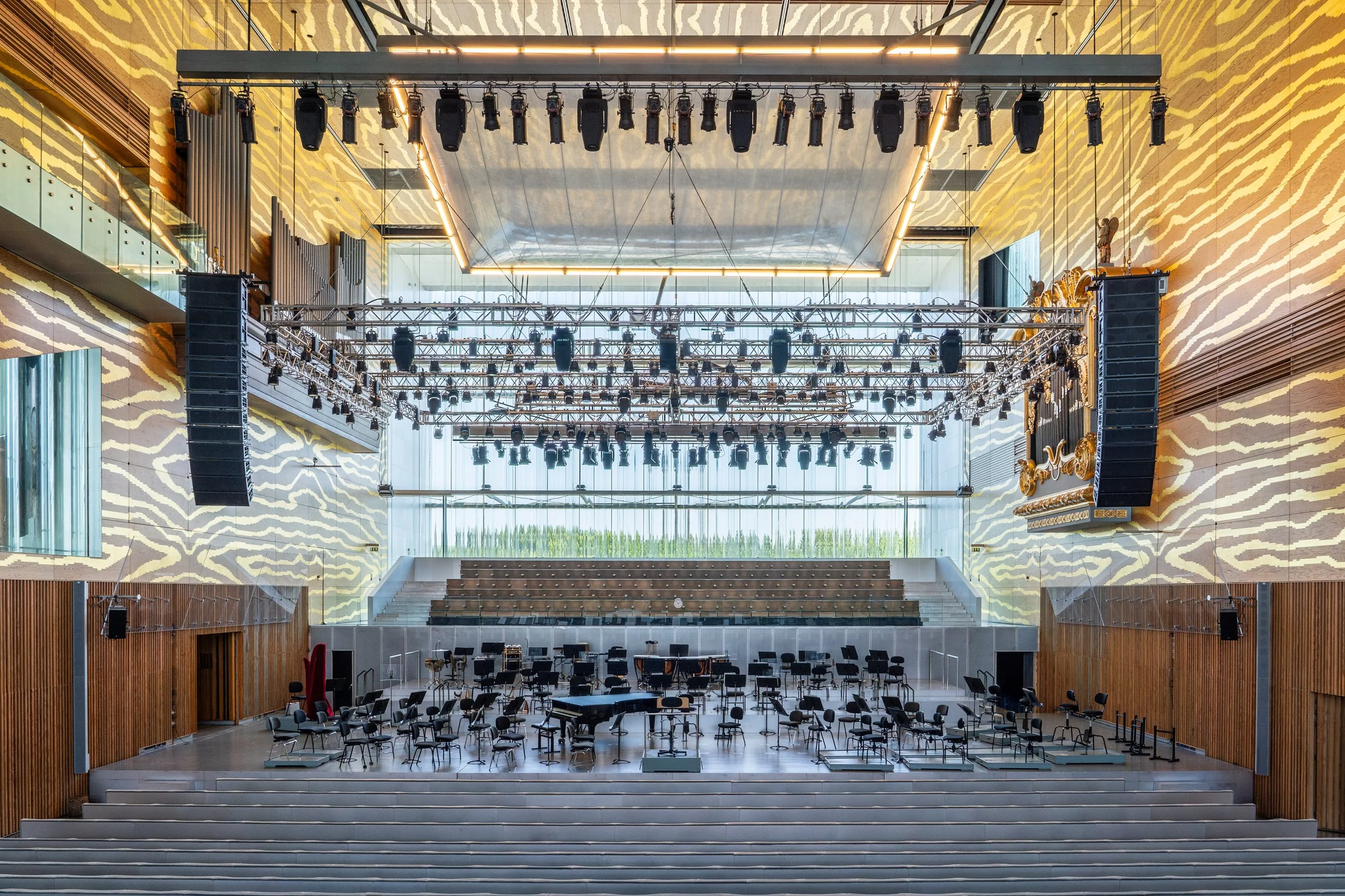
While in Porto my partner and I signed up or a tour of this wonderful building. We were taken through the entire space, learnt about its origin, architecture, construction methodology, design intent, how each space is used, and more. It was one of the better landmark tours that I’ve been on. Hearing about the incredible consideration that went into designing the main concert hall, and how each material and structure impacted the sound was particularly impressive.
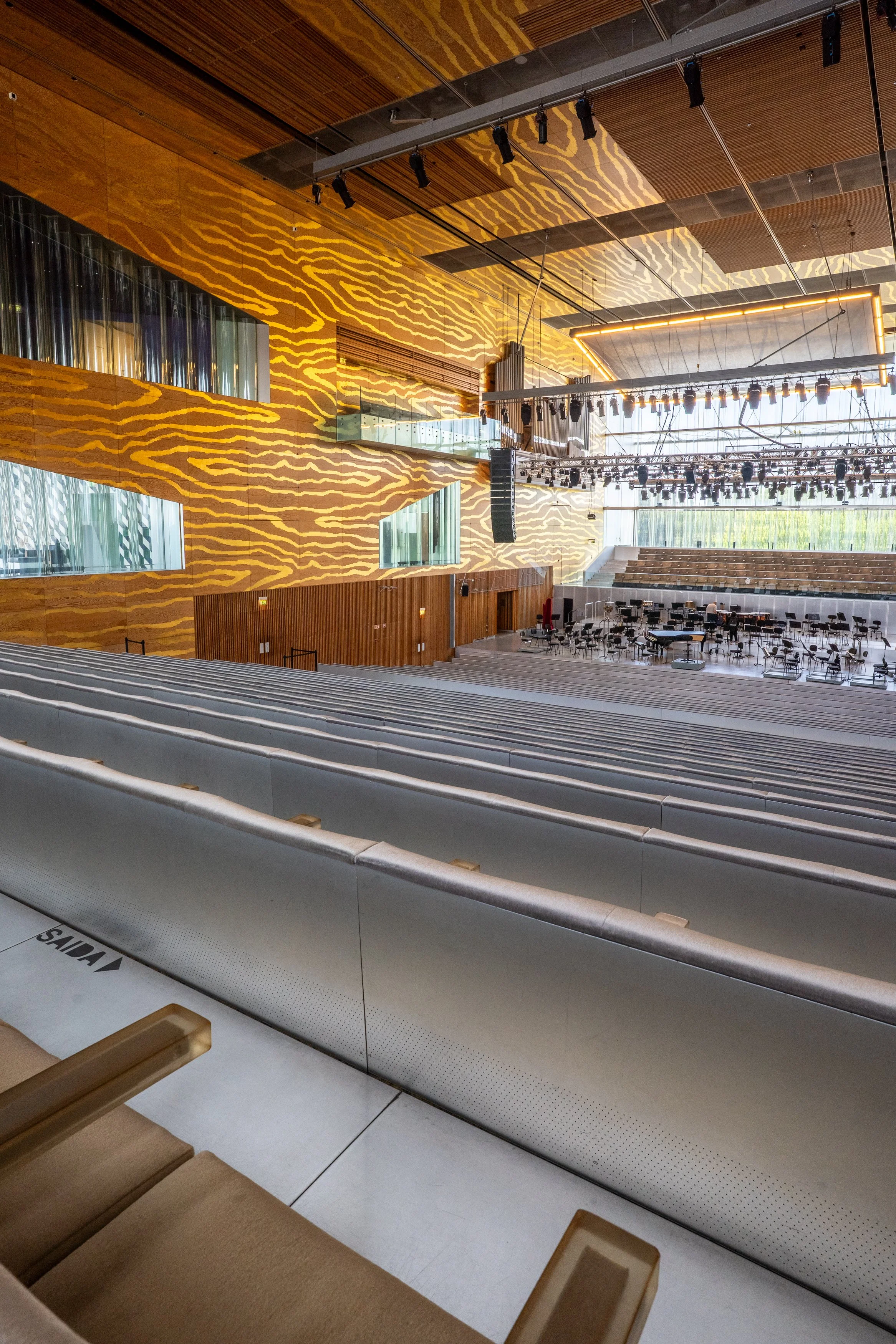
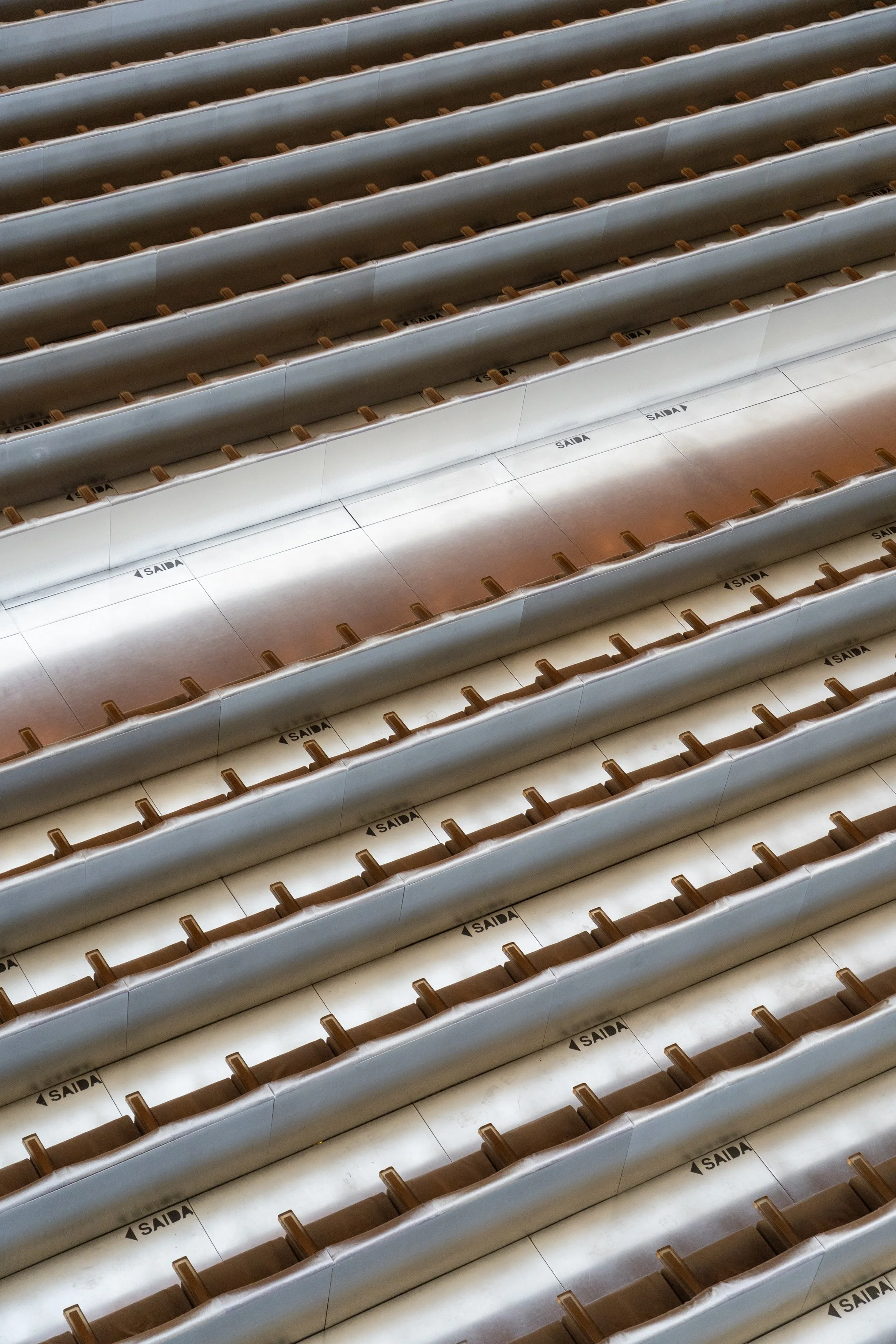
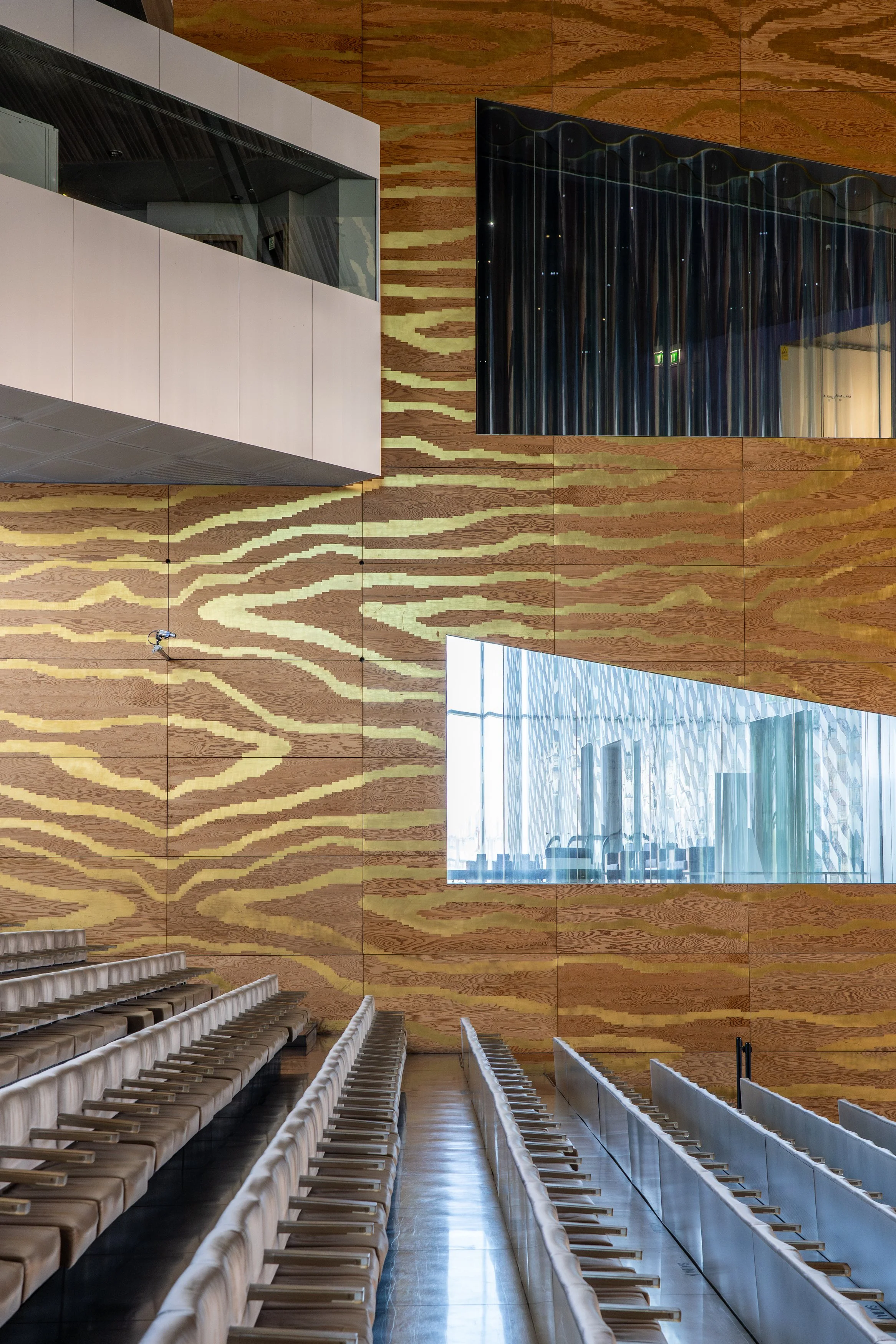
Following the tour, we were given free rein of the building and could photograph to our heart’s content. Each space was so unique, but all have a connective geometry that serves as a connective tissue between them. You can learn more about each space here.
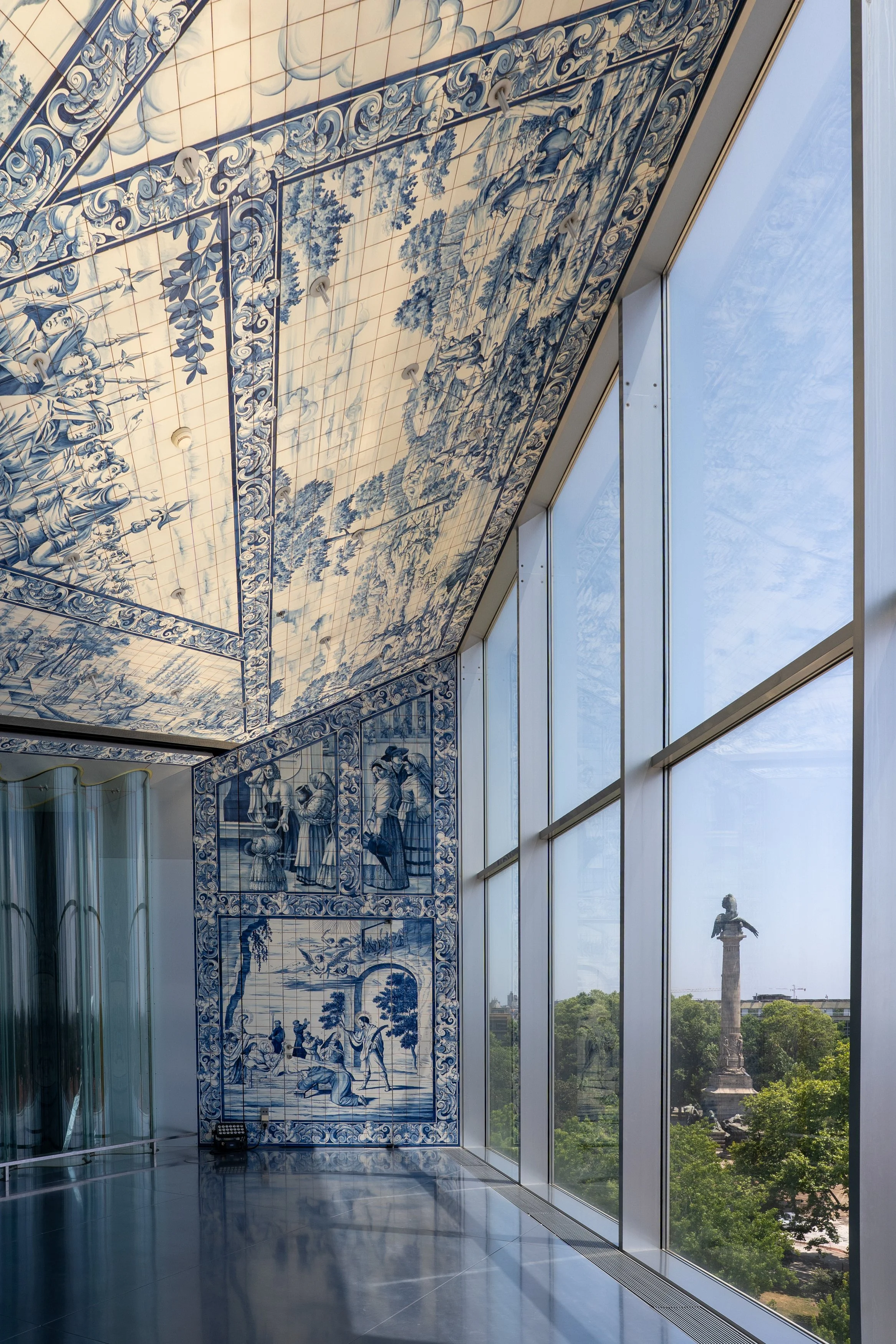
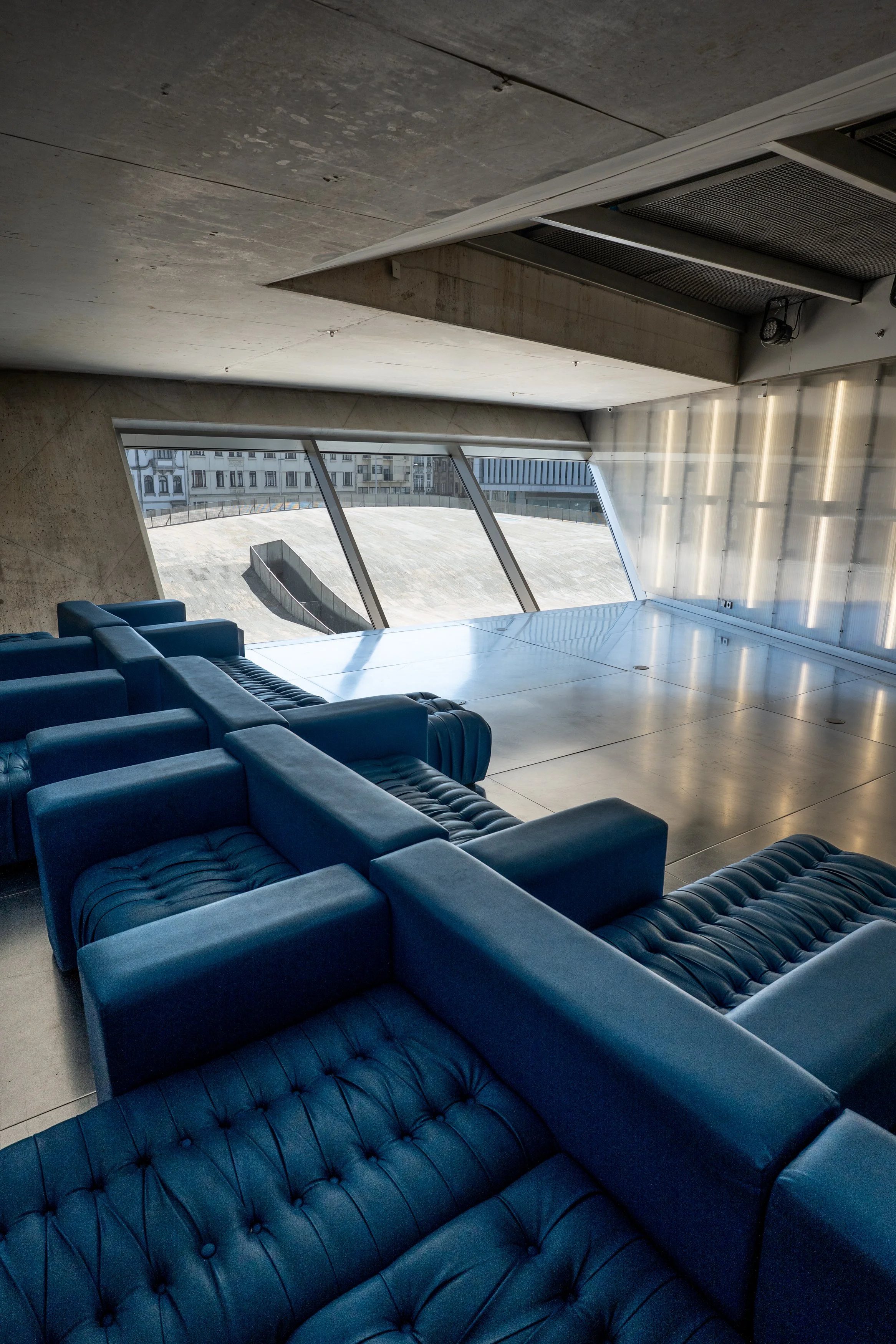
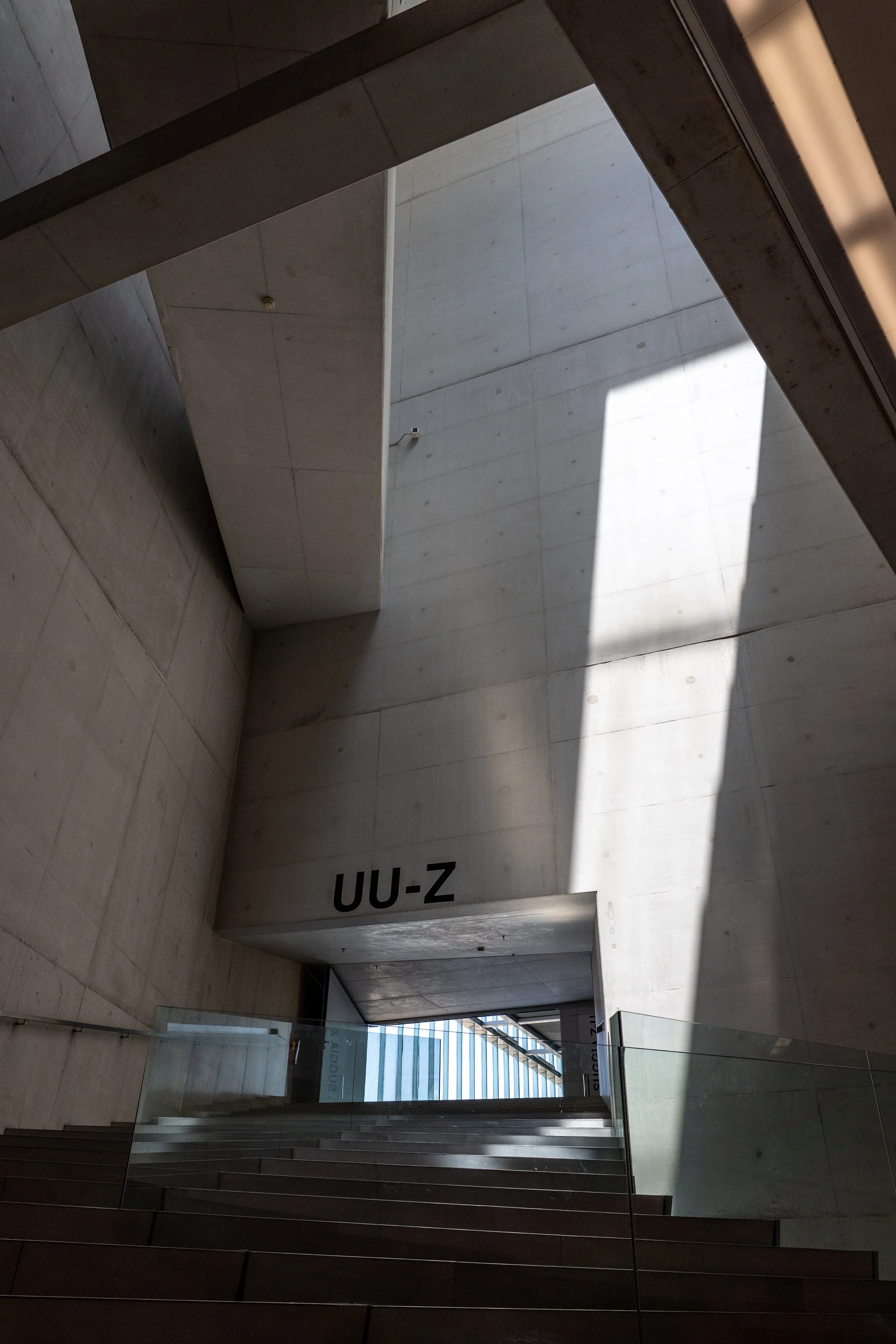
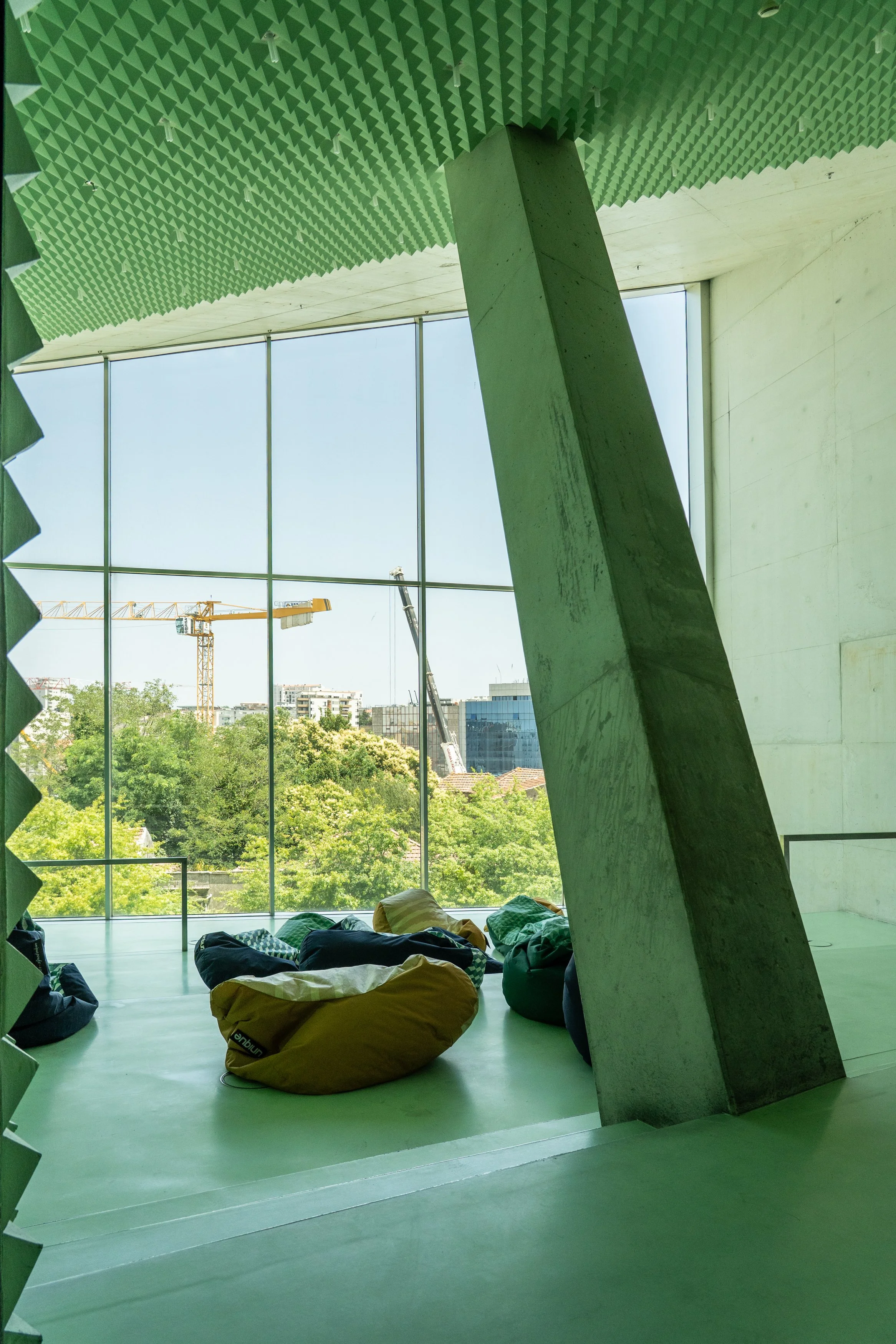
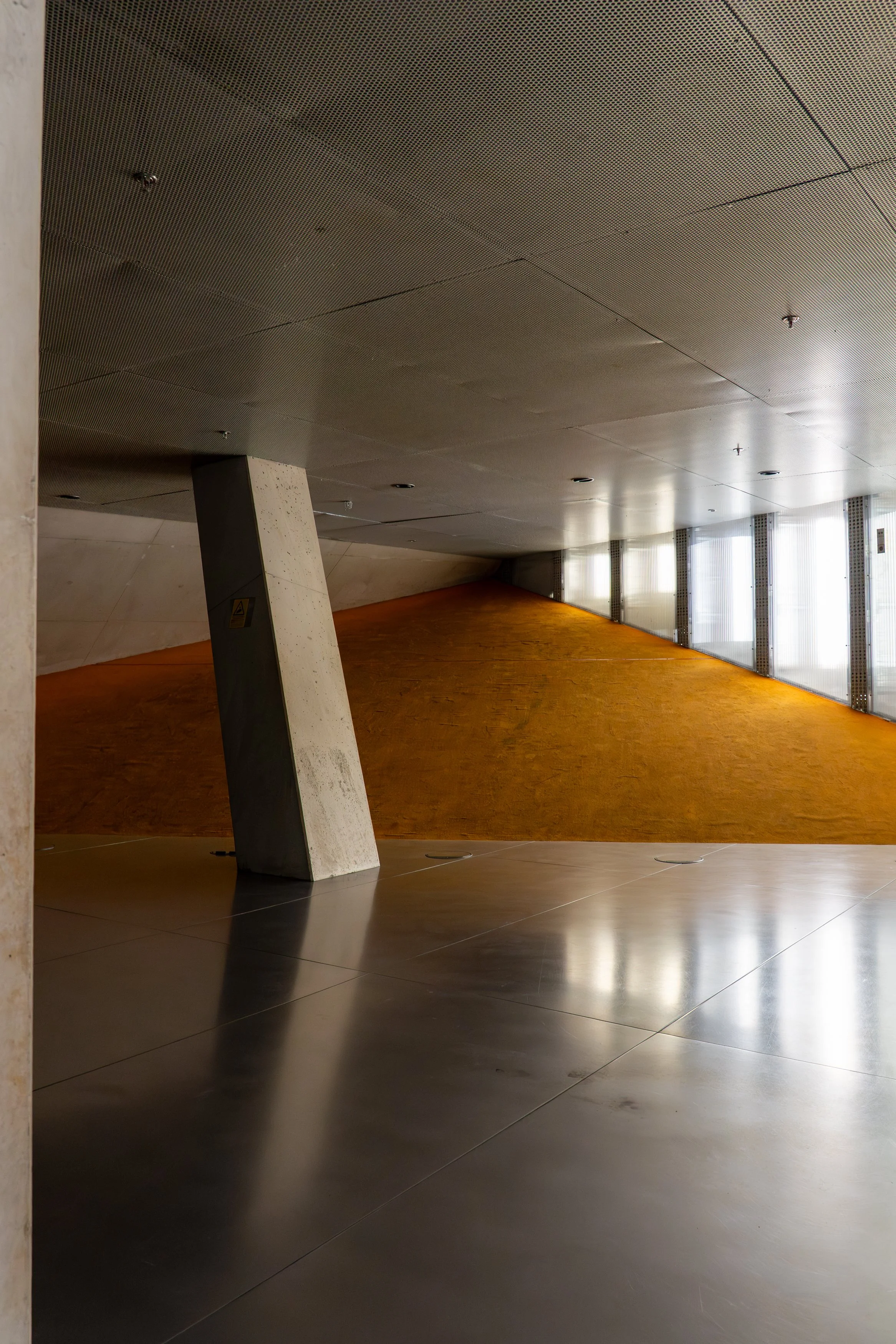
I love experiences like this, where I can visit such a unique space, learn about it and then have the opportunity and time to create a photographic study.
One of my favourite spaces was the one shown below, the VIP room. From the Casa’s website :
“The VIP room was created to be a kind of calling card for Casa da Música, a distinct and particularly formal space within the institution.
At its core was the goal of establishing a bridge between Portuguese and Dutch cultures, not only because Porto and Rotterdam shared the status of European Capital of Culture in 2001 – of seminal importance for Casa da Música – but also because Koolhaas, a Dutchman, was the author of the project for the city’s most emblematic contemporary building. This purpose was fulfilled with the application of tile panels inspired by both cultures, evoking a connection between Portuguese and Dutch ceramists, painters, and potters dating back to the early 16th century and continuing into the mid-17th century. The view from this room offers a comprehensive perspective of Porto, from the pinnacle of the Clérigos Tower to the Atlantic Ocean.”