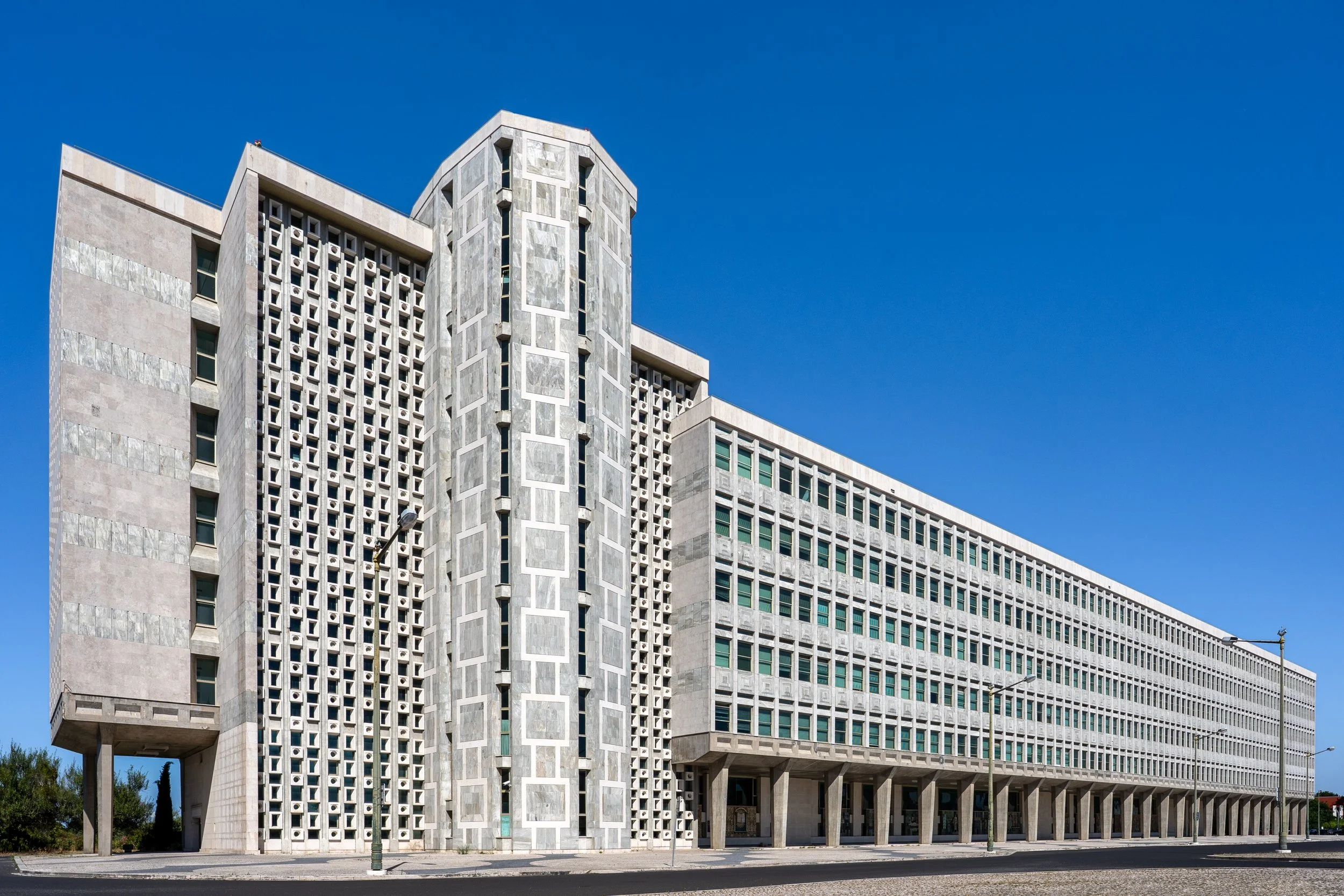
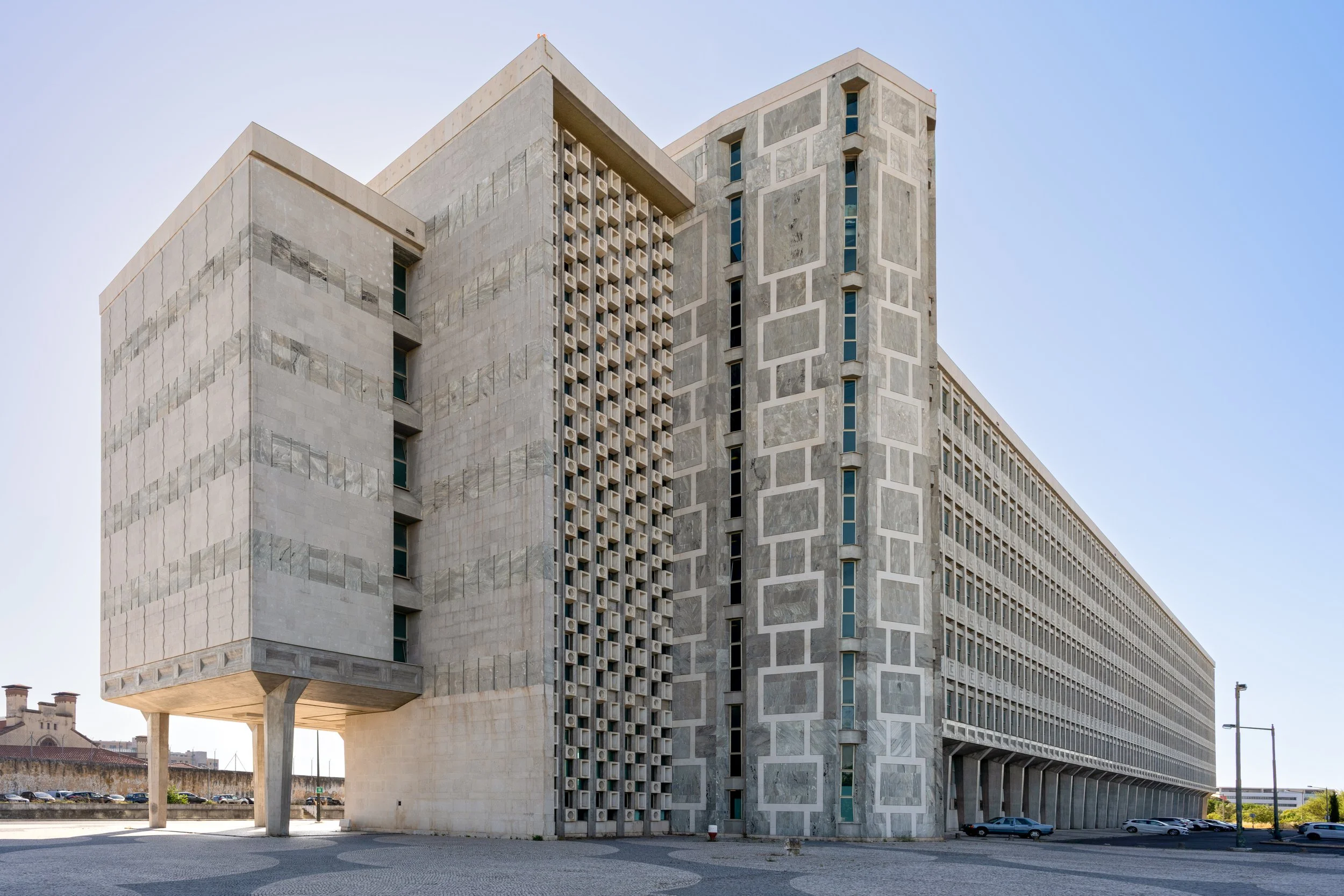
Location
Rua Marquês de Fronteira, Lisbon, at the northern end of Parque Eduardo VII.
Architects
Januário Godinho and João Andresen
Completed
1970
Architectural Style
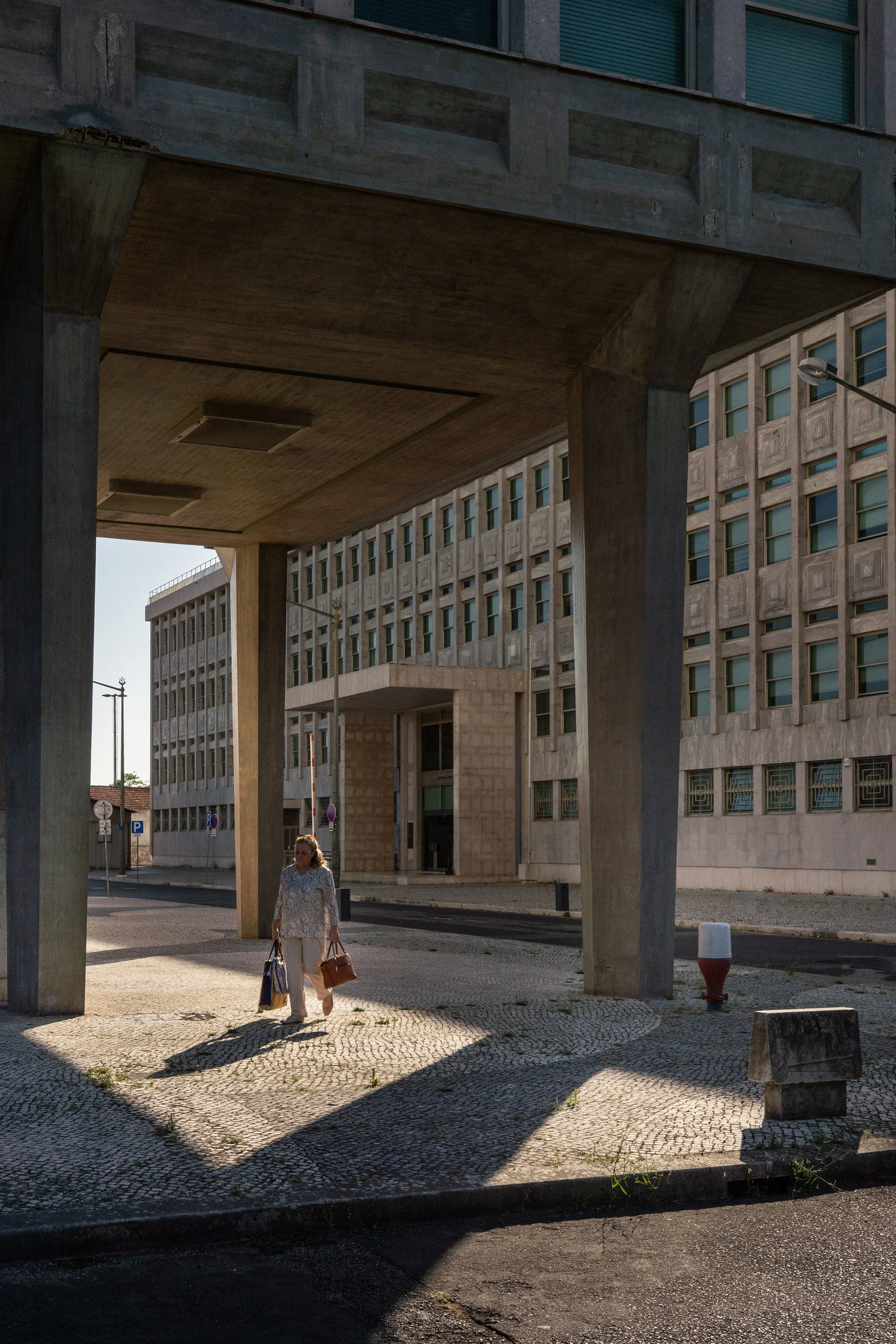
Late Portuguese modernism with strong Brutalist influences, expressed through monumental concrete forms, geometric façades and rhythmic surface patterns.
Photography Tips
The building is particularly compelling for architectural photography thanks to its repeating geometric patterns and textured concrete surfaces. Walk around the perimeter to capture the rhythm of columns and façade grids, and look for compositions that emphasise the building’s monumental scale against the open sky. Morning or late afternoon light enhances the depth of the façade textures and reveals the subtle decorative patterns embedded in the concrete.
Notable Details to Photograph
The repeating façade patterns of squares and rectangles
The sculptural concrete columns and elevated structure
Ceramic art panels under the entrance portico depicting themes of justice and wisdom
Wide-angle views showing the building’s imposing civic scale
These images were judged as a Winner in ‘Other Exteriors’ in the Architecture Masterprize 2025.
The Palácio da Justiça de Lisboa is an important public building that represents Portugal’s legal system.
Designed in the mid-20th century by architect João Simões, it features a strong, symmetrical design with tall columns and large stone façades. Its solid materials and balanced proportions give it a sense of strength and stability. Built during the Estado Novo period, the building was designed to express order, authority and national pride.
Today, it remains a powerful symbol of justice in Lisbon, combining clear architectural lines with a lasting civic purpose.
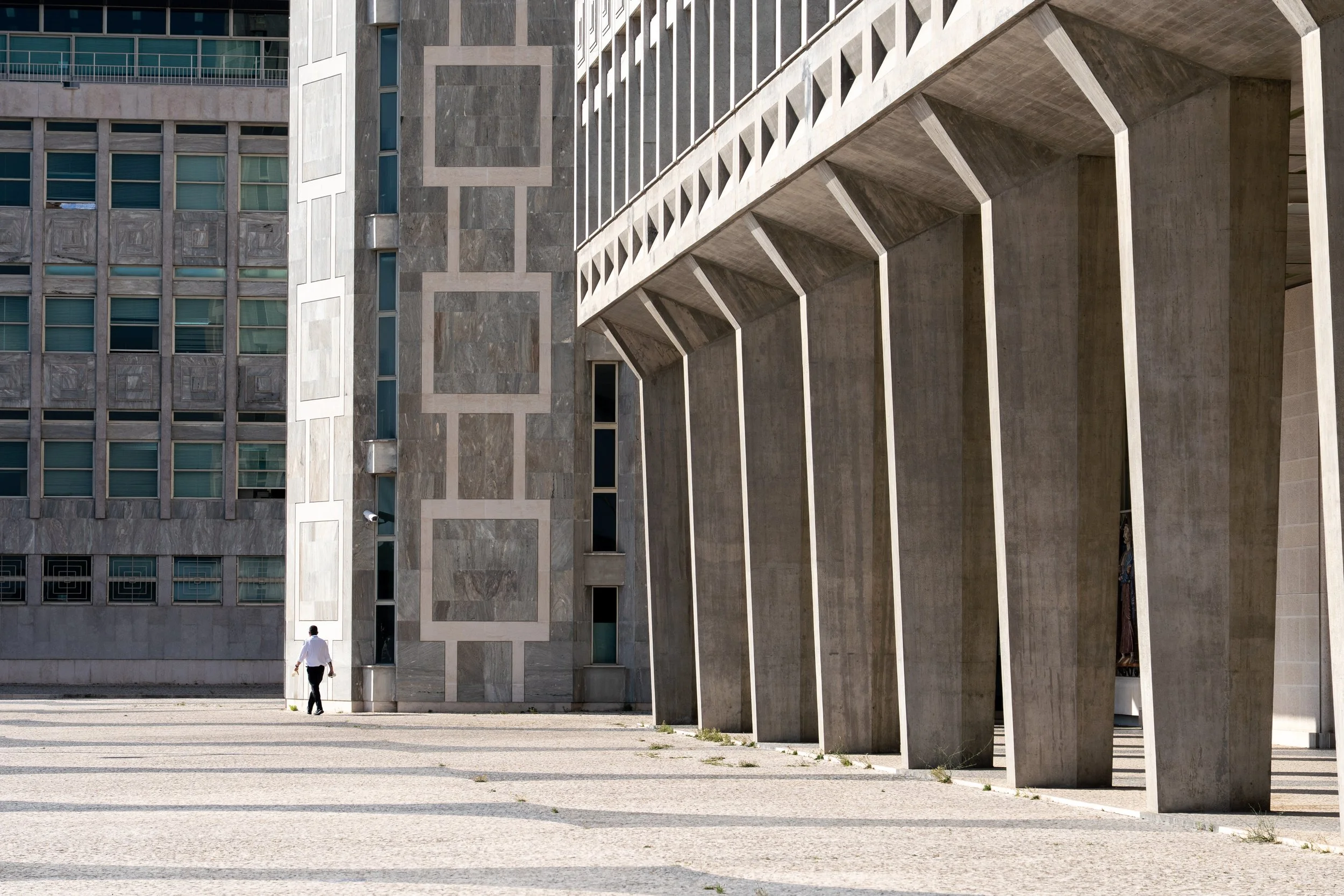
Before my trip to Portugal I spent time researching buildings to photograph, and may attention was immediately caught by this wonderful place. I was searching for brutalist places to shoot, and while it’s not brutalist, the concrete construction and monumental nature caught my attention. Visiting in summer, there’s something special about the light in Portugal, so clear and golden, the way it lit up the angles and features was just sublime.
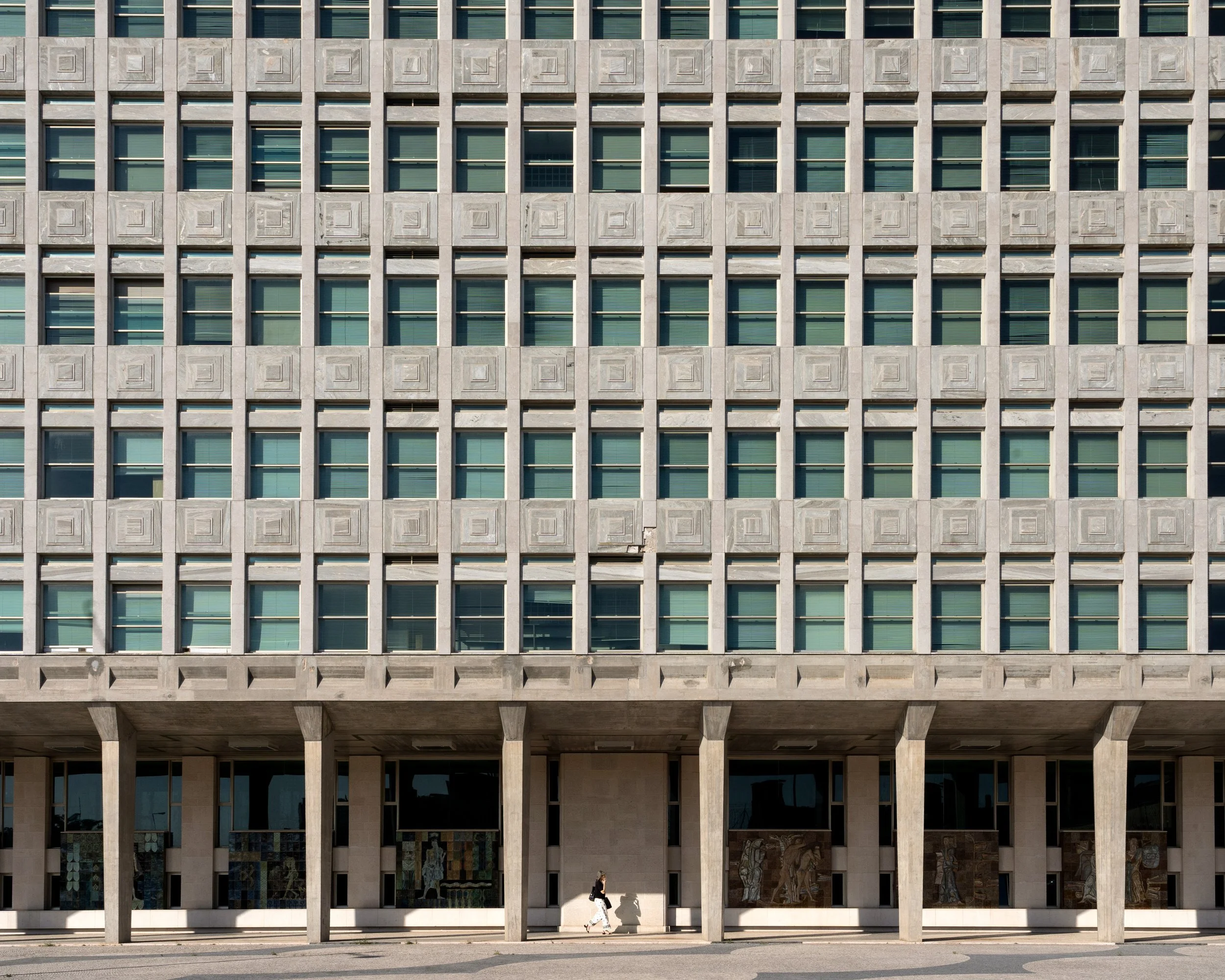
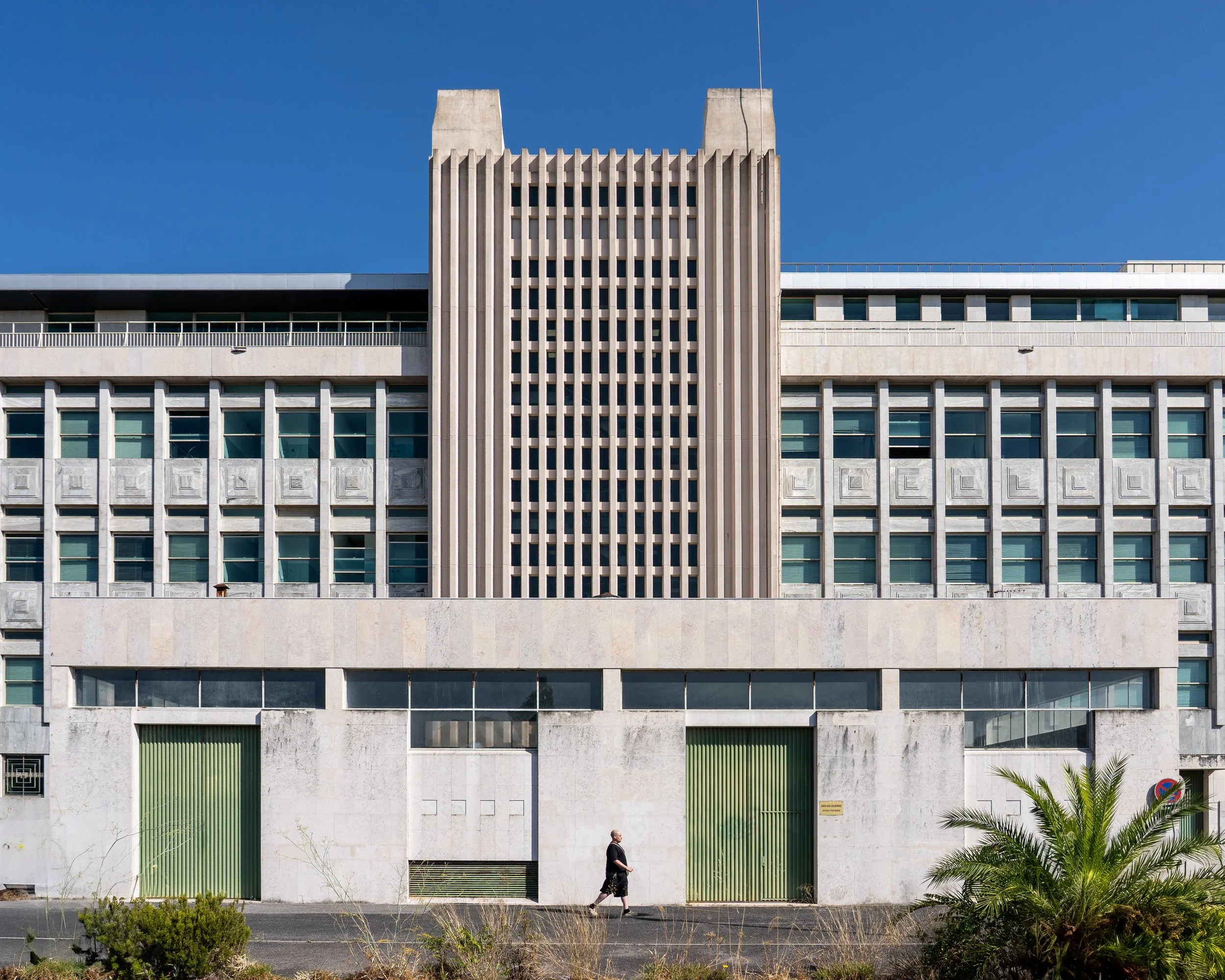
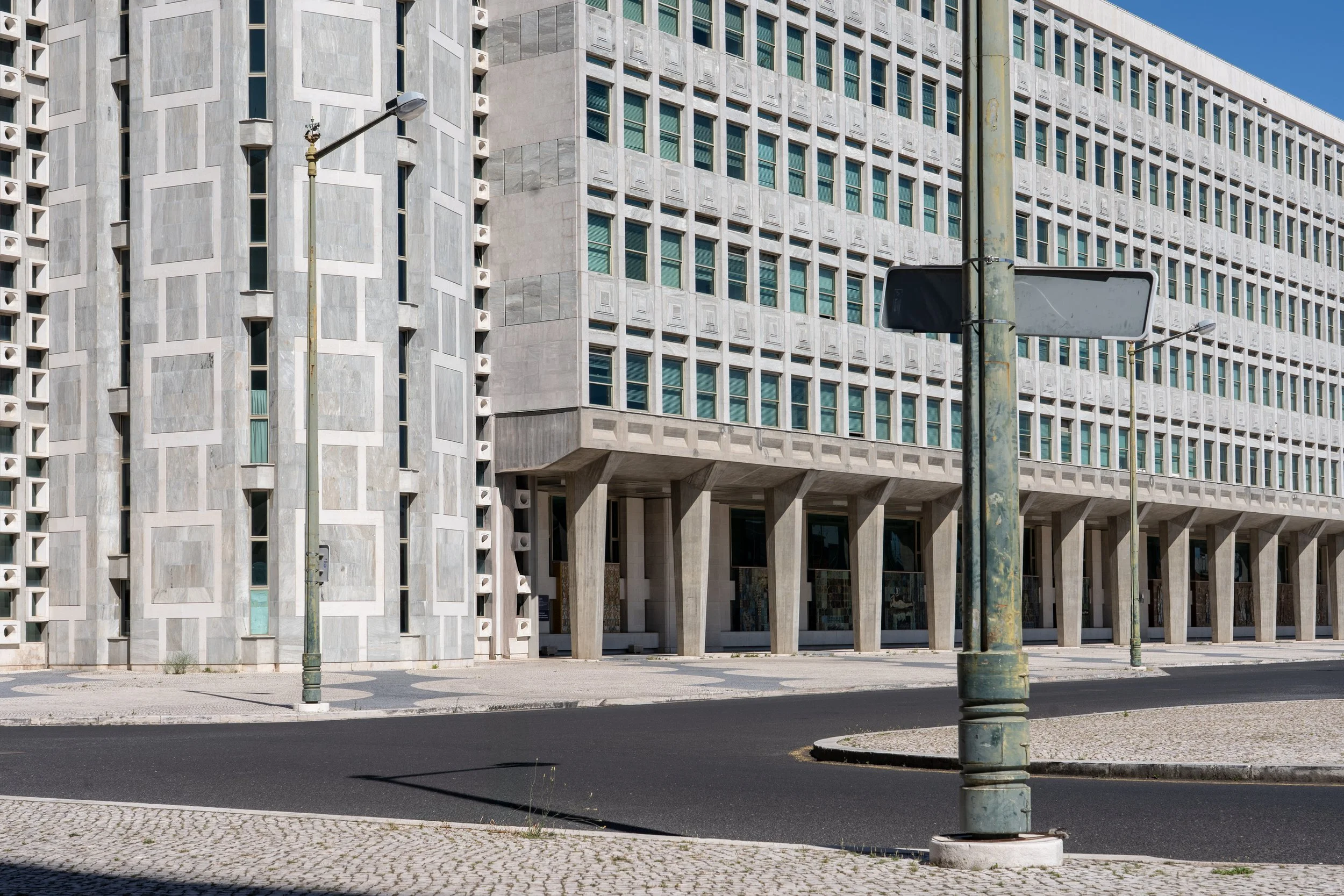
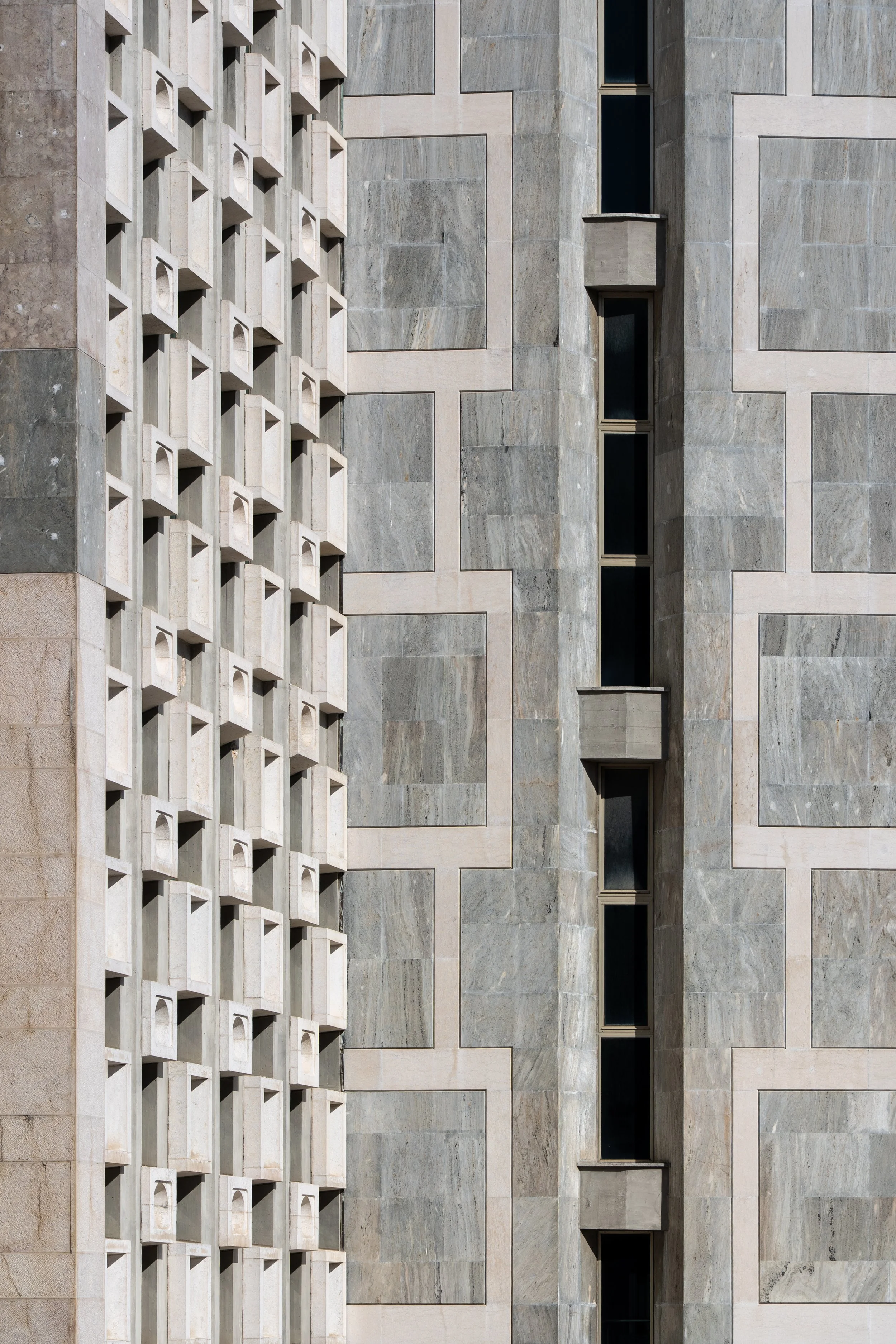
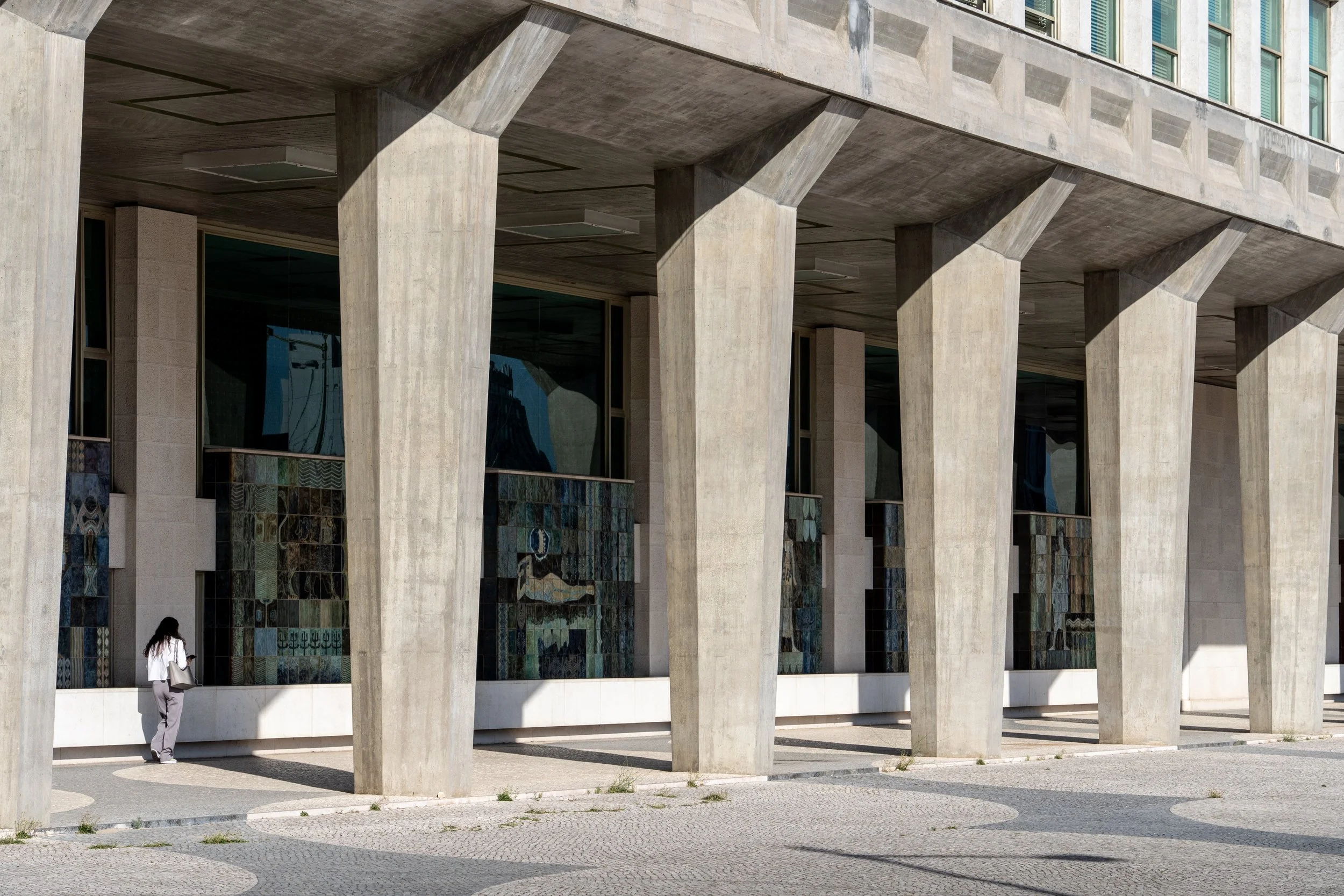
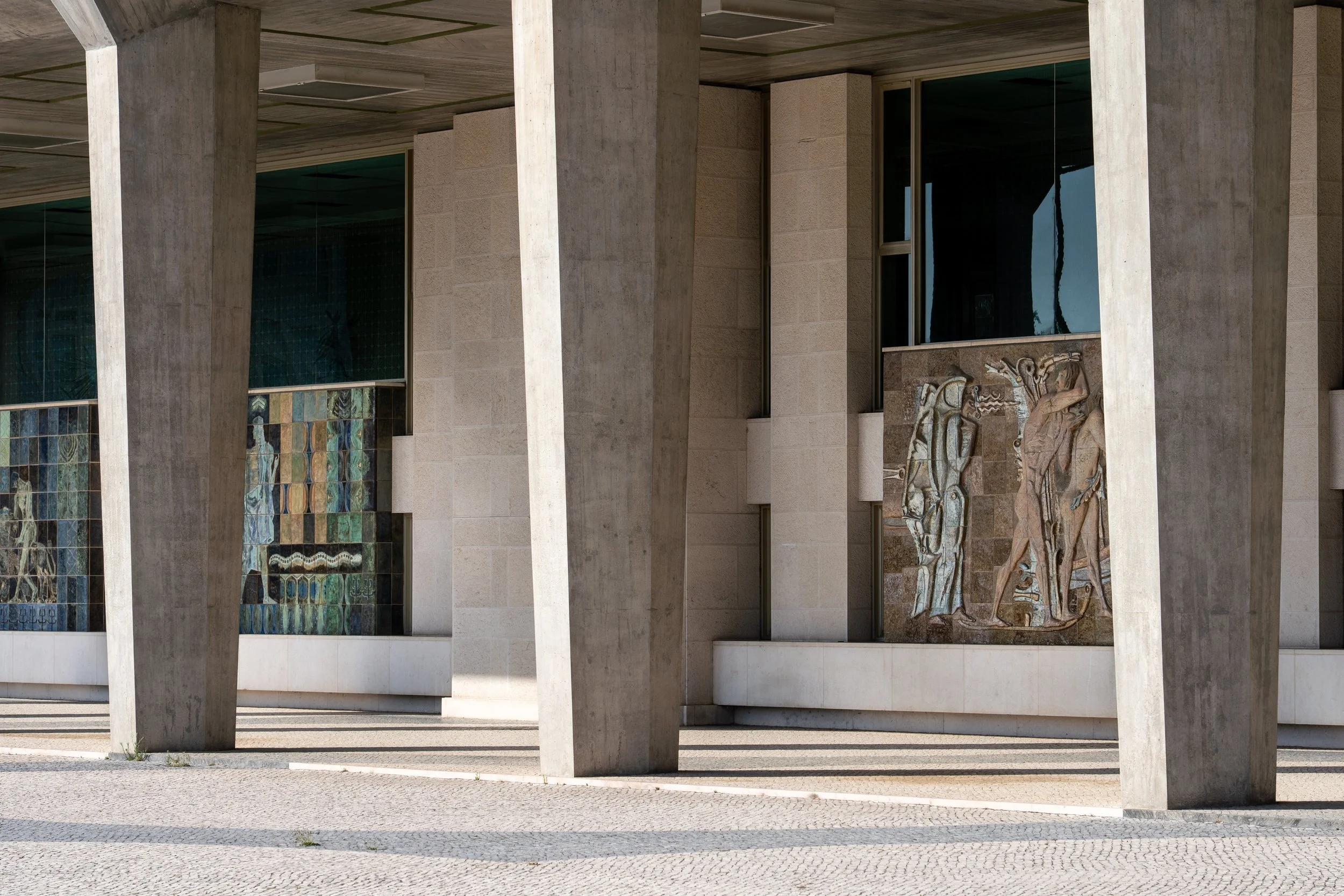
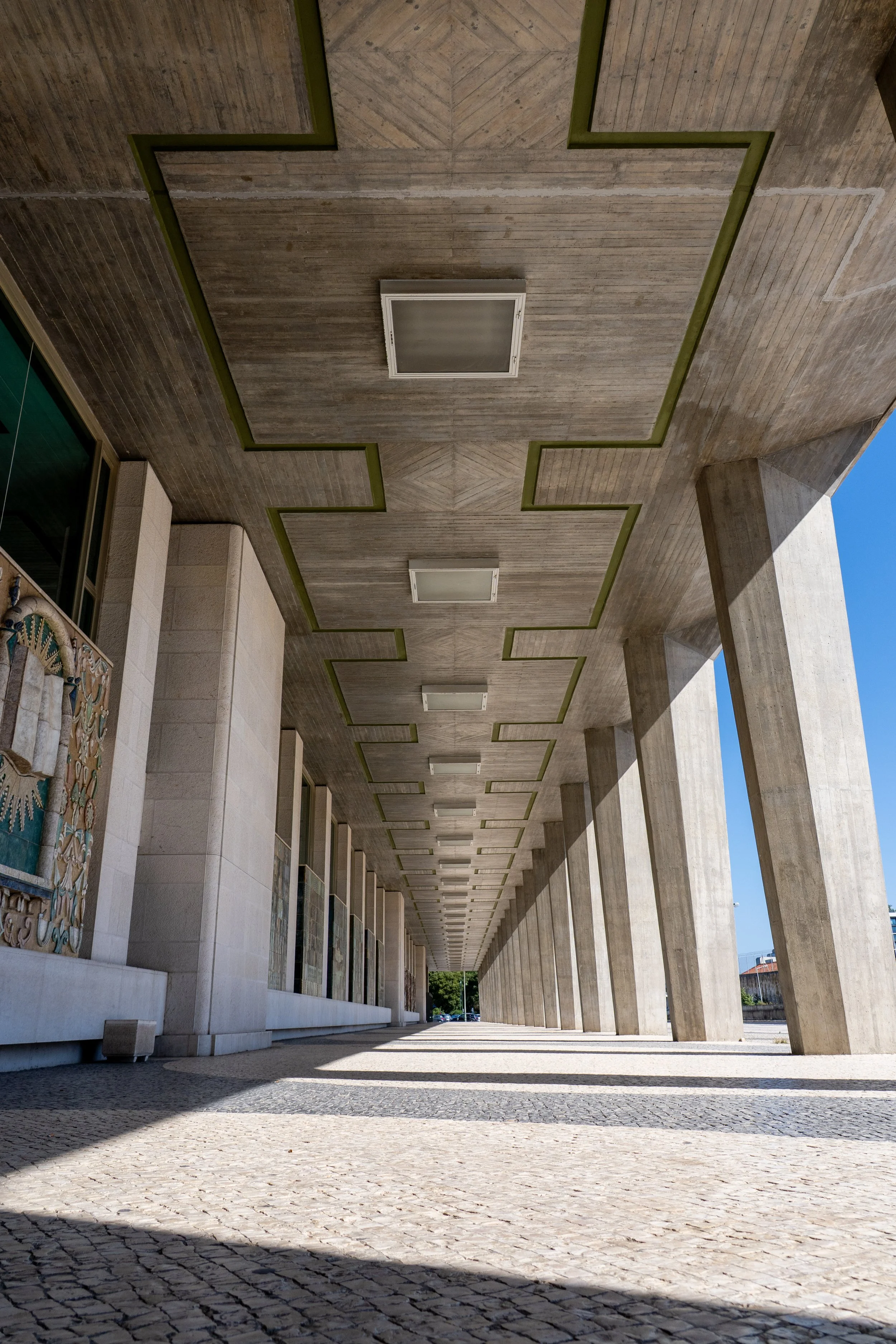
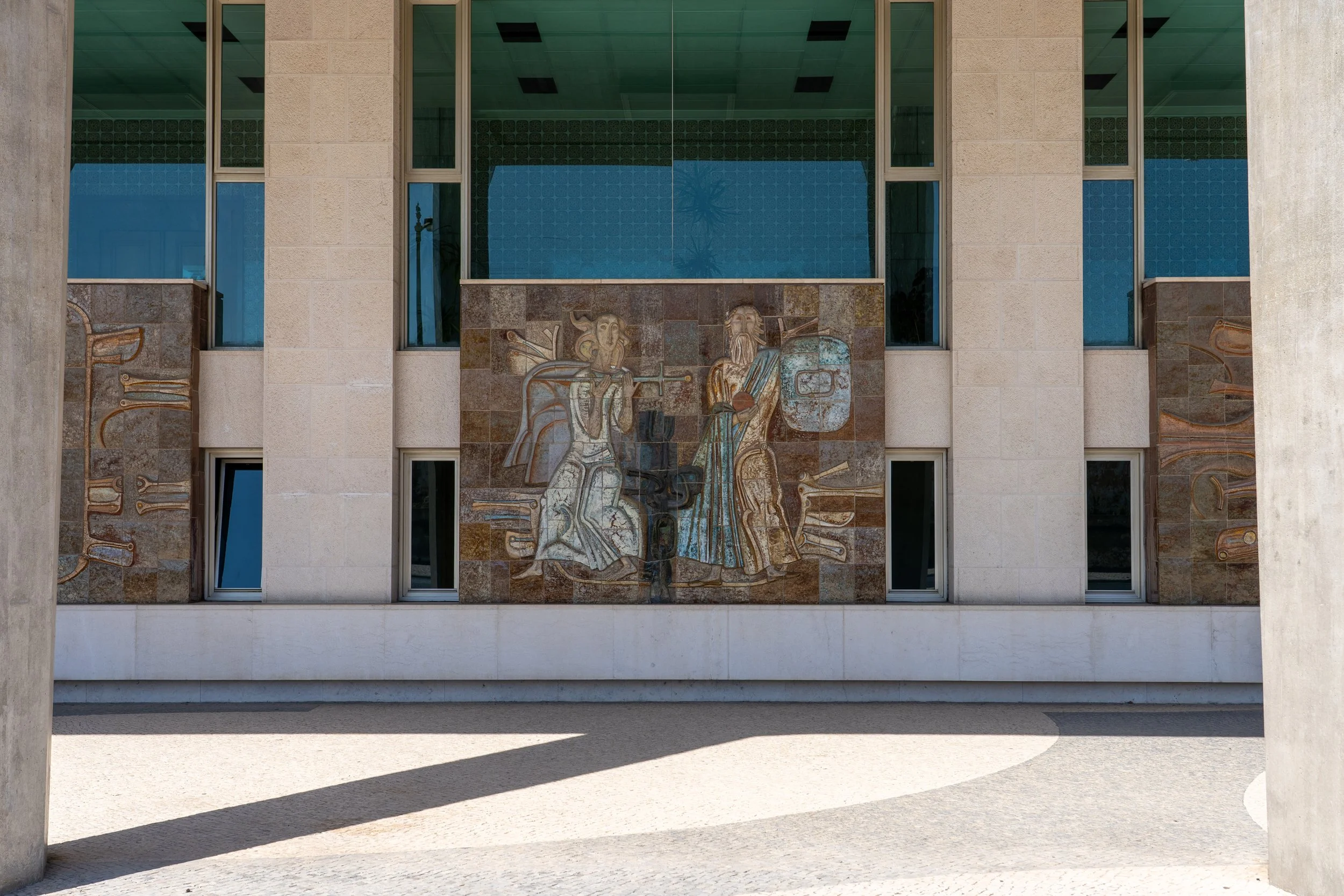
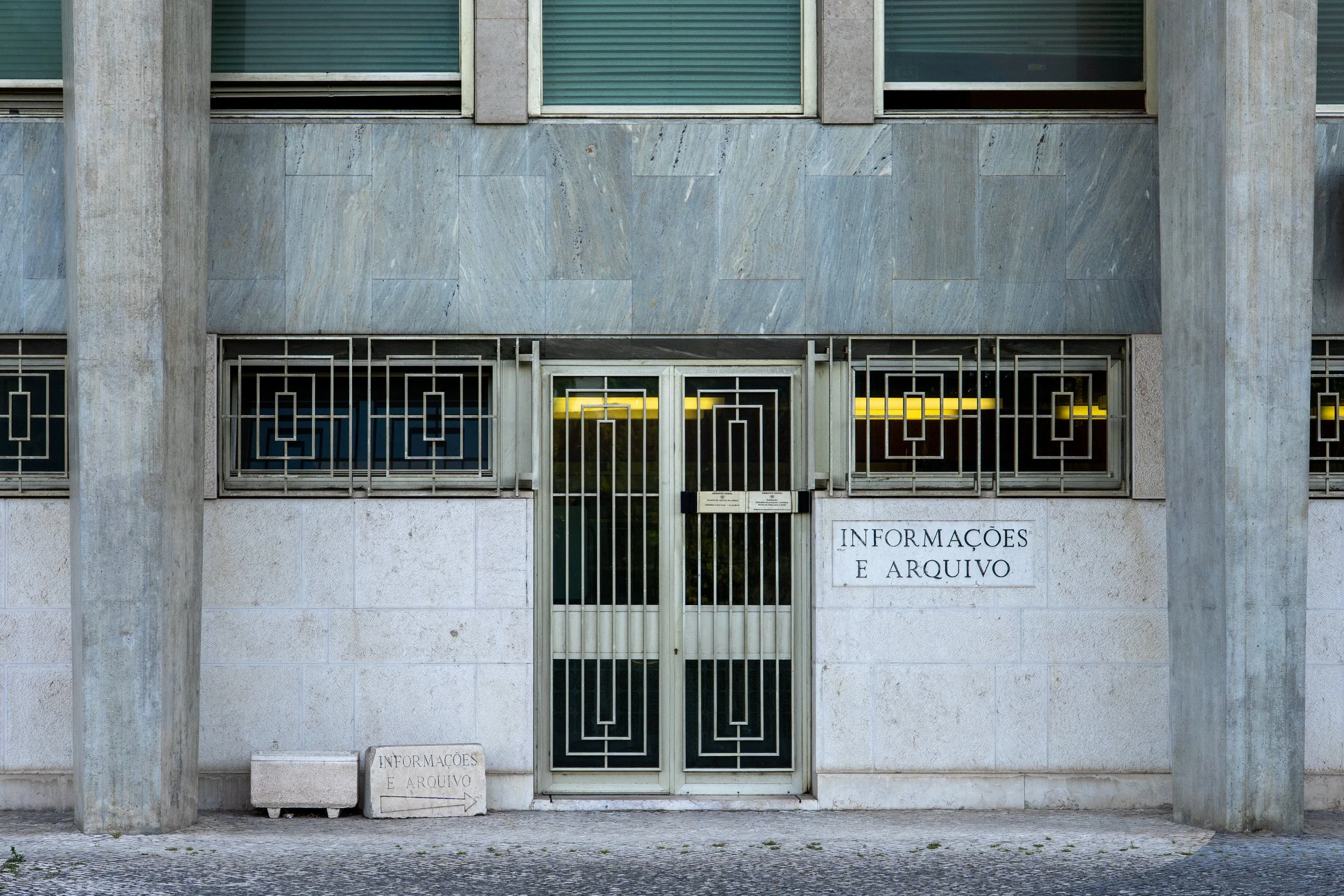
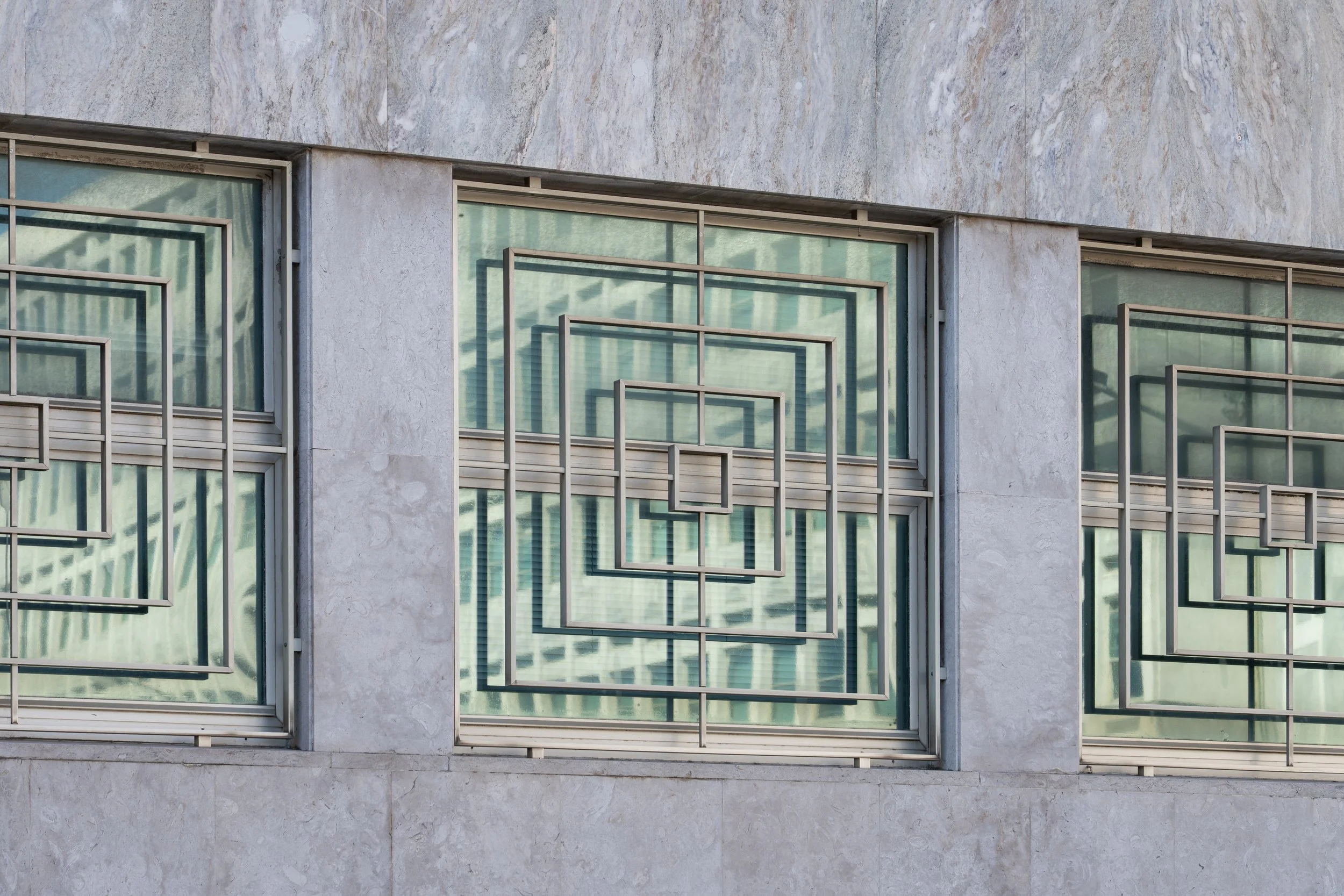
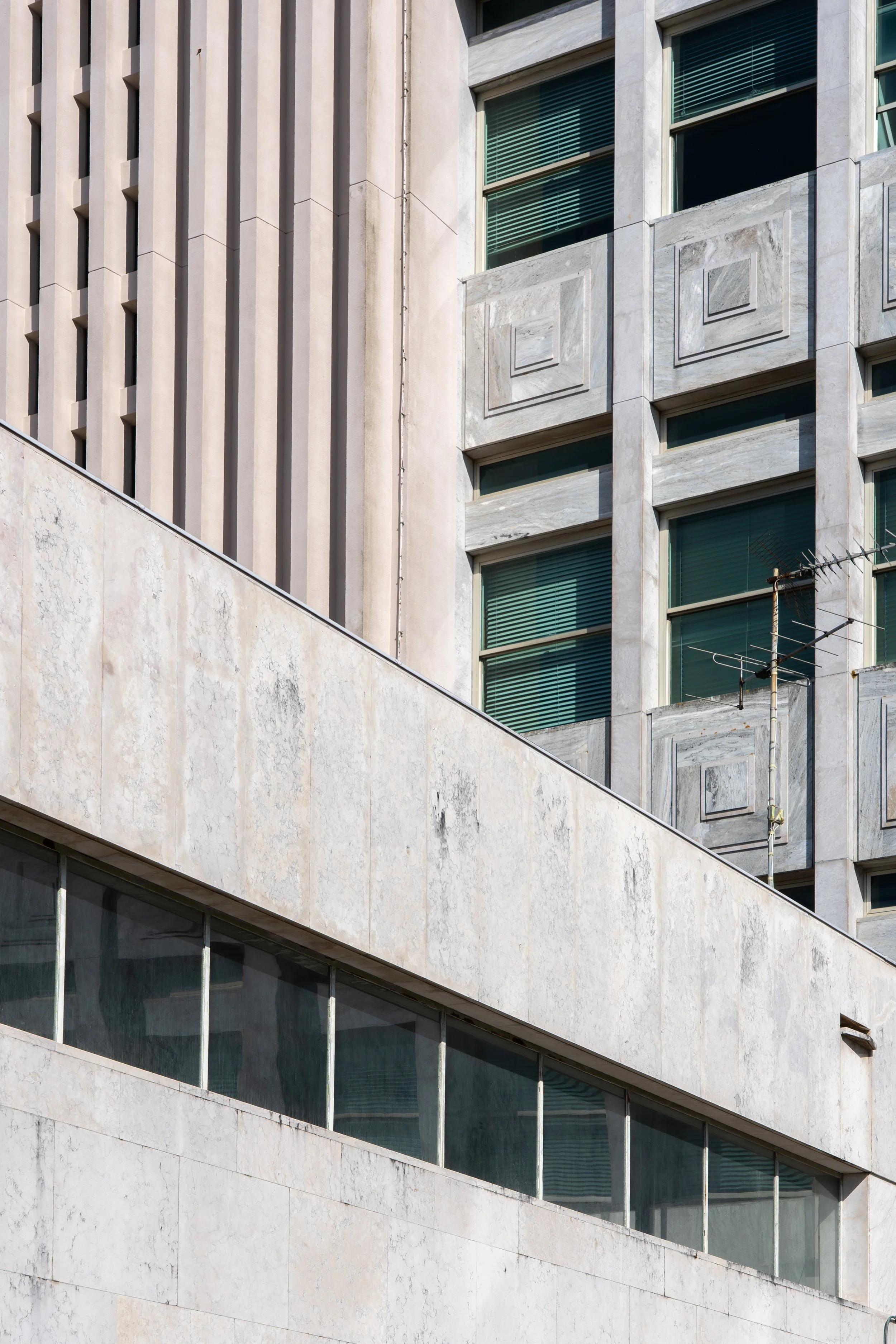
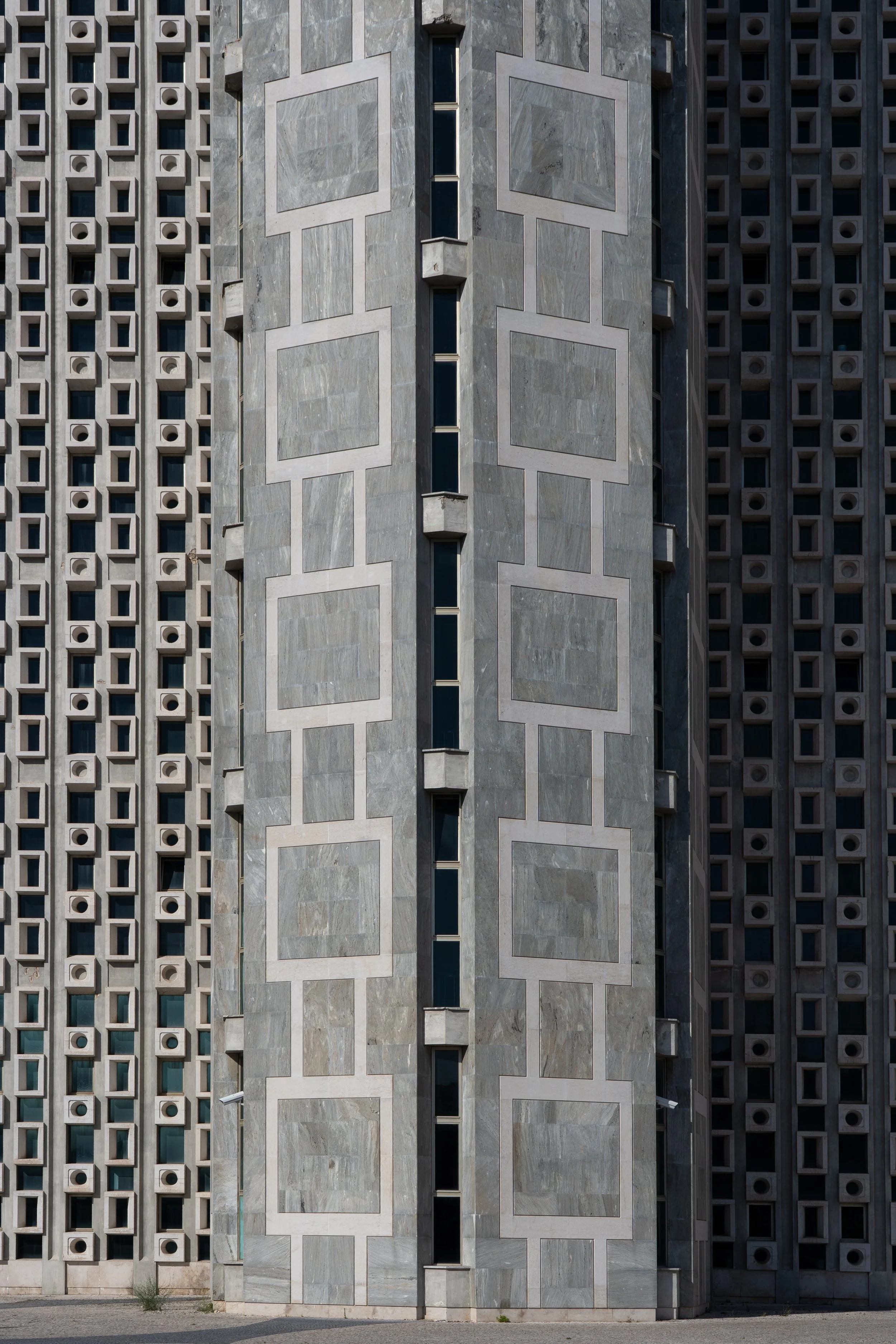
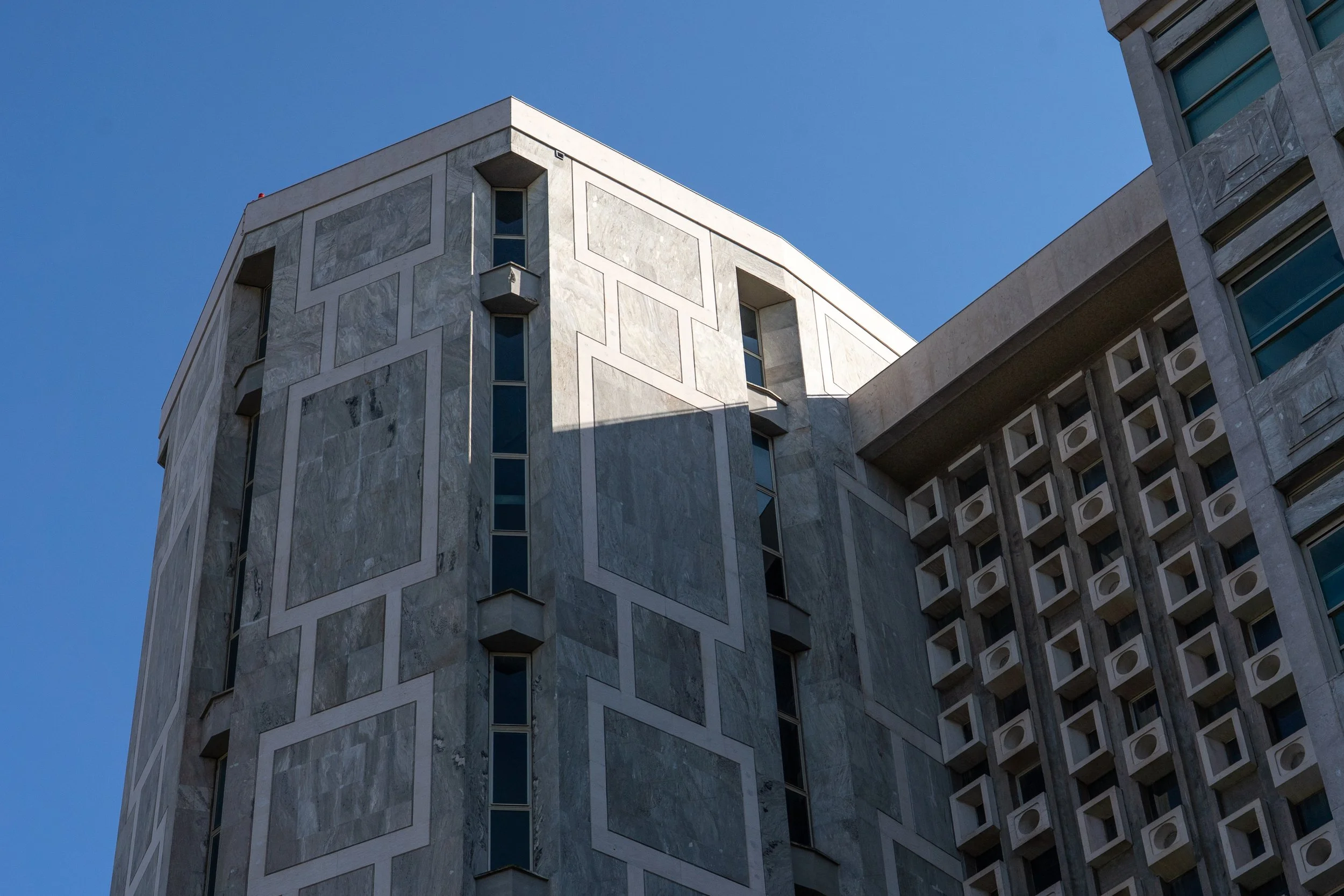
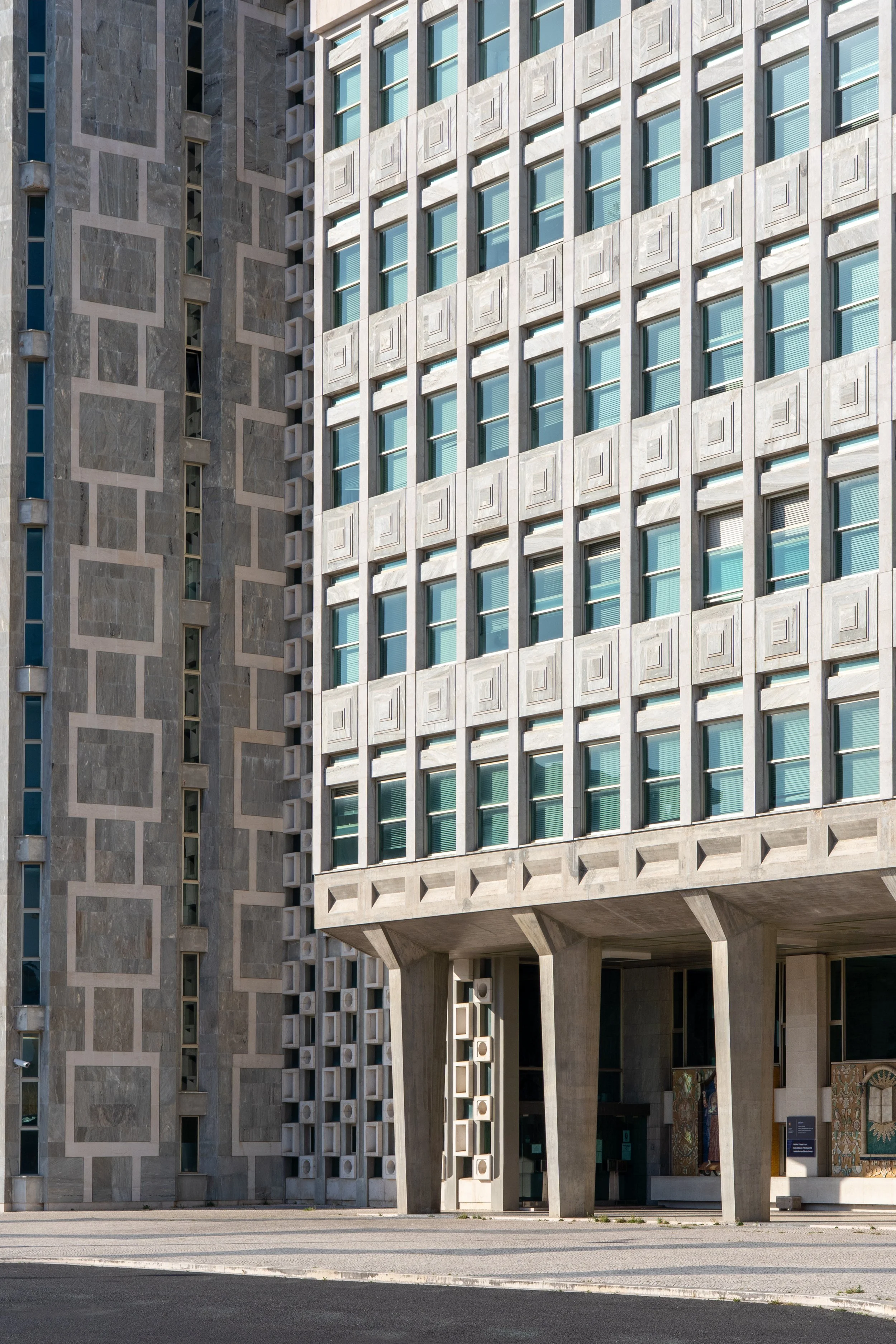
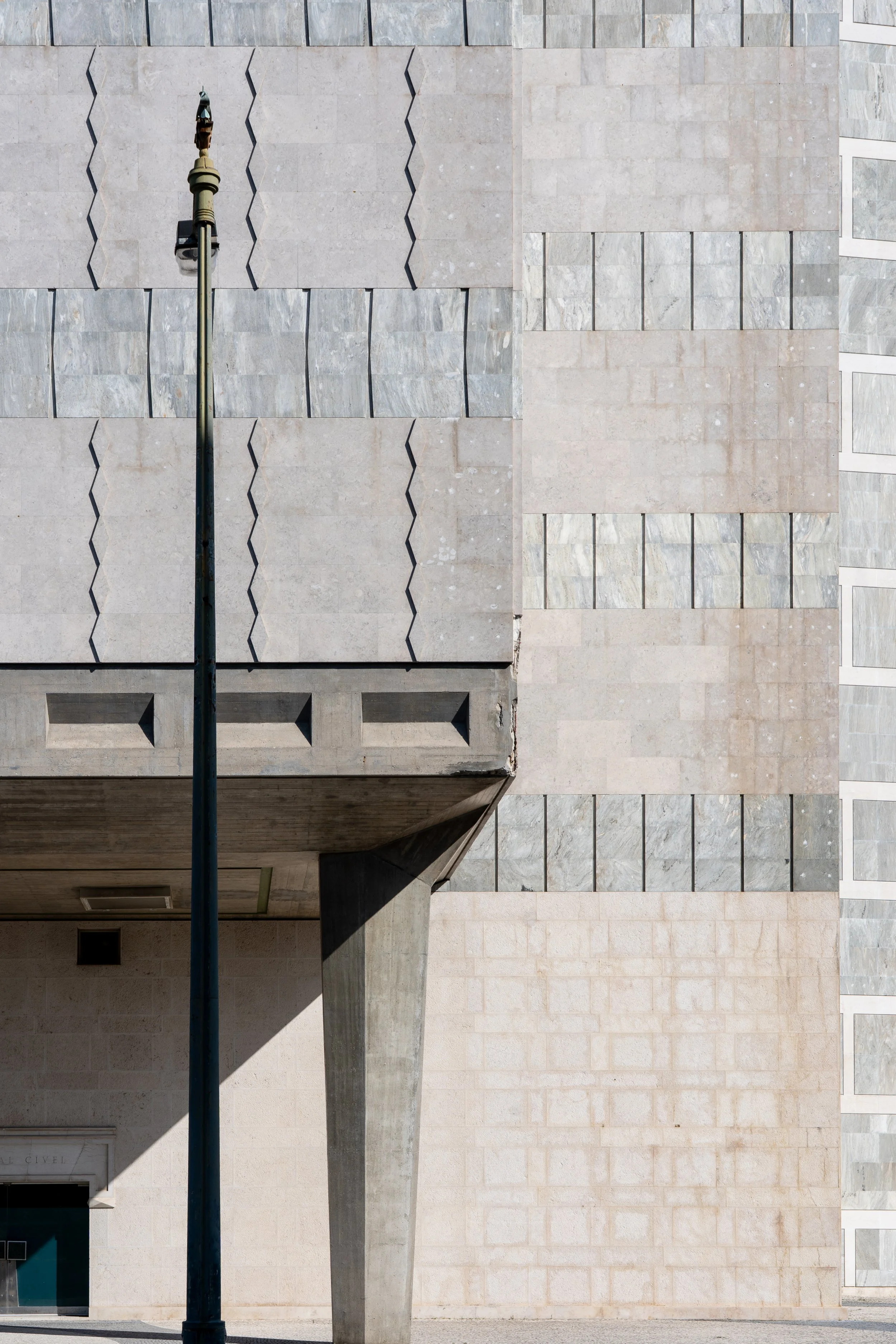
My process when visiting a new space like this is to circle the building as much as possible, observing the way people move though the space, looking for features or angles that excite me, areas that I could use as ‘set scenes’, etc. I’ll generally then start to take a bunch of images as experiments to see what I can create within the limits of the frame. Through this process I ind the images that really speak to me. Often I like to use repetition and symmetry (or asymmetry), and wait for a person to walk through the perfect spot to provide scale. On other occasions I see a scene that I love, and wait for a person find an object to ‘complete’ it.
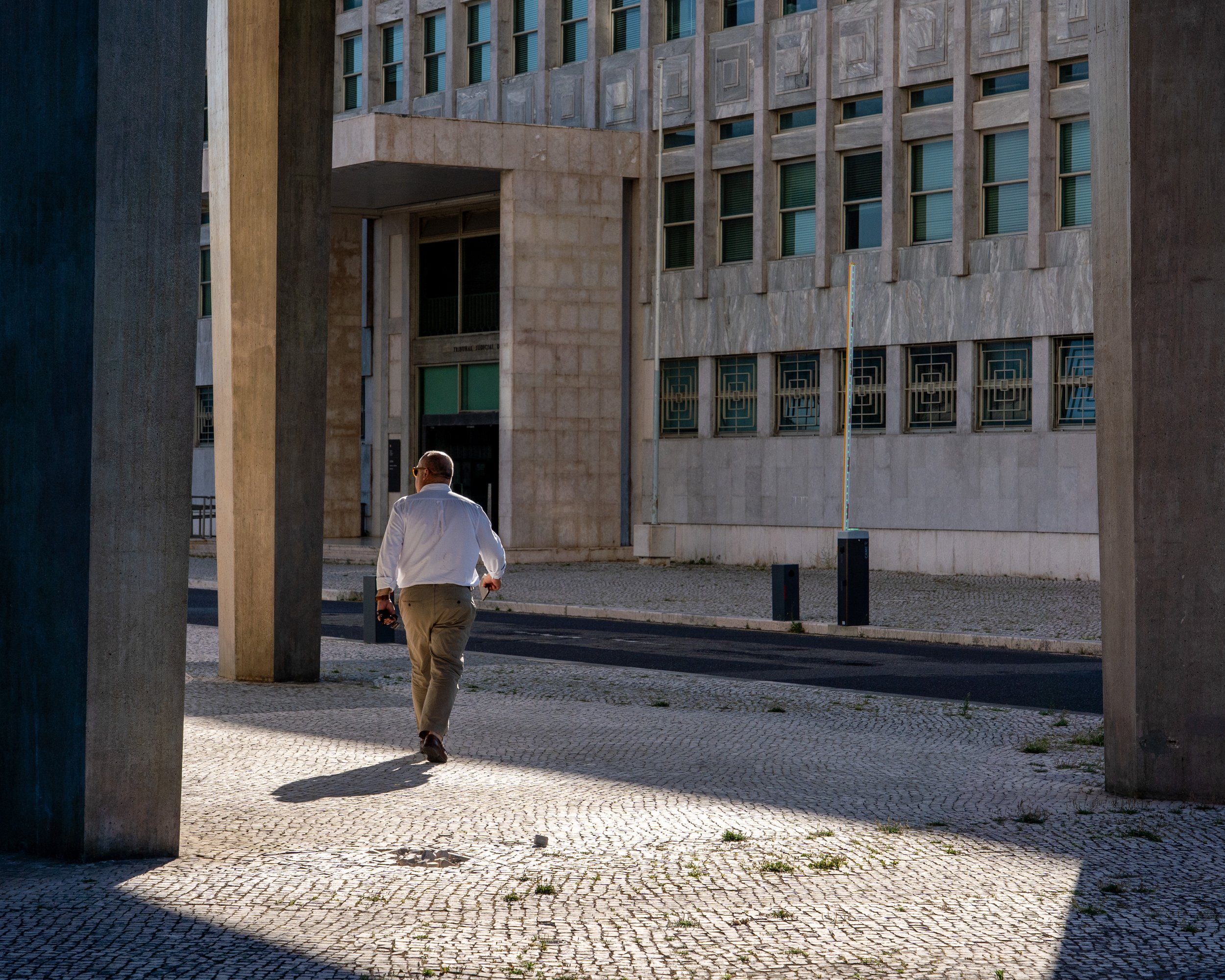
In the images below, I loved the way that the sun was creating light and shade, seeing it almost like a stage set waiting for the main character to complete it. I might wait for 15 or 20 minutes for someone to come along in just the right place and ‘click’! Sometimes no one comes, and after around 15 minutes I give myself a 1 minute count down before I have to move on and find somethings else (although I may do the 1 minute count down a few times!!!). I like the little stories in the images below.

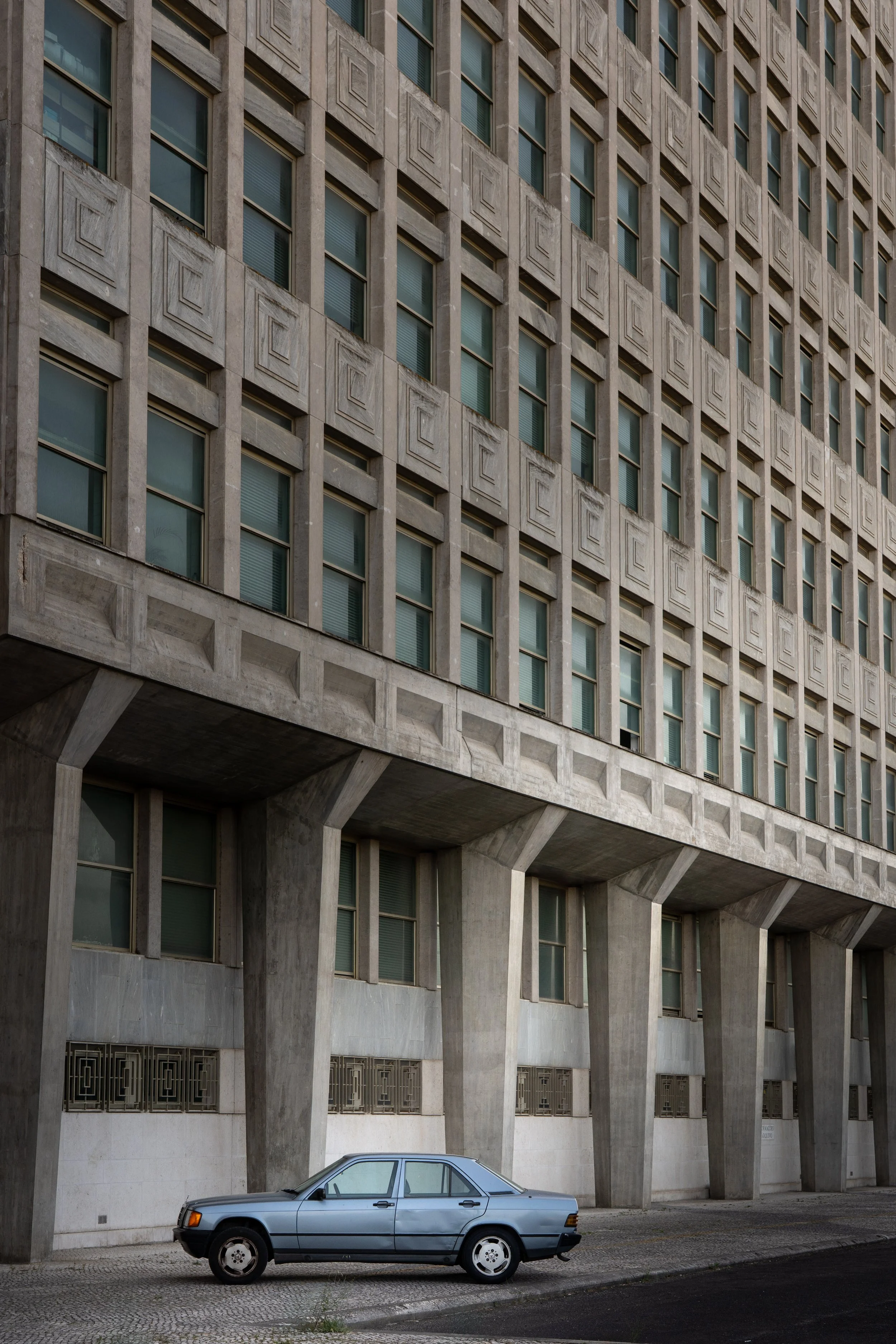
And finally a couple of images of the whole scope of the building.