
Melbourne Metro Tunnel
Melbourne has been a hotbed of infrastructure investment with the Big Build over the past decade, with disruption to roads and trains across the city. The “Big Build” officially kicked off major project construction in 2015 with the establishment of the Melbourne Metro Rail Authority, although the tunnel had began boring in 2010. After such a long gestation, it’s been so exciting to see the tunnel and stations open to the public in December 2025.
I love photographing places, and it’s been super exciting having 6 brand new underground stations to explore and photograph. They all have a similar, yet distinct, design language. The stations were designed in collaboration between leading design practices Hassell, WW+P and RSHP.
The design language of the new Melbourne Metro Tunnel — especially as expressed through its five new underground stations — can be described as a contemporary civic modernism that blends functional clarity, spatial openness, contextual responsiveness, and wayfinding-focused aesthetics. It’s a cohesive architectural approach that creates both a line-wide identity and unique expressions at each station.
Below is my impressions and thoughts on each of the stations based on a few trips to understand them through image making. It takes a while to understand the physicality of the spaces, how they relate to the precincts around them, and how people come to use them. I’m really looking forward to seeing them come to life.
ANZAC STATION
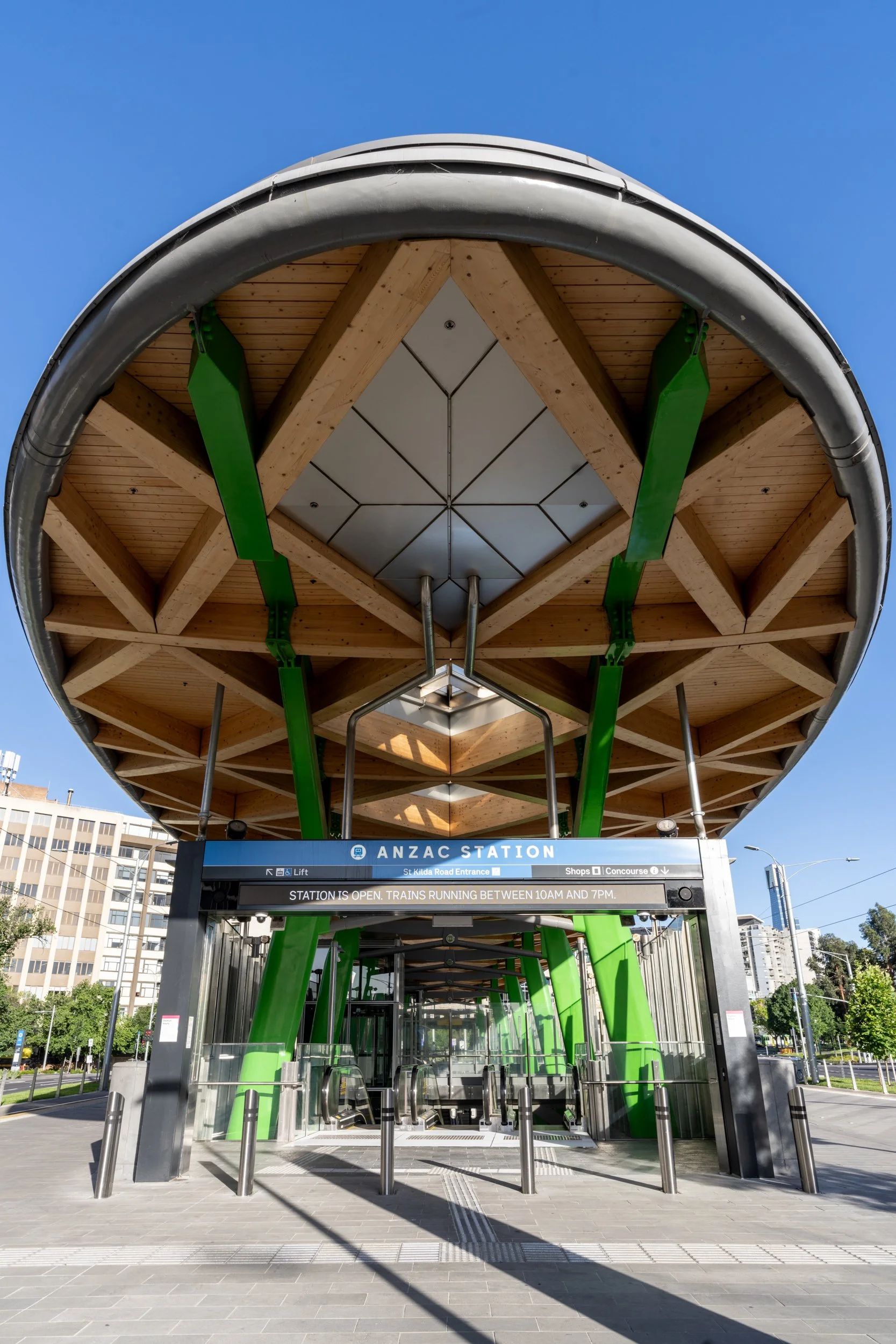
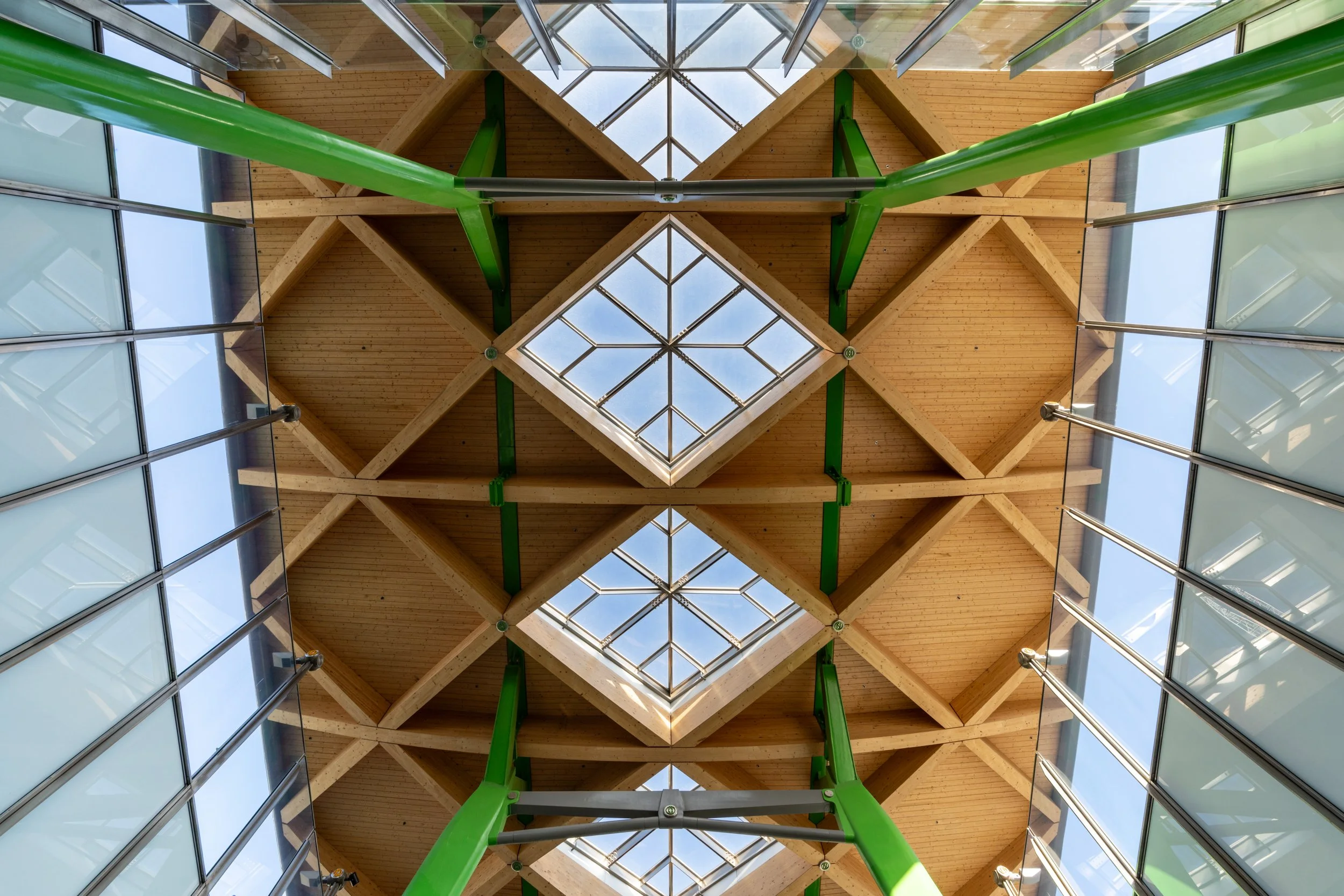
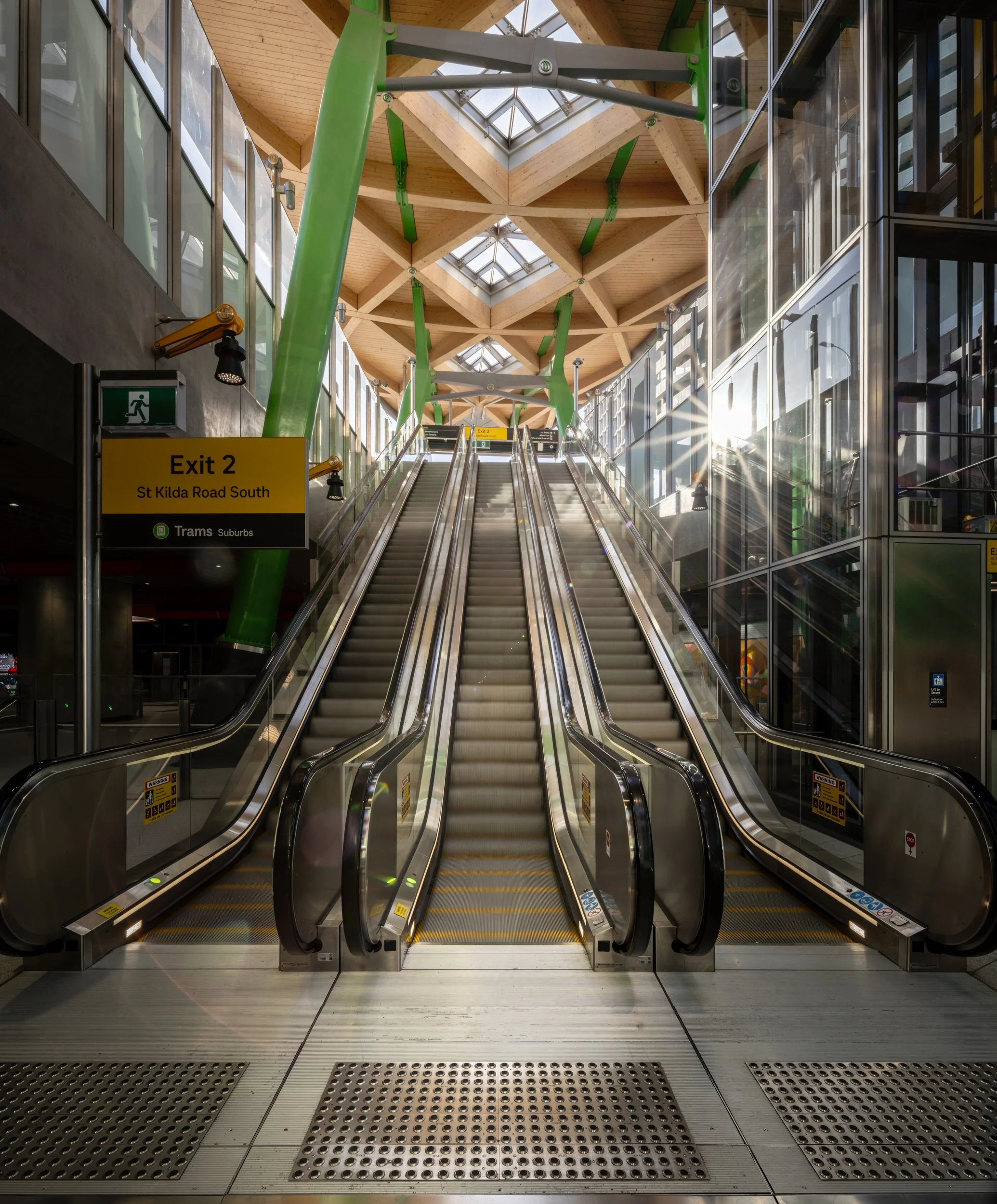
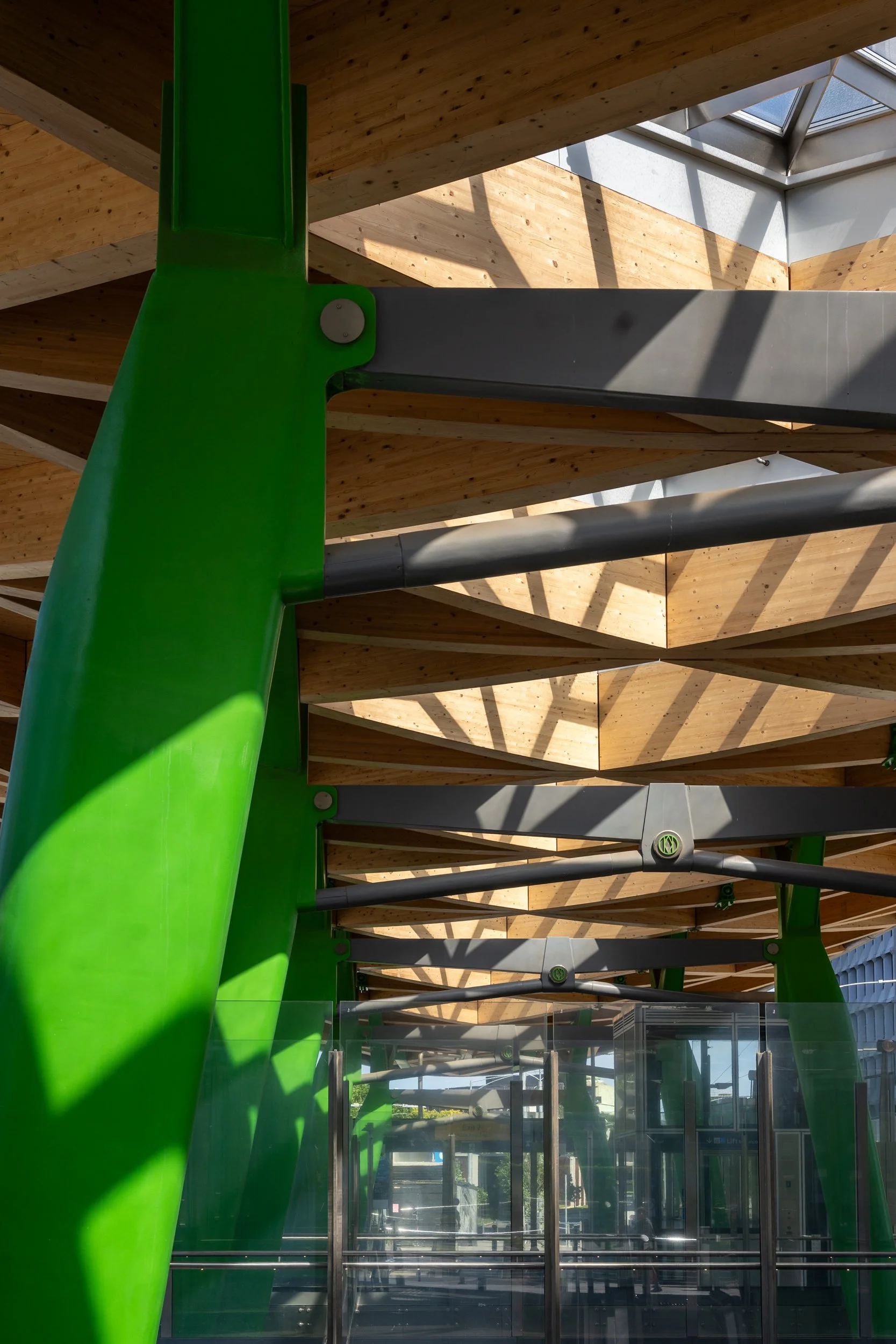
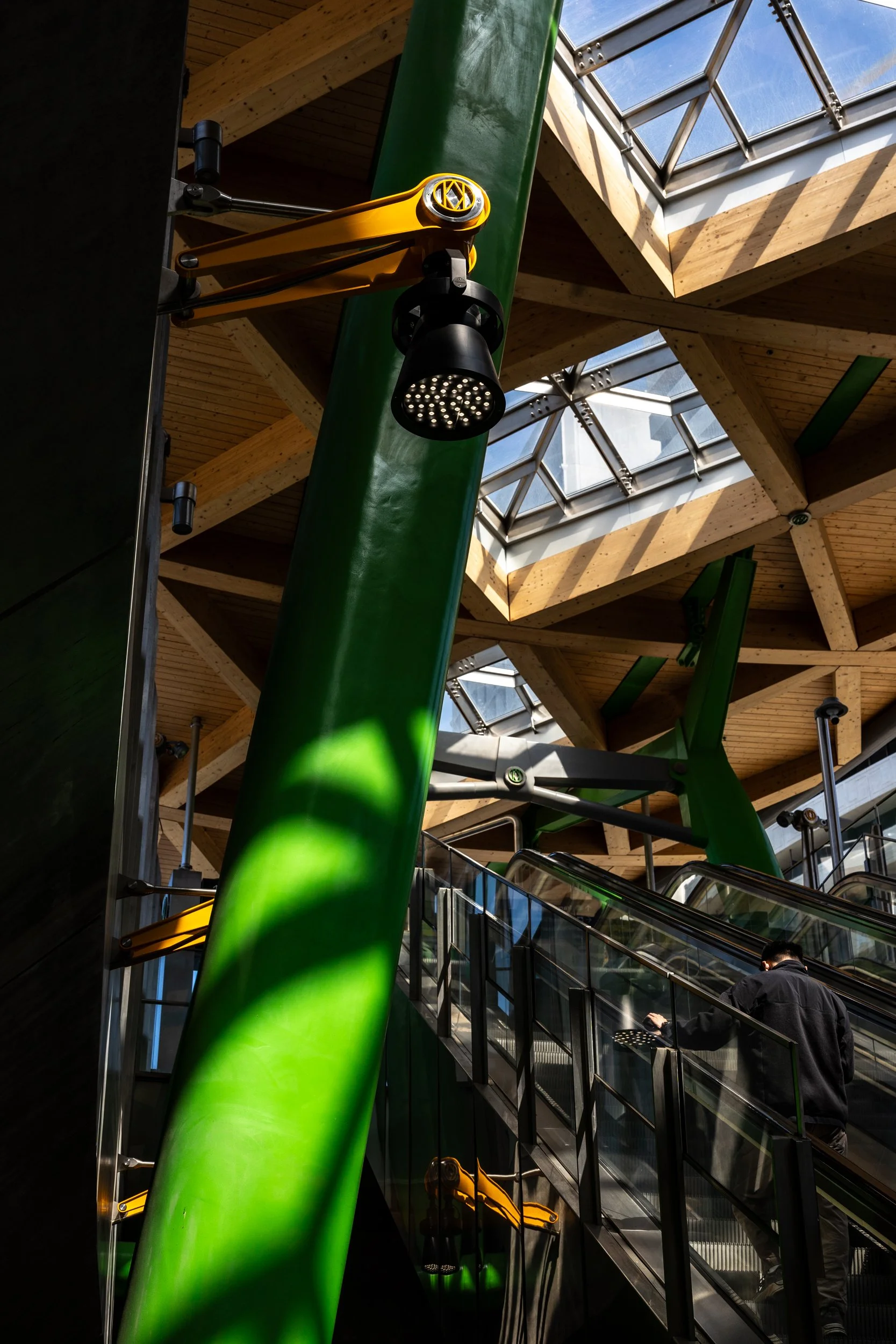
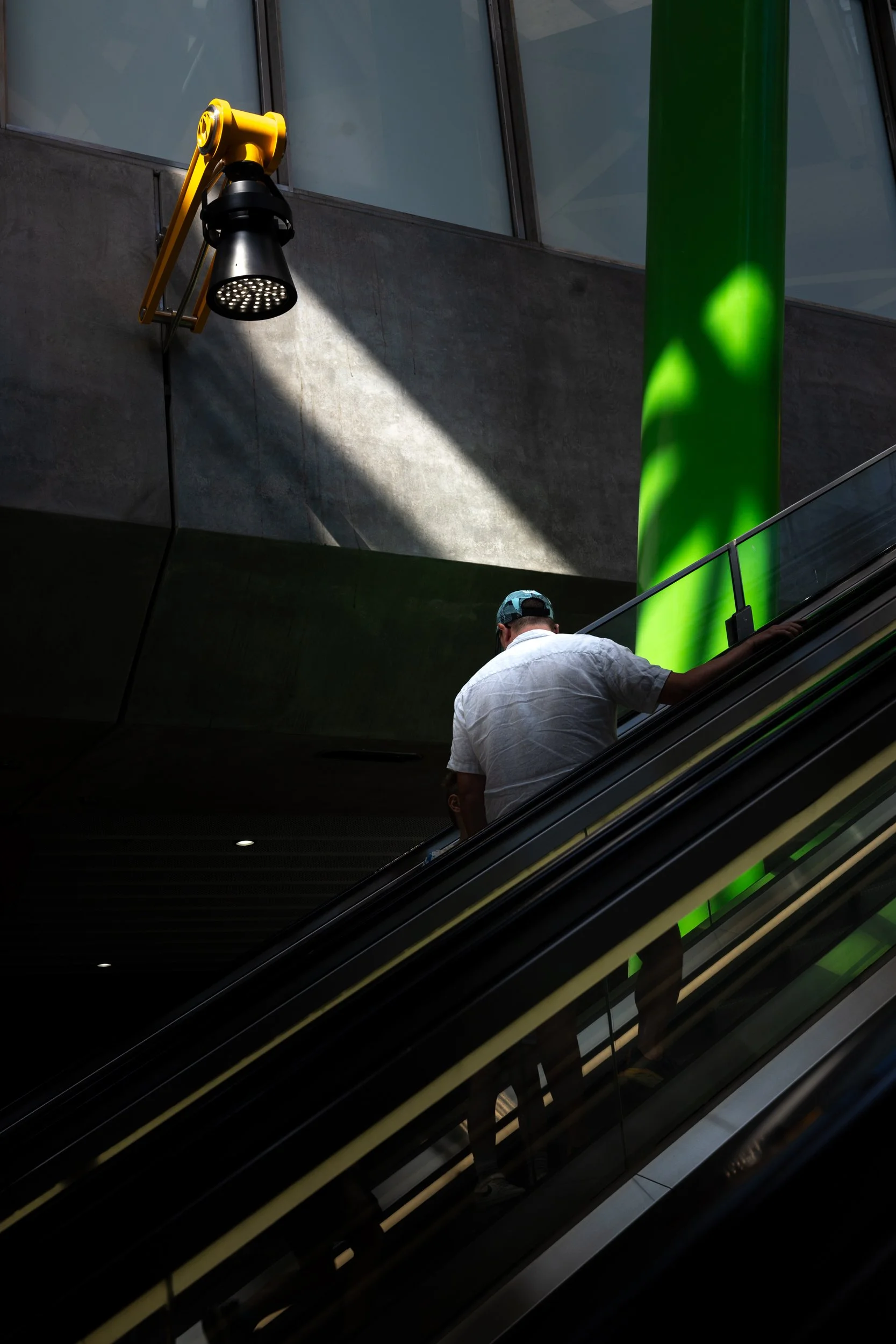
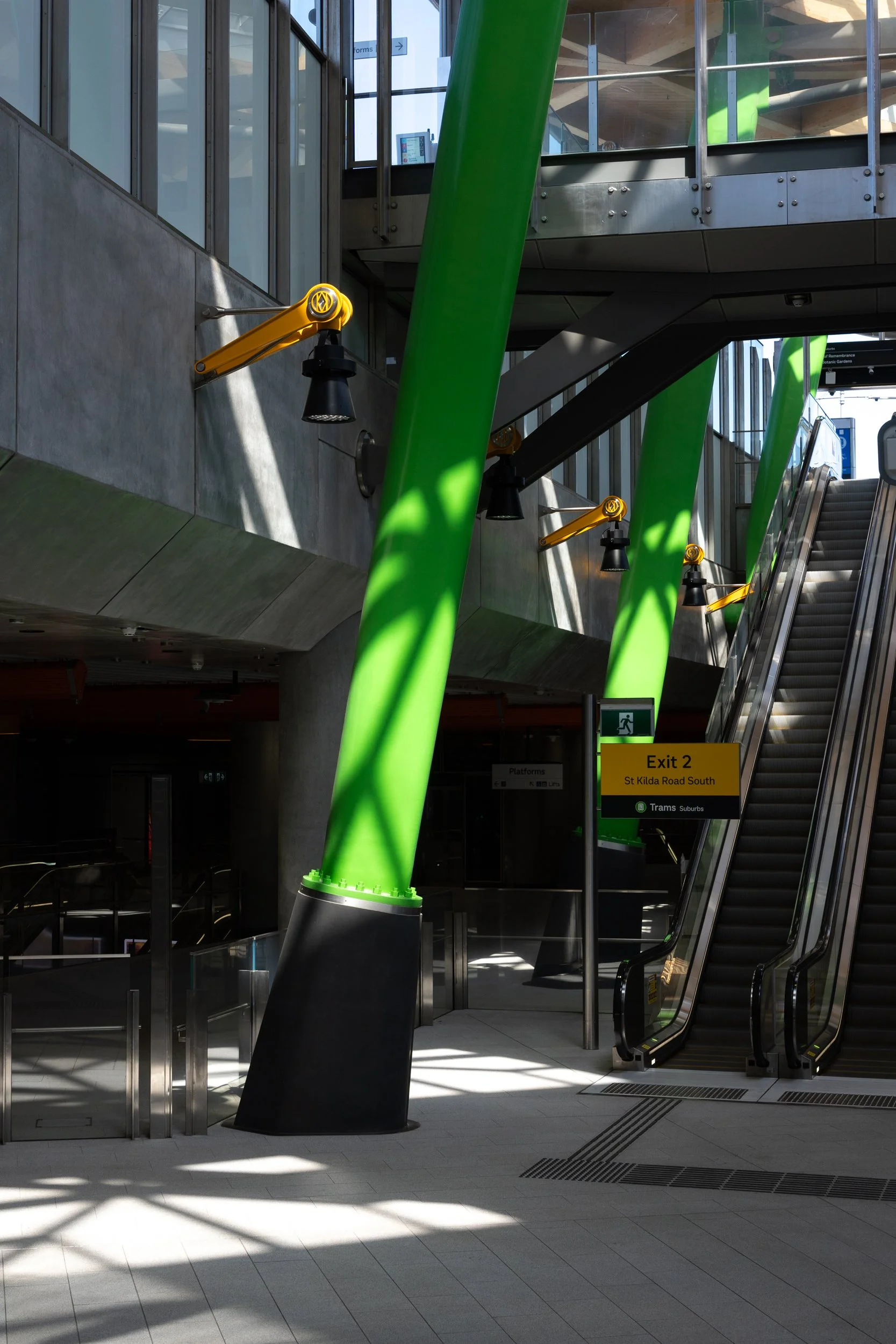
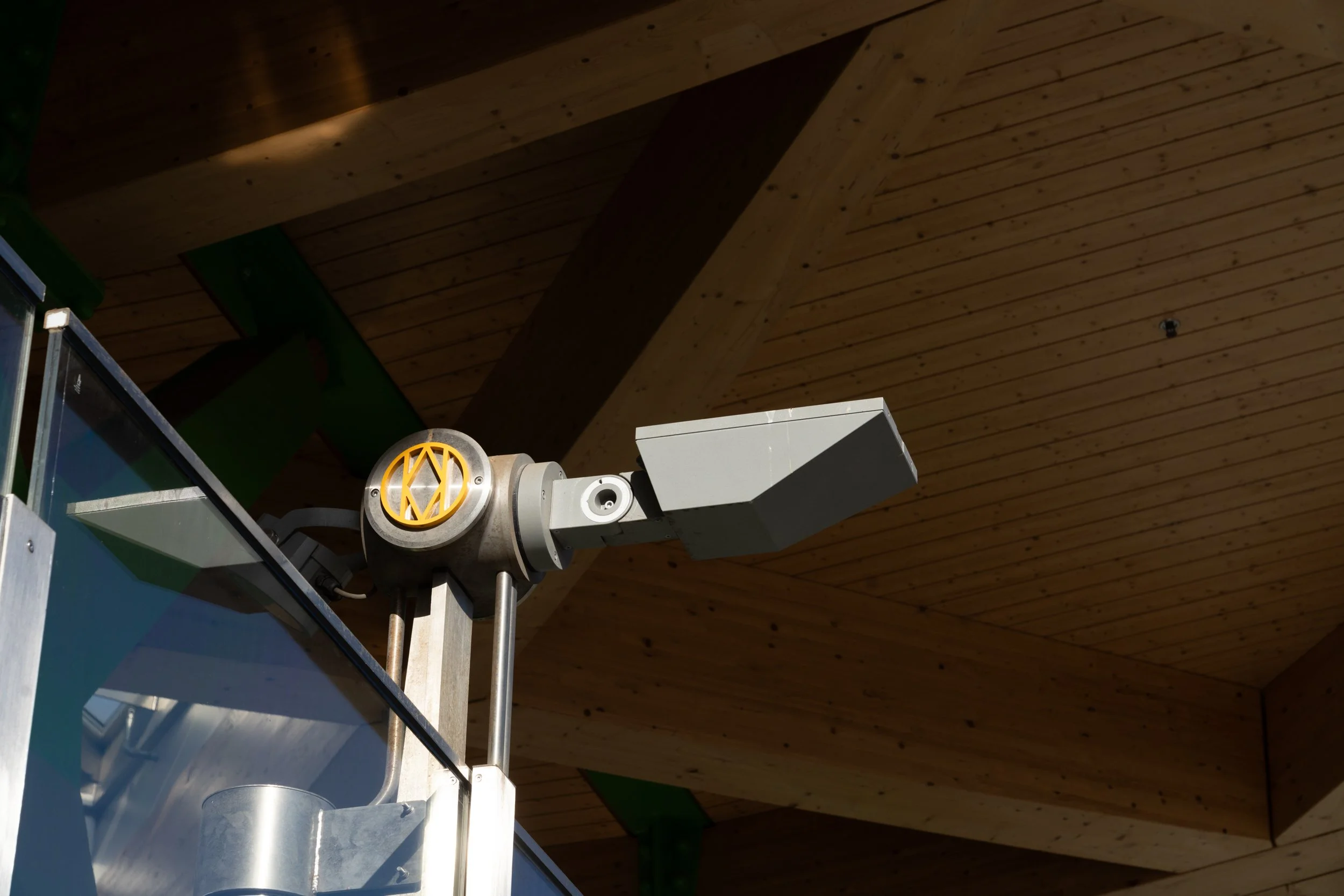
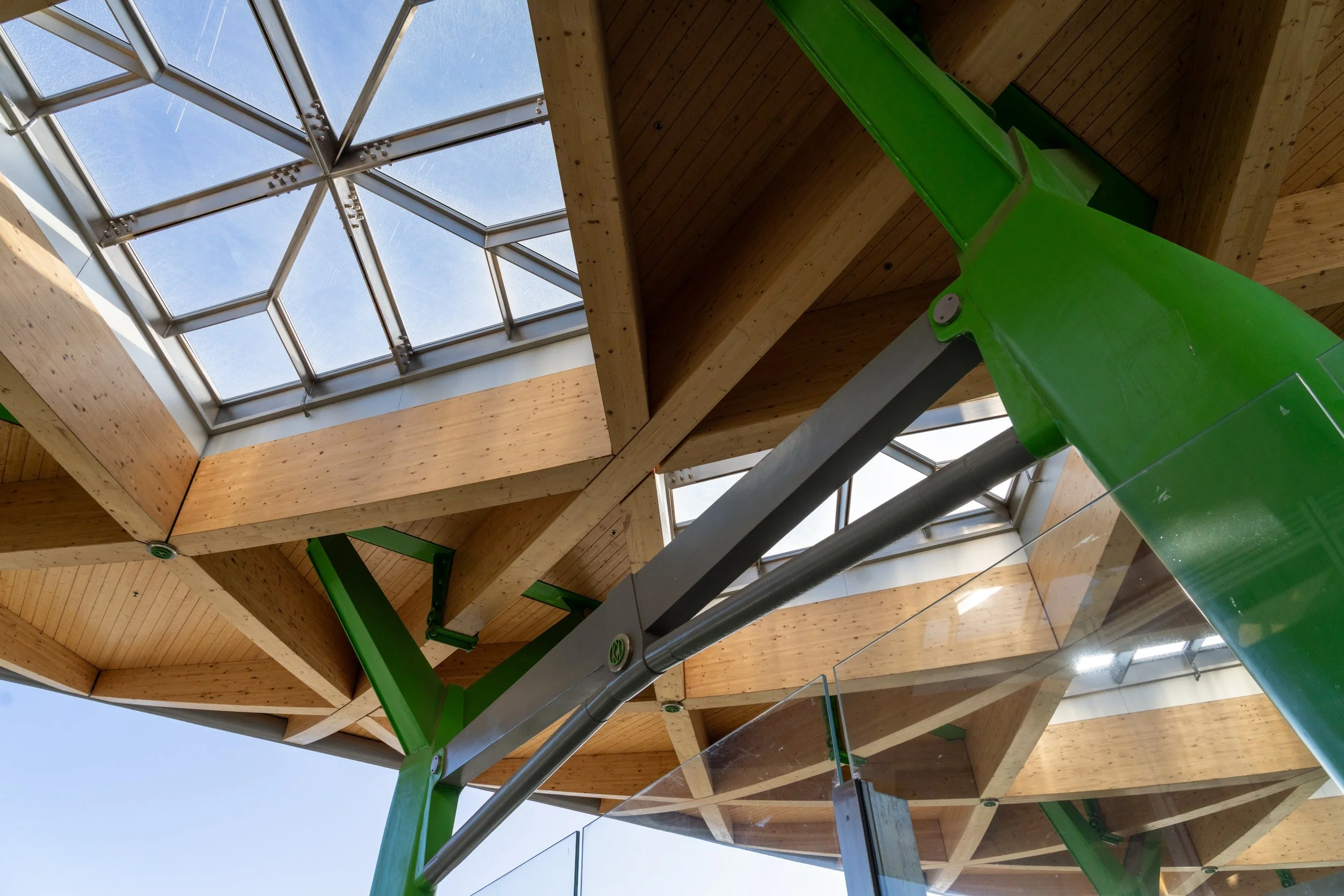
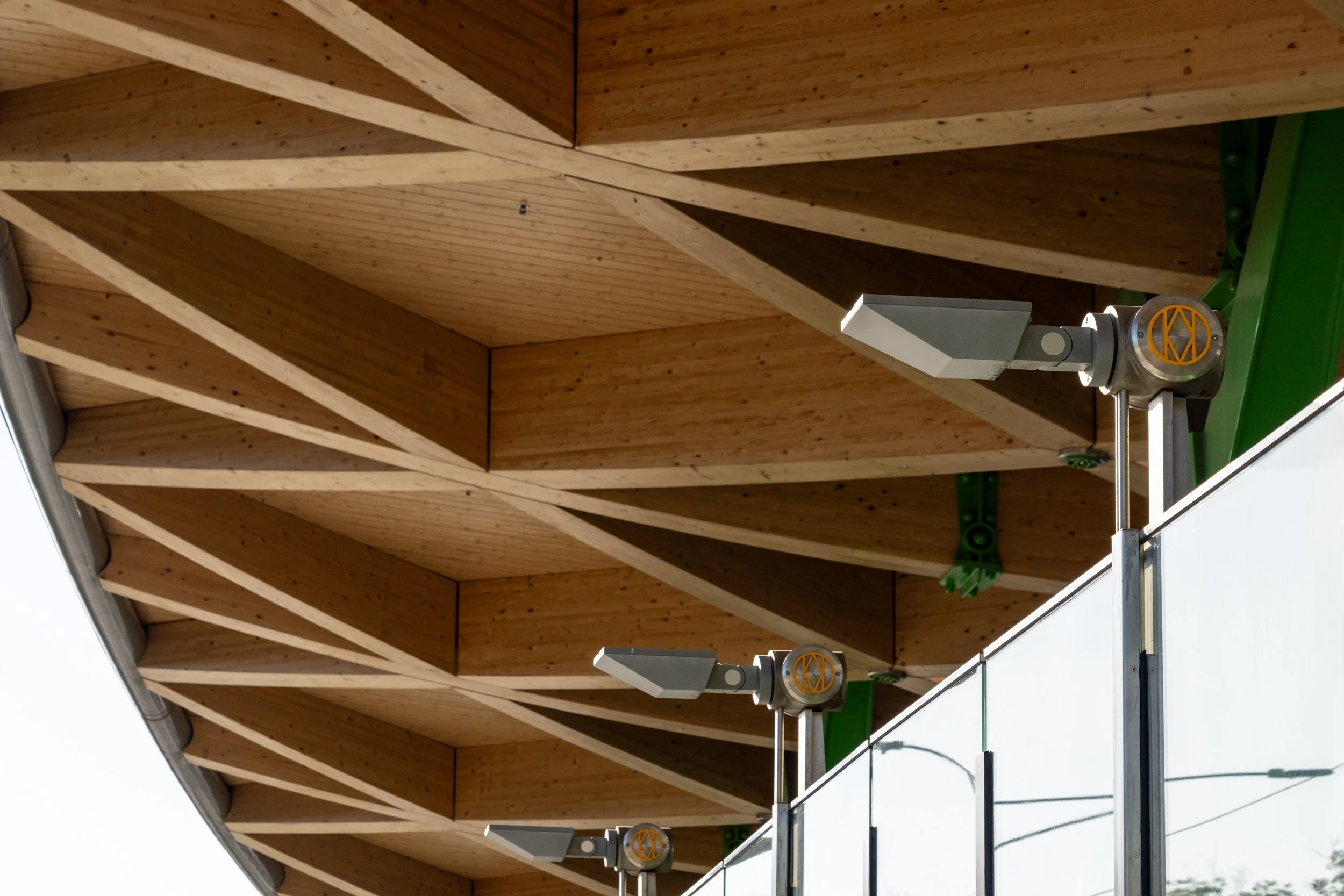
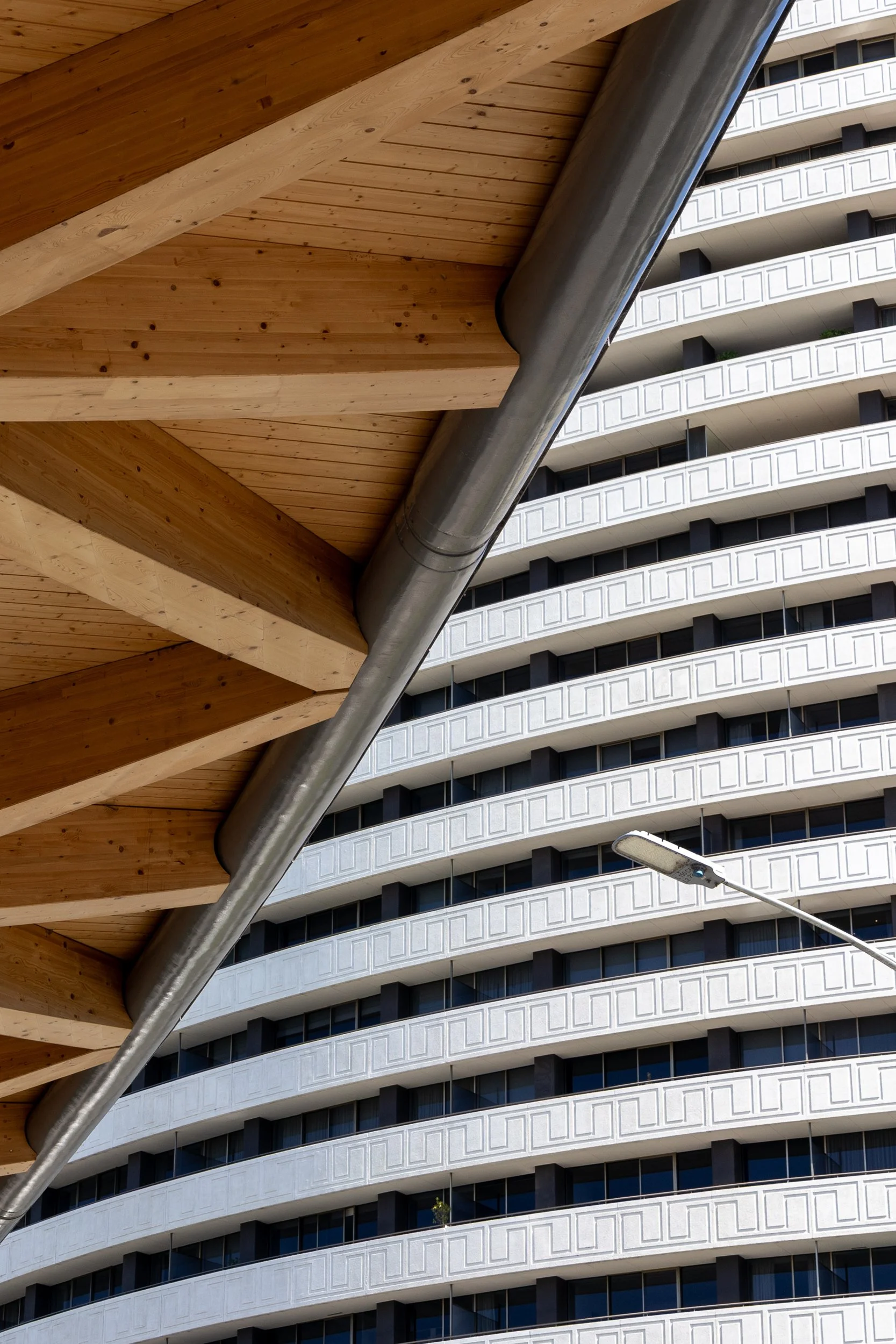
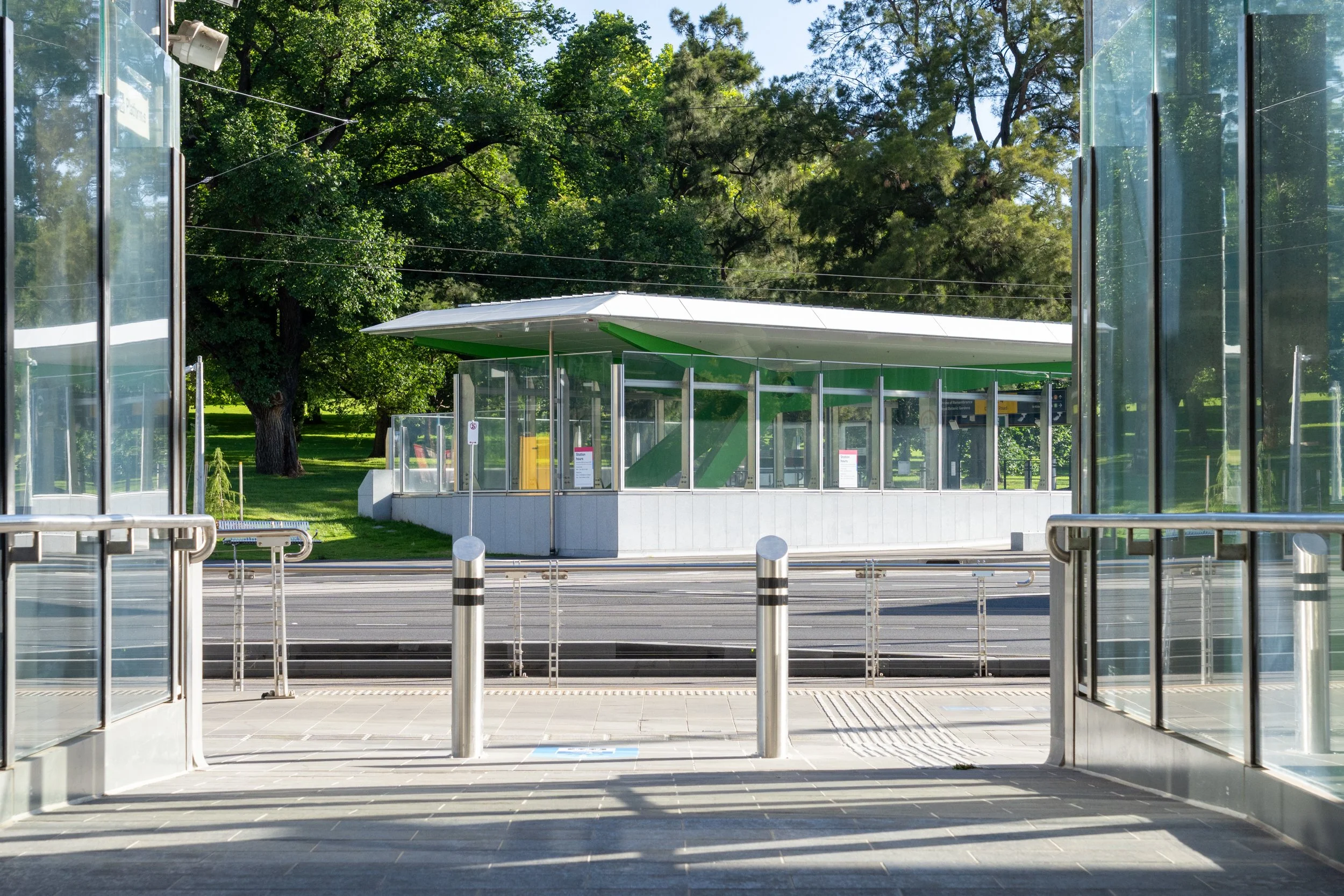
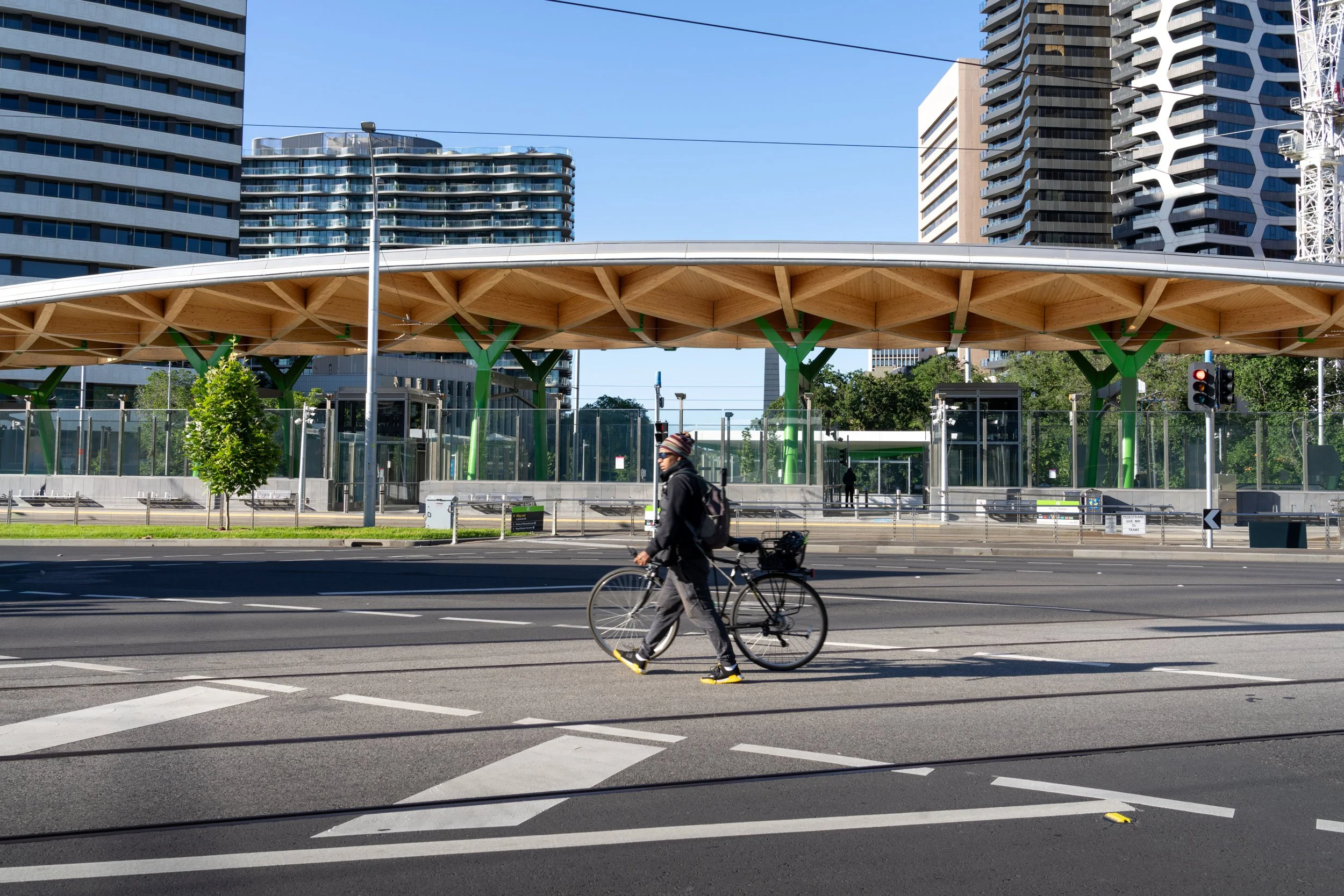
The first view at Anzac Station is a prominent curved, wooden canopy supported by bright green supports. The ground level of the station serves as a tram junction, with access to the station below. The exciting feature for me as a photographer is the sectioned skylights in the canopy, allowing for dramatic patterns of light and shade in the concourse below, Similar in a way to the effect at the Tokyo International Conference Centre, this will be a wonderful opportunity to photograph at different times of the day, watching the way the light picks up different elements in the architecture, and people moving through the space.
There is an underground concourse to both sides of the street, with one leading up to the Shrine of Remembrance. This is going to be BUSY on Anzac Day.
TOWN HALL STATION
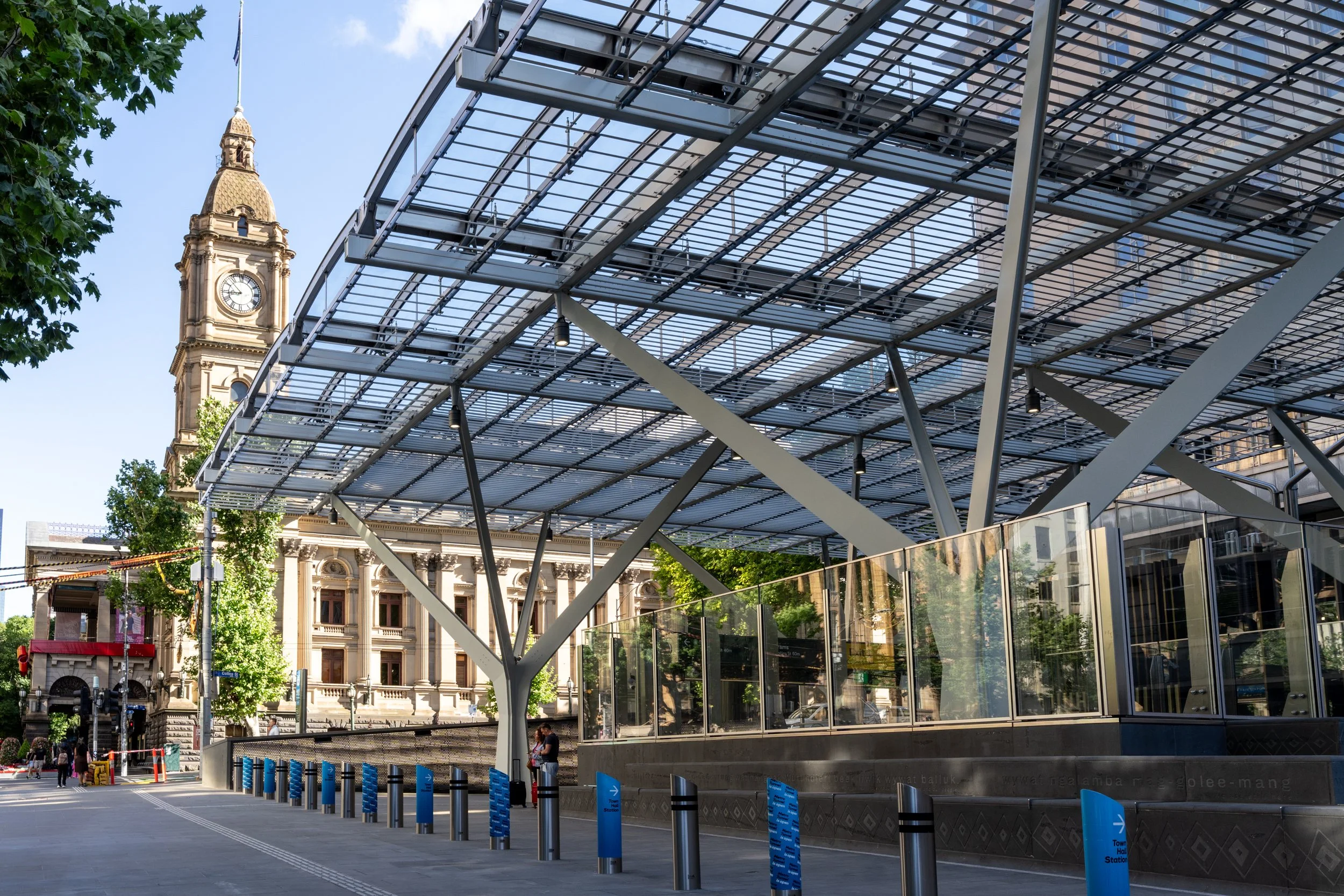
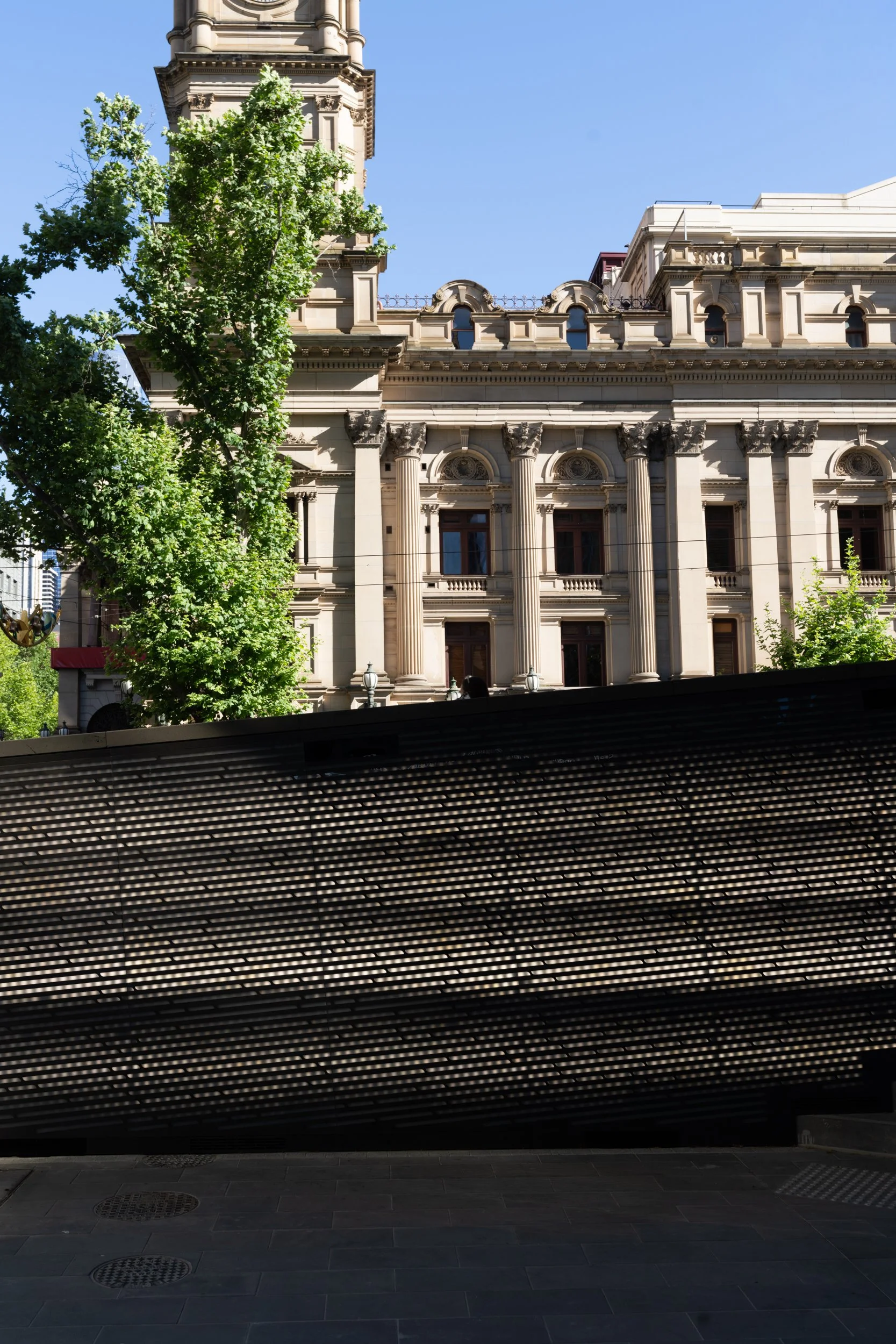
At Town Hall station, you are greeted by the petite new town square, which to be honest, isn’t super interesting yet photographically. This may change depending on the events or installations that may inhabit the space. The only entrance open at present is opposite Town Hall, however there will be two other main entrances opening in time.
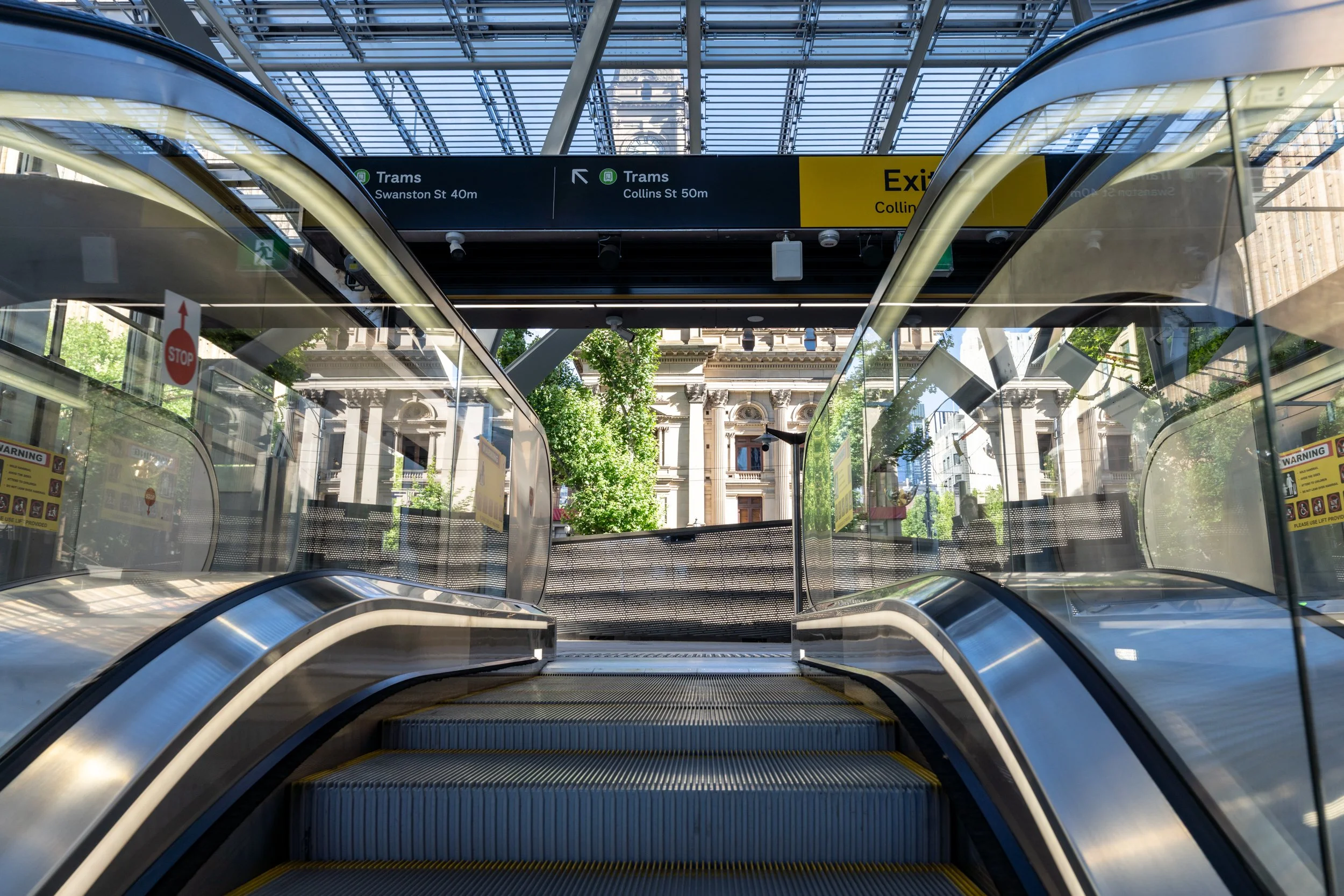
A canopy covers the entrance, creating wonderful strips of light and shade below them during the middle hours of the day. There are bench seats around the exterior of the station entrance underneath these slats, giving great opportunities for people photography. There’s also a digital version of the original waterfall opposite the entrance too. Many of the design elements in this entrance refer back to the traditional owners of the land, welcoming us into the space.
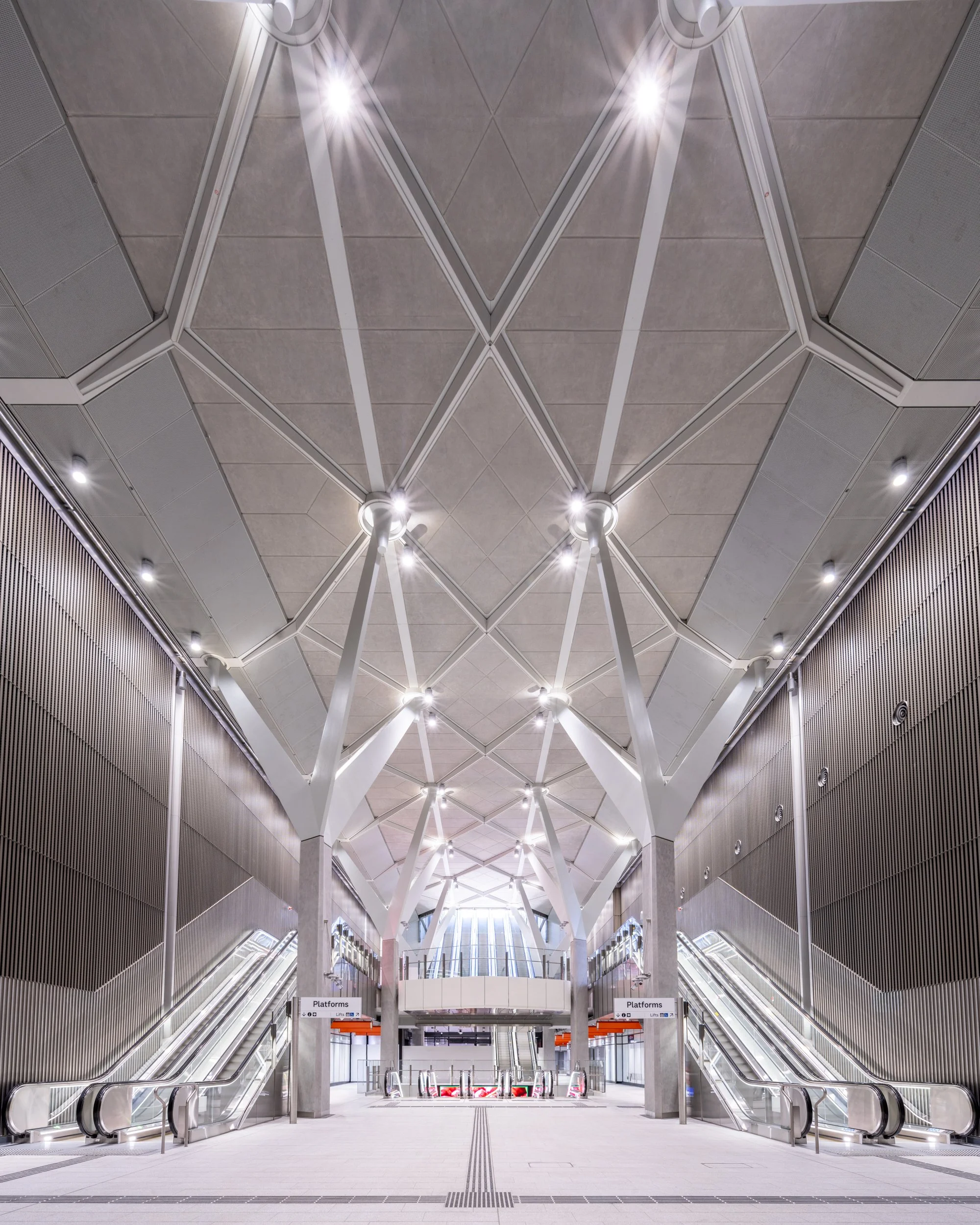
As you descend into the station itself, you’re greeted by vast open space like a cathedral with white tree branch columns through the space. This will connect with the other entrances to the station, and connects down to the platforms.
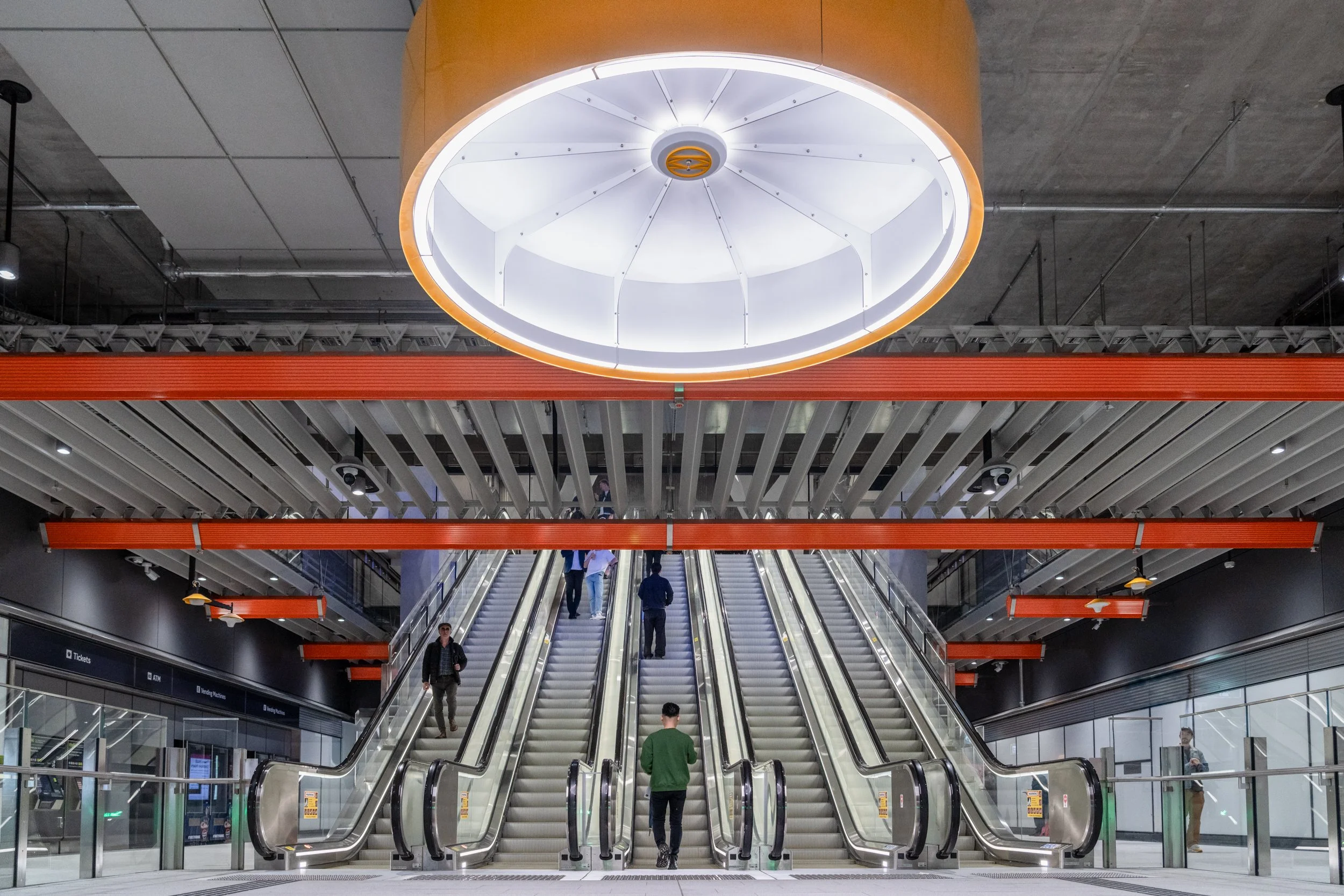
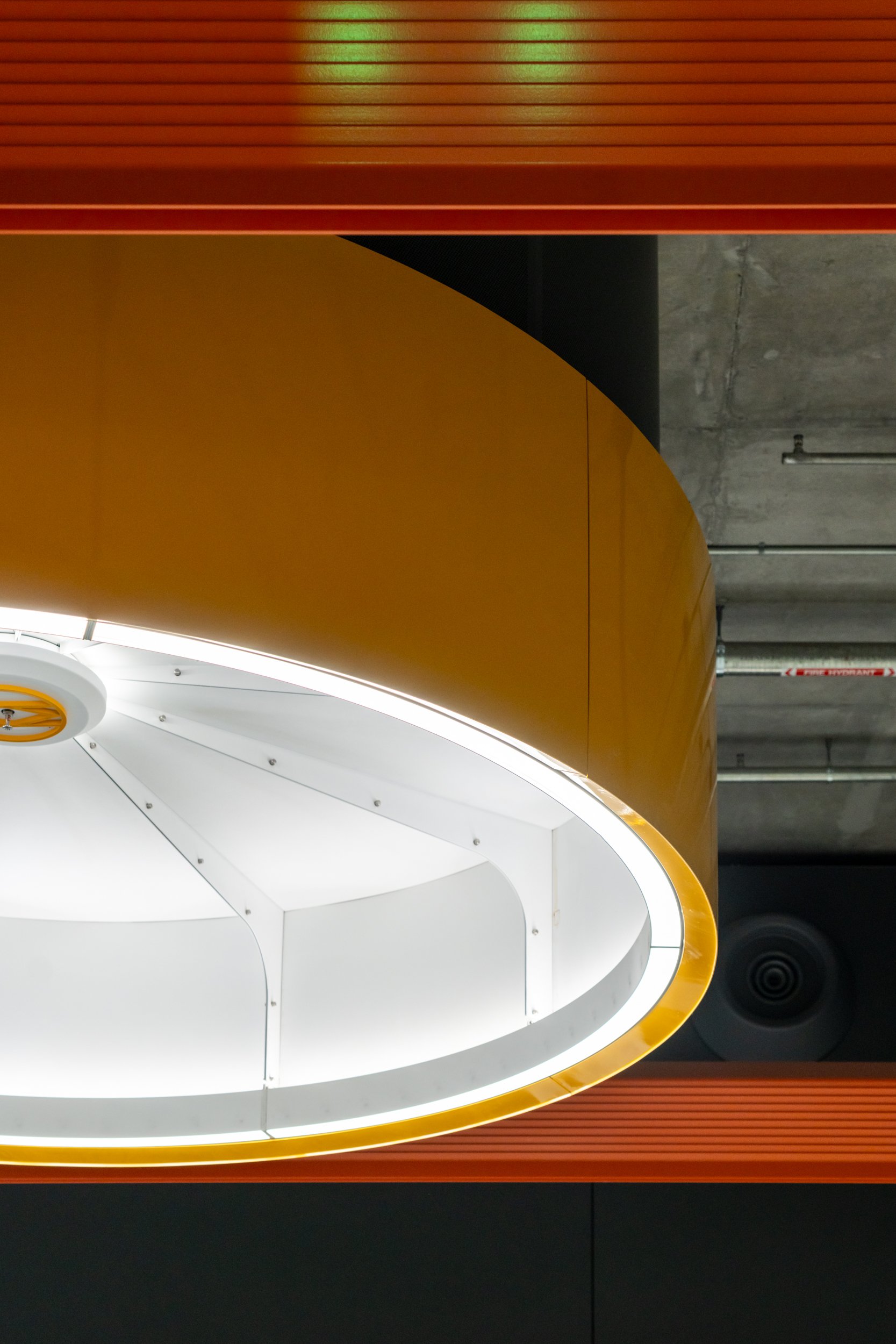
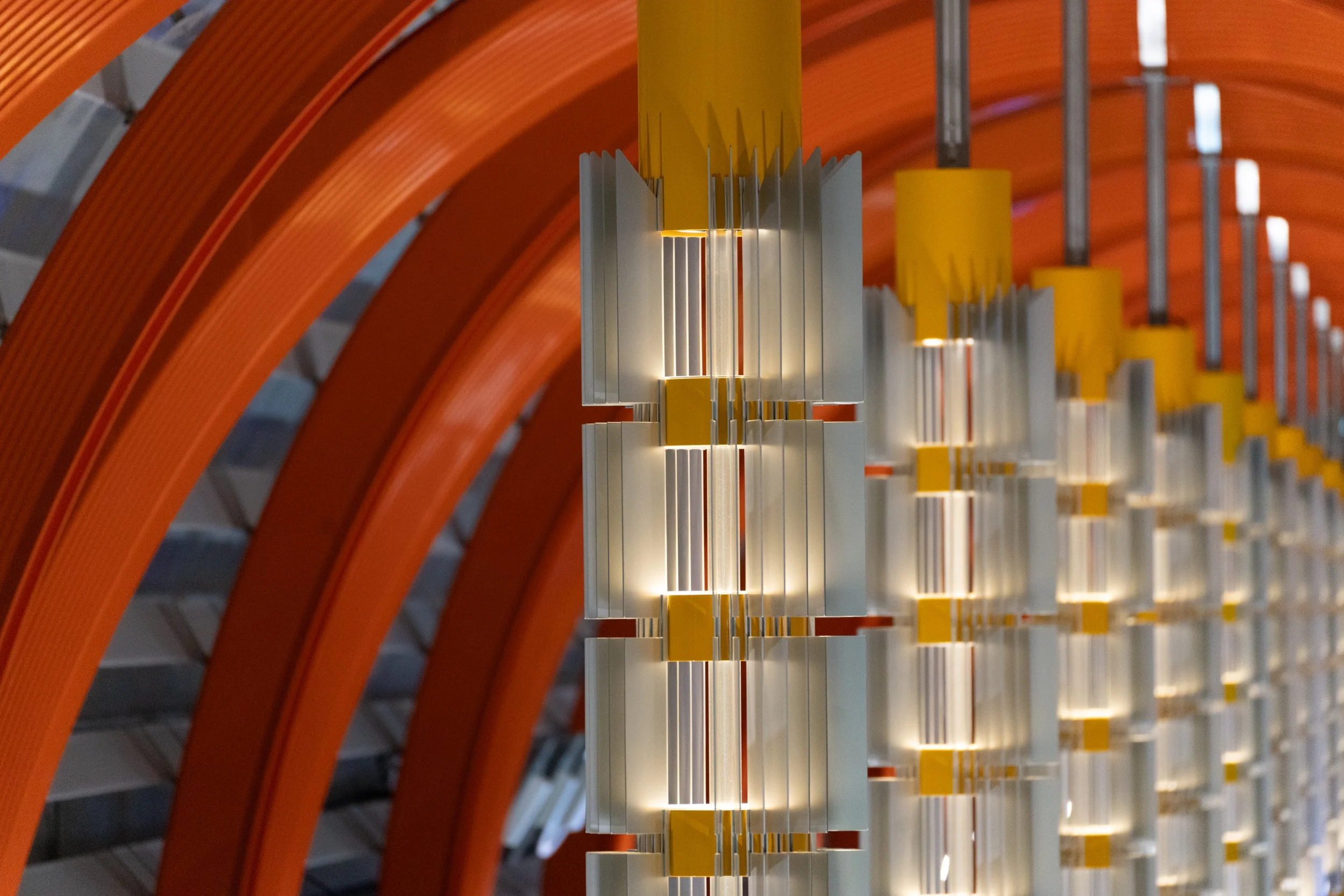
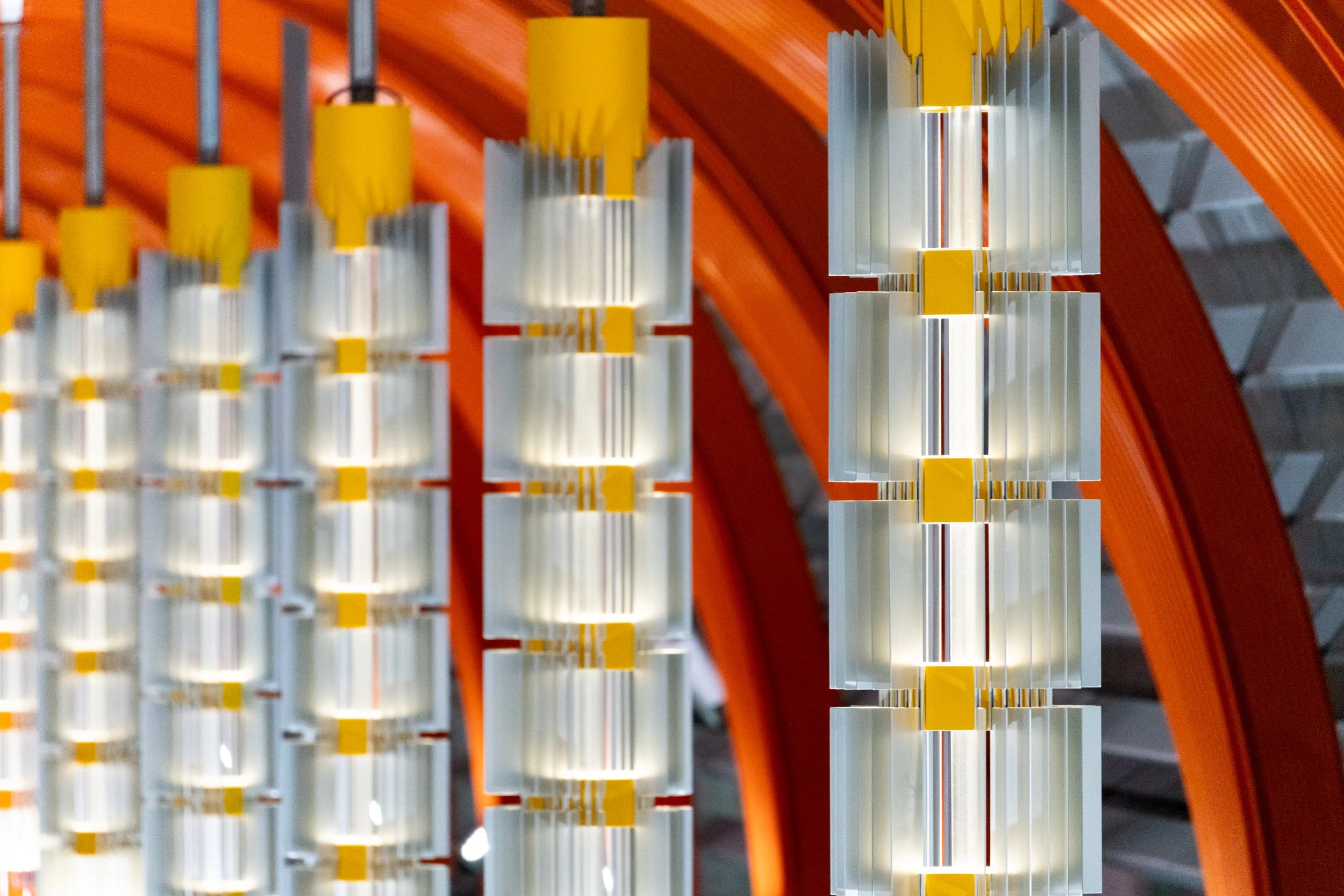
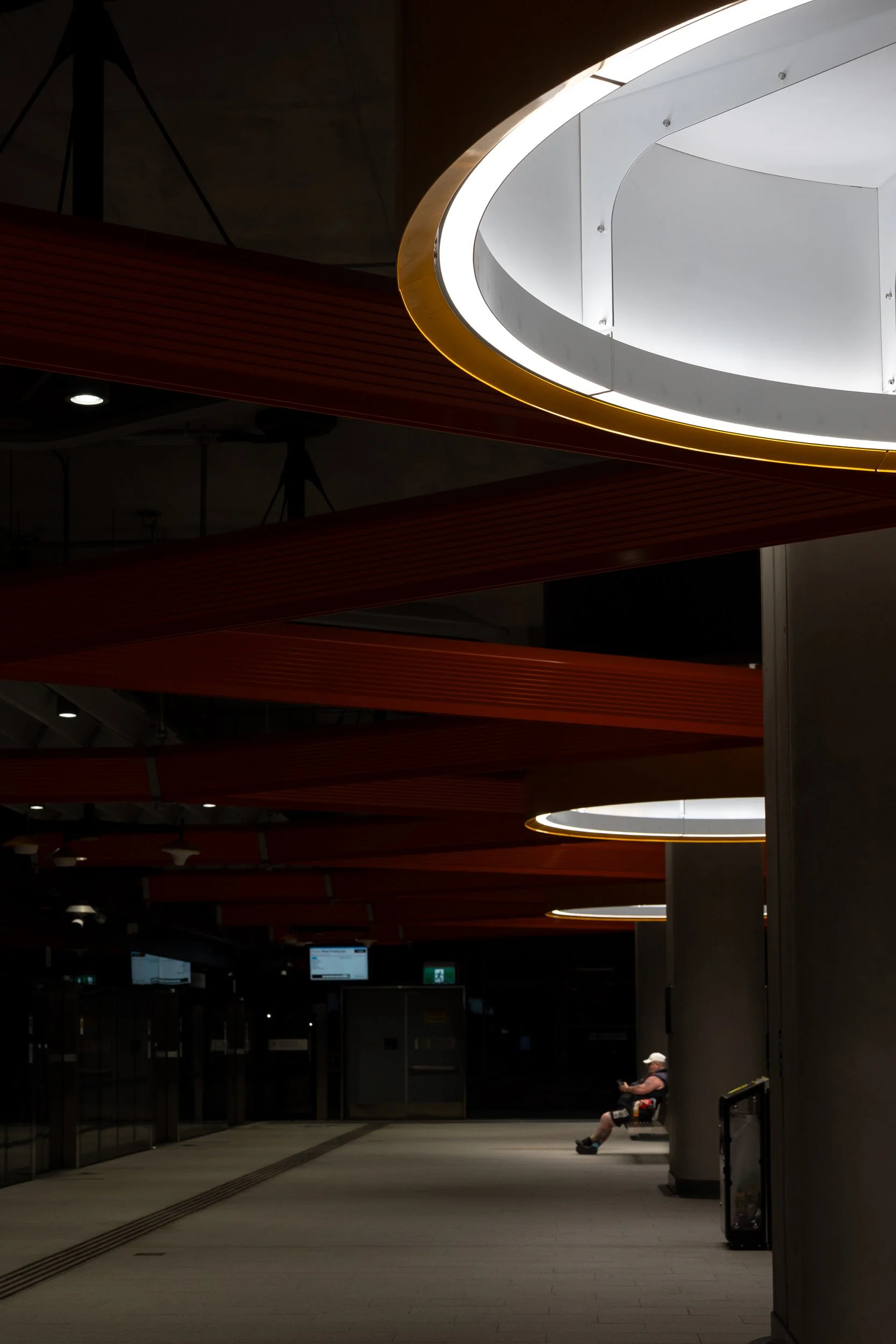
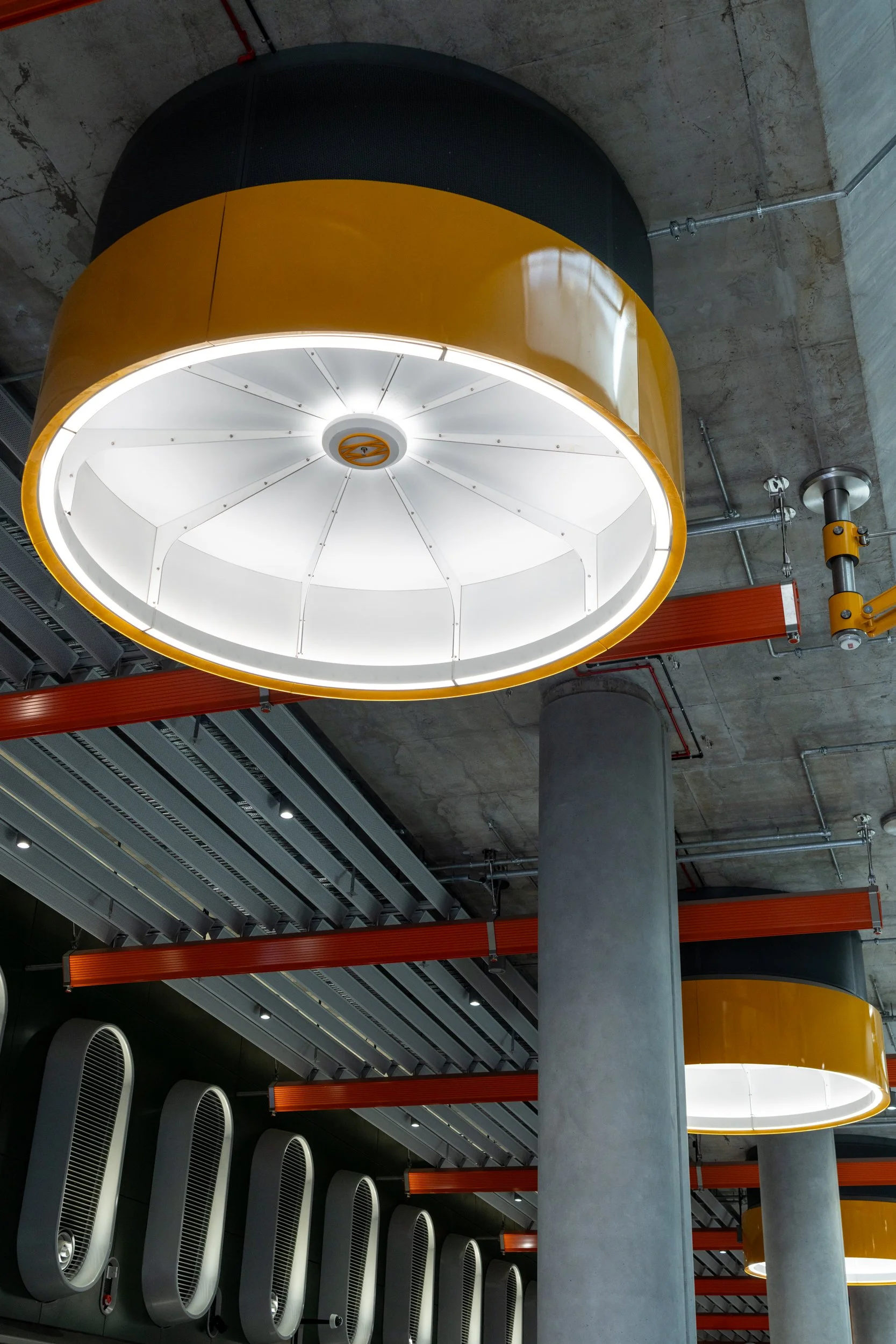
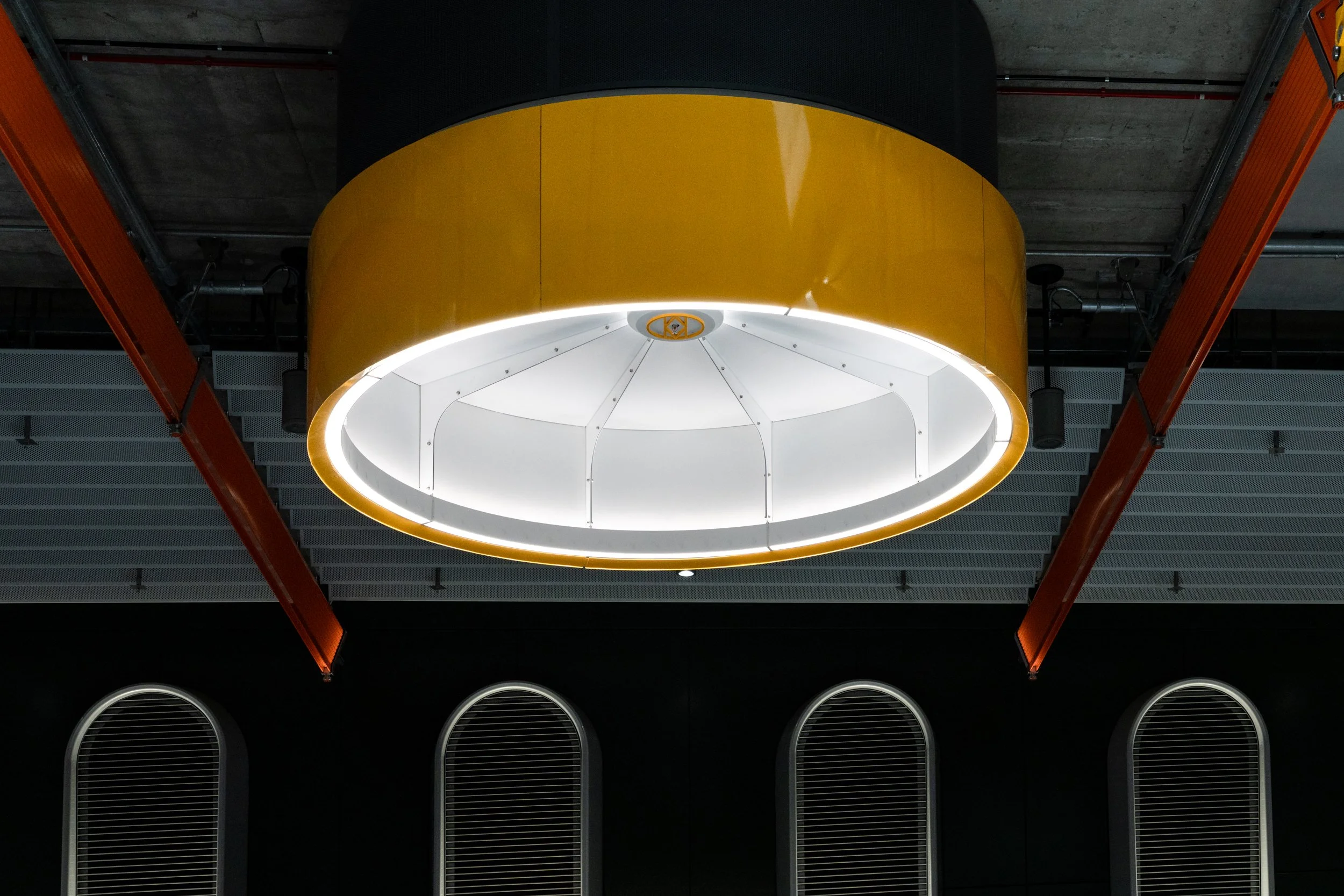
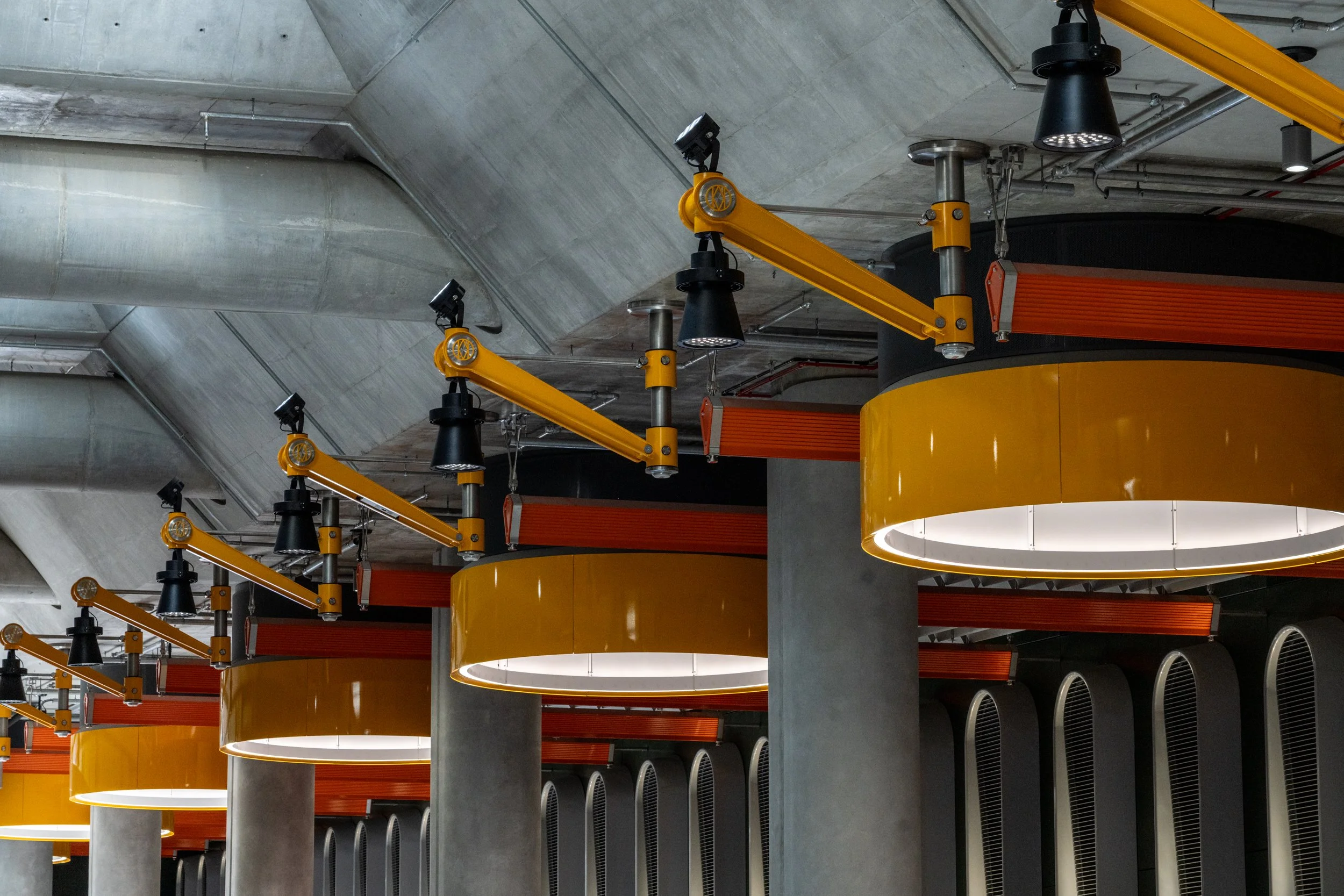
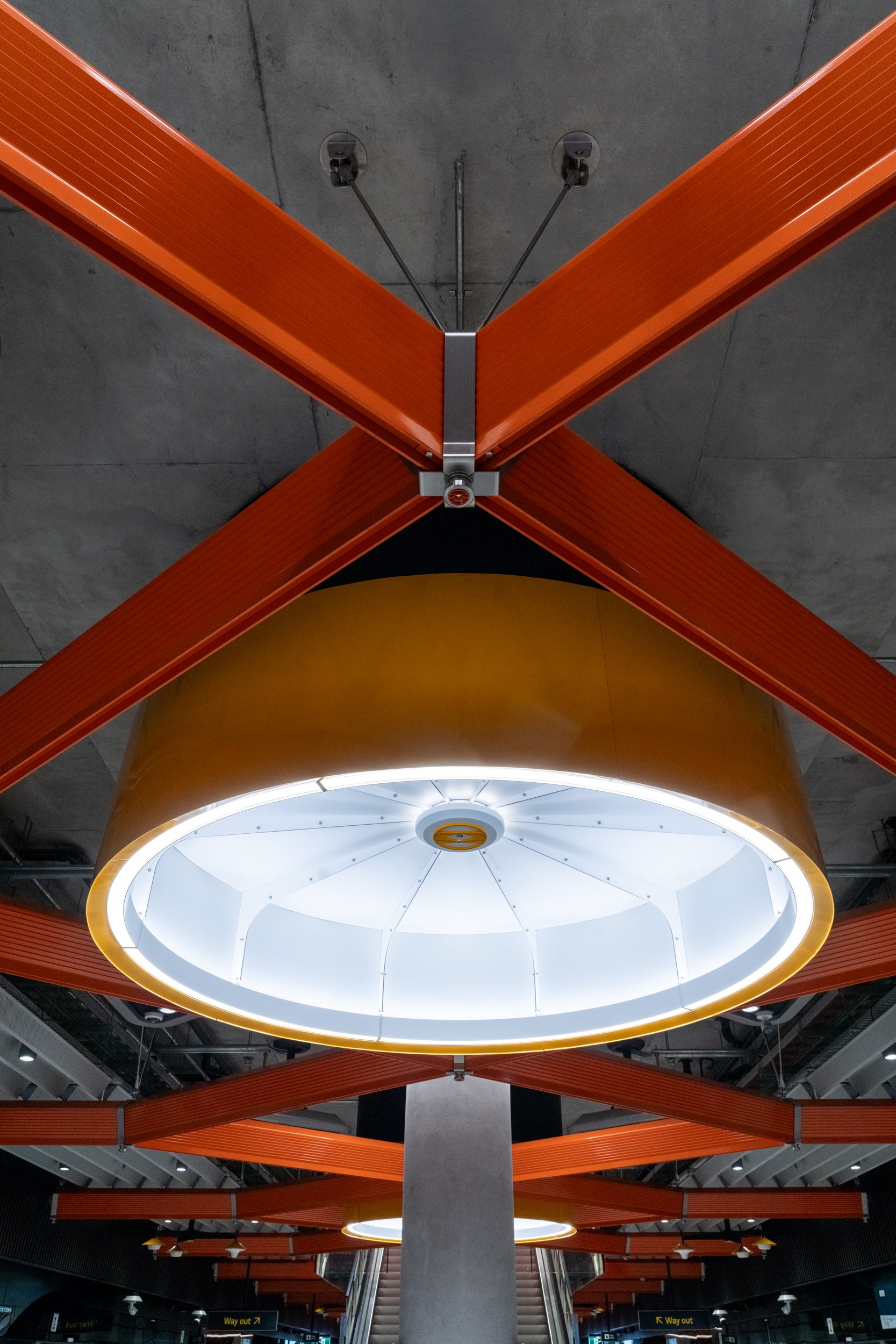
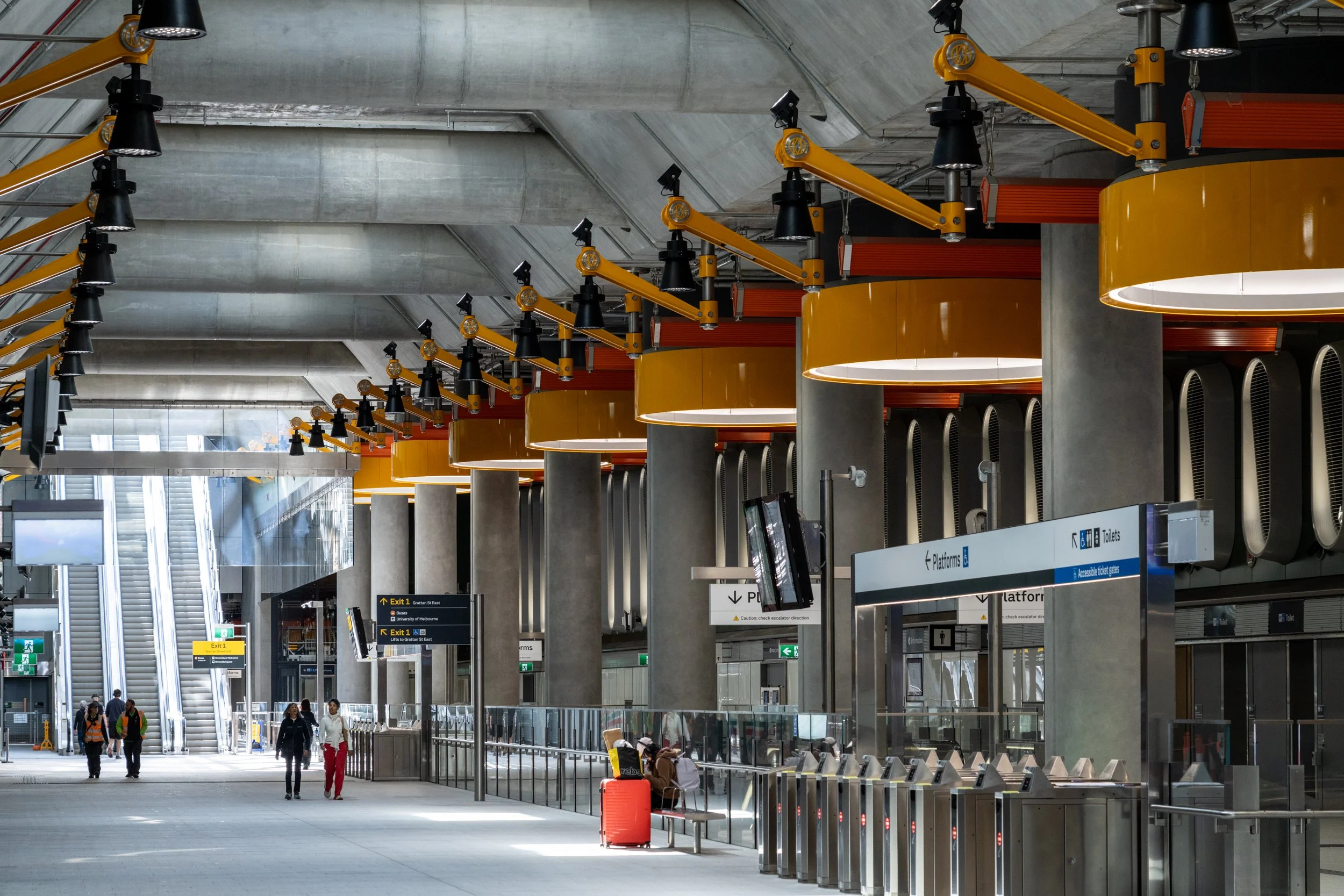
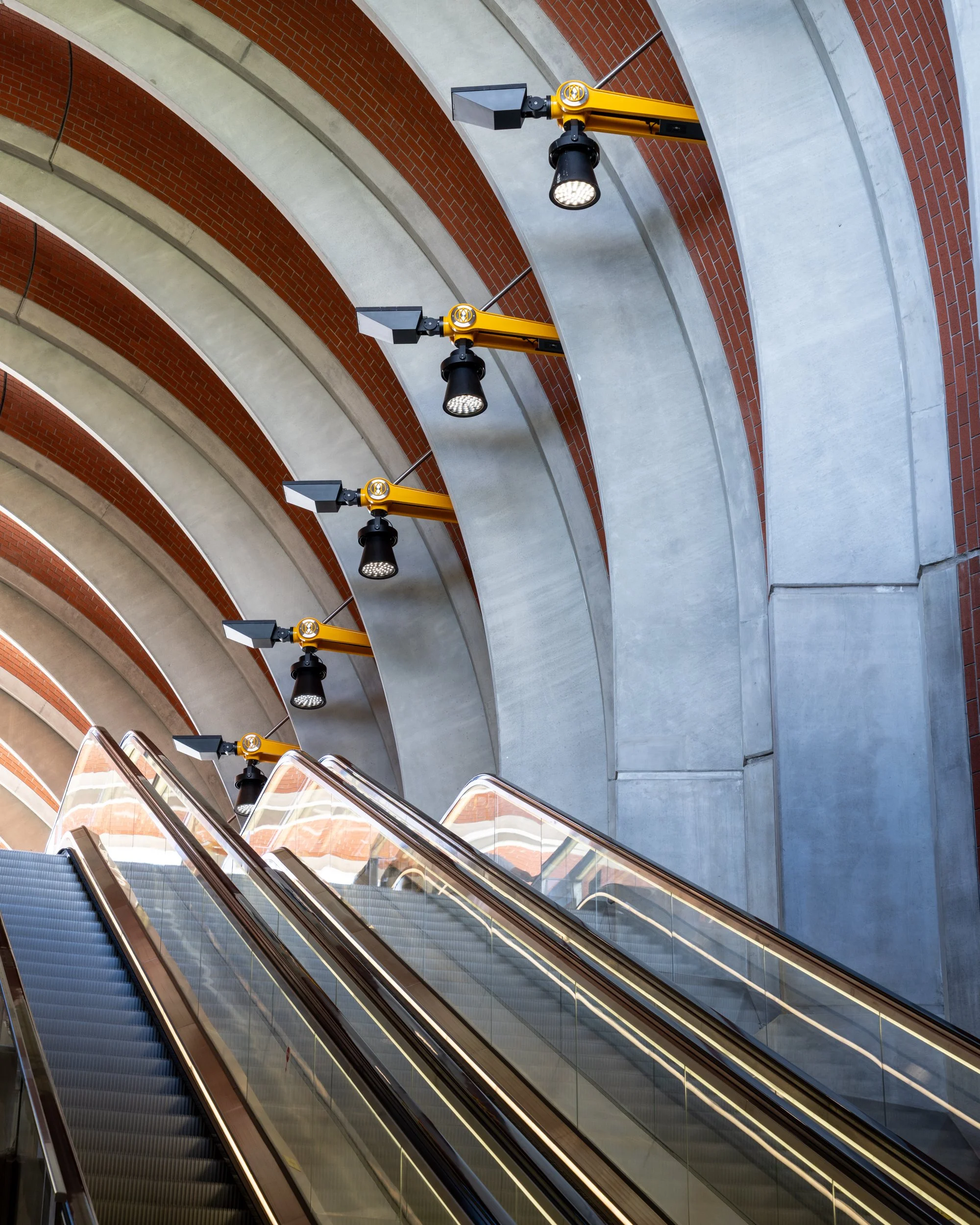
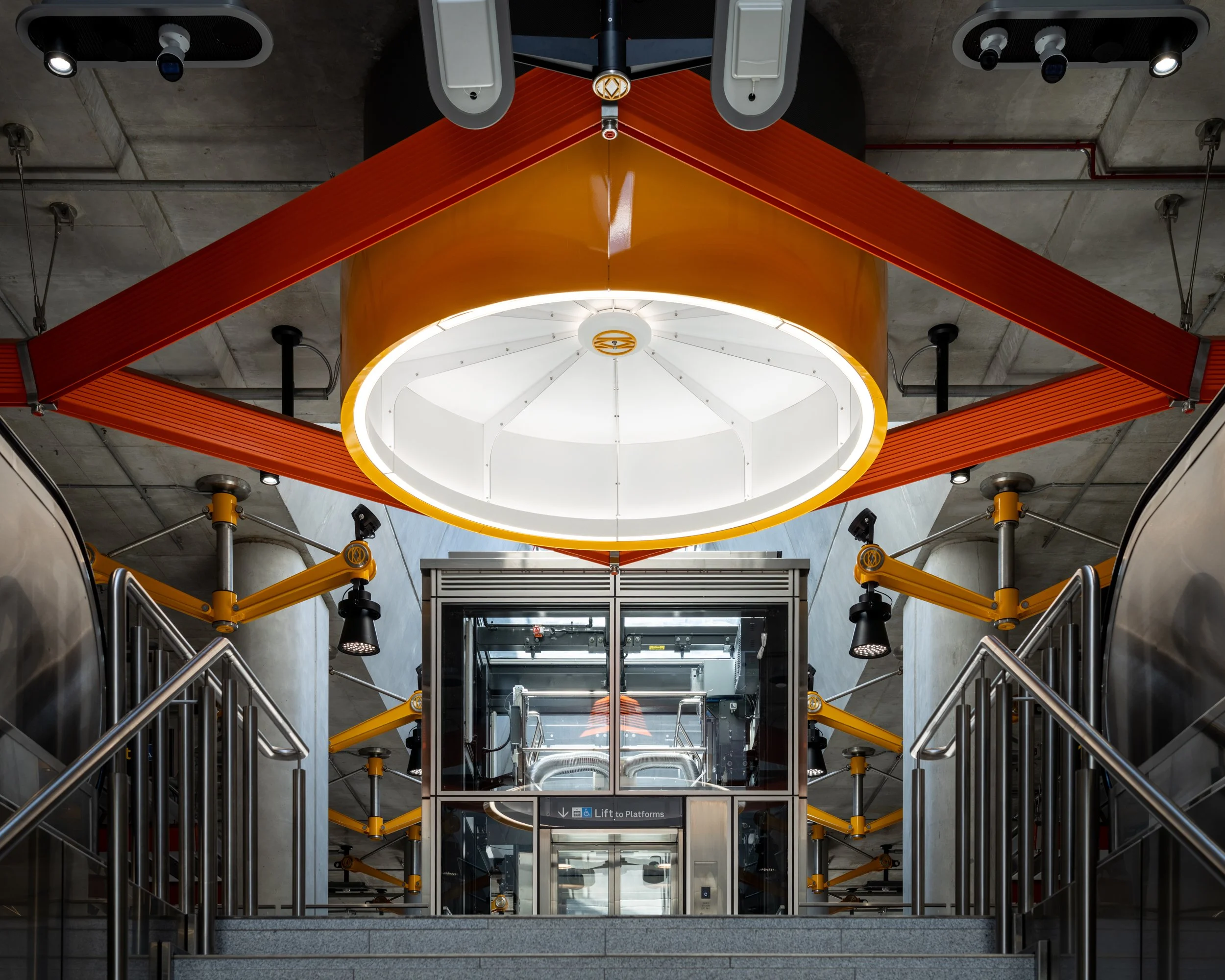
Once you enter the station itself, you are greeted by prominent yellow circular lighting features with bright orange ‘latticework’ beams. These are great to create compositions based on shape and form. The wide multiple escalators can interact with these shapes for great images too.
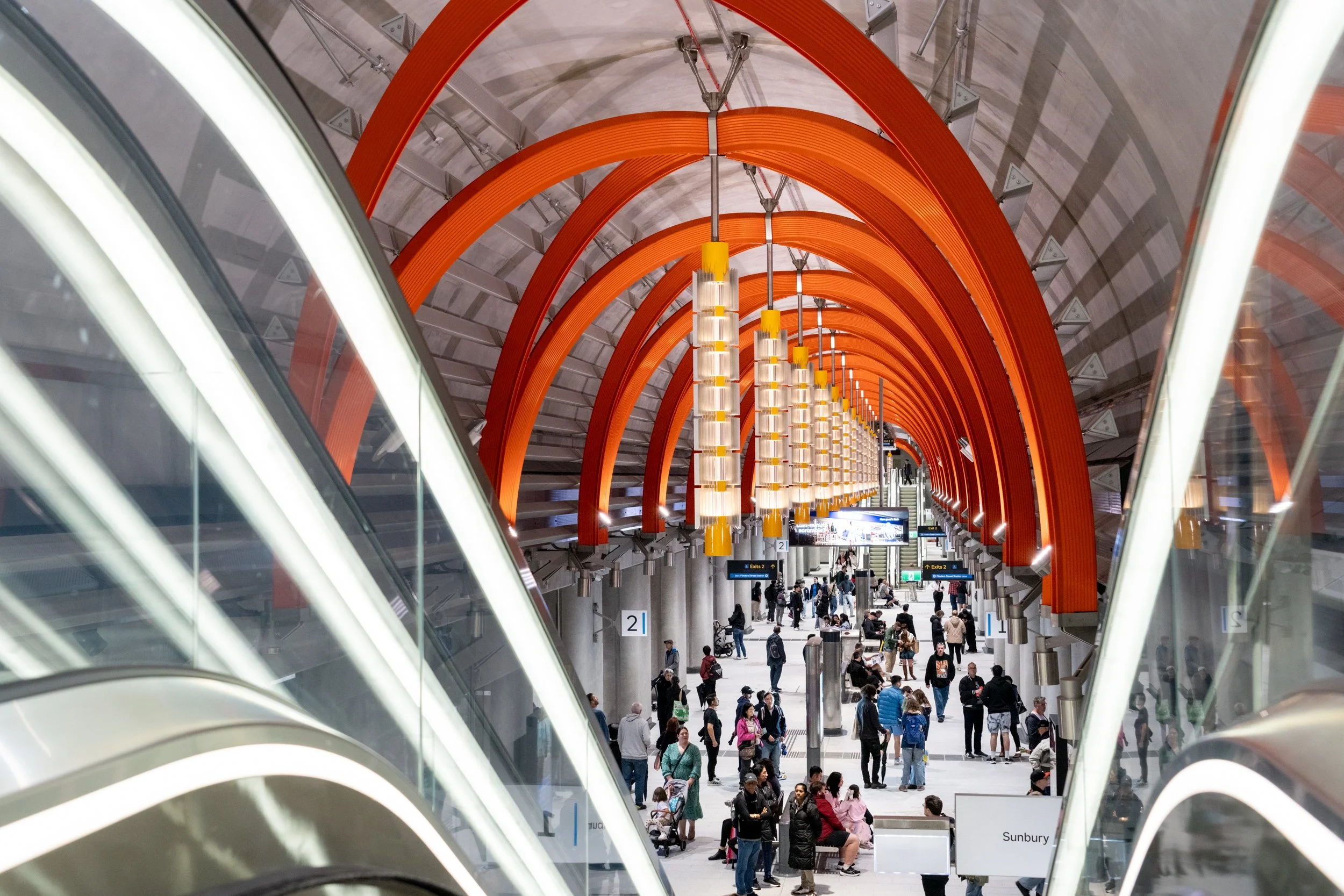
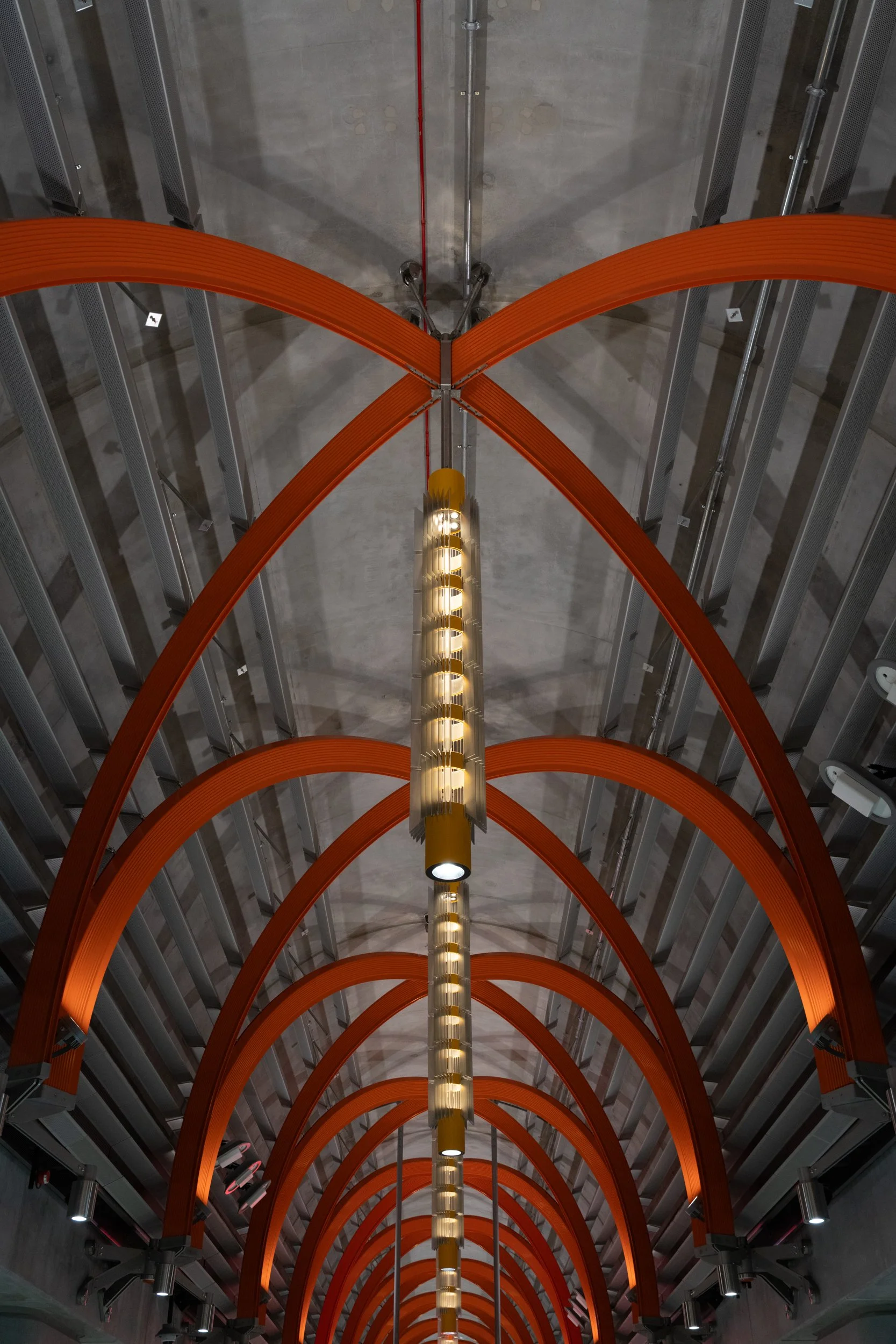
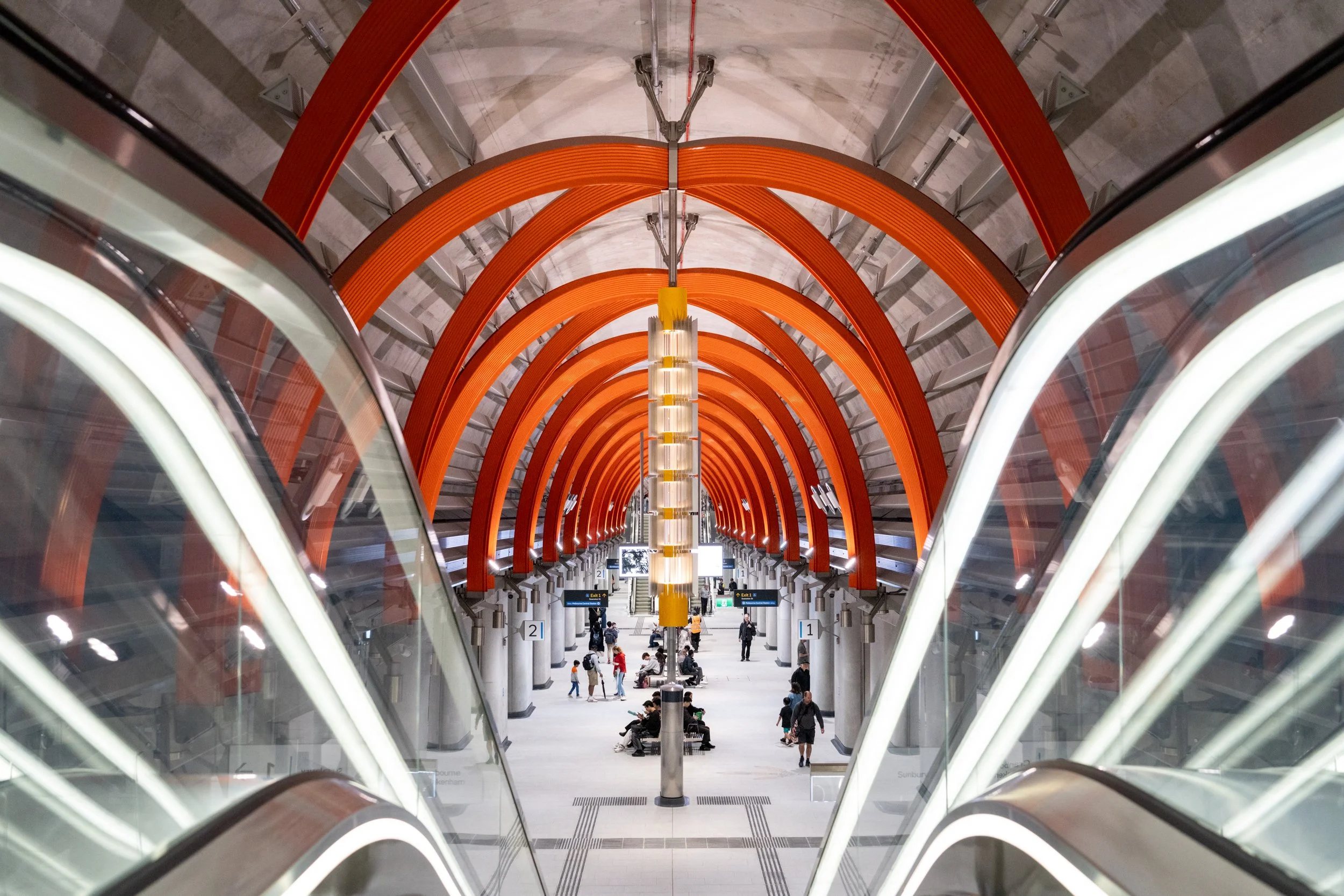
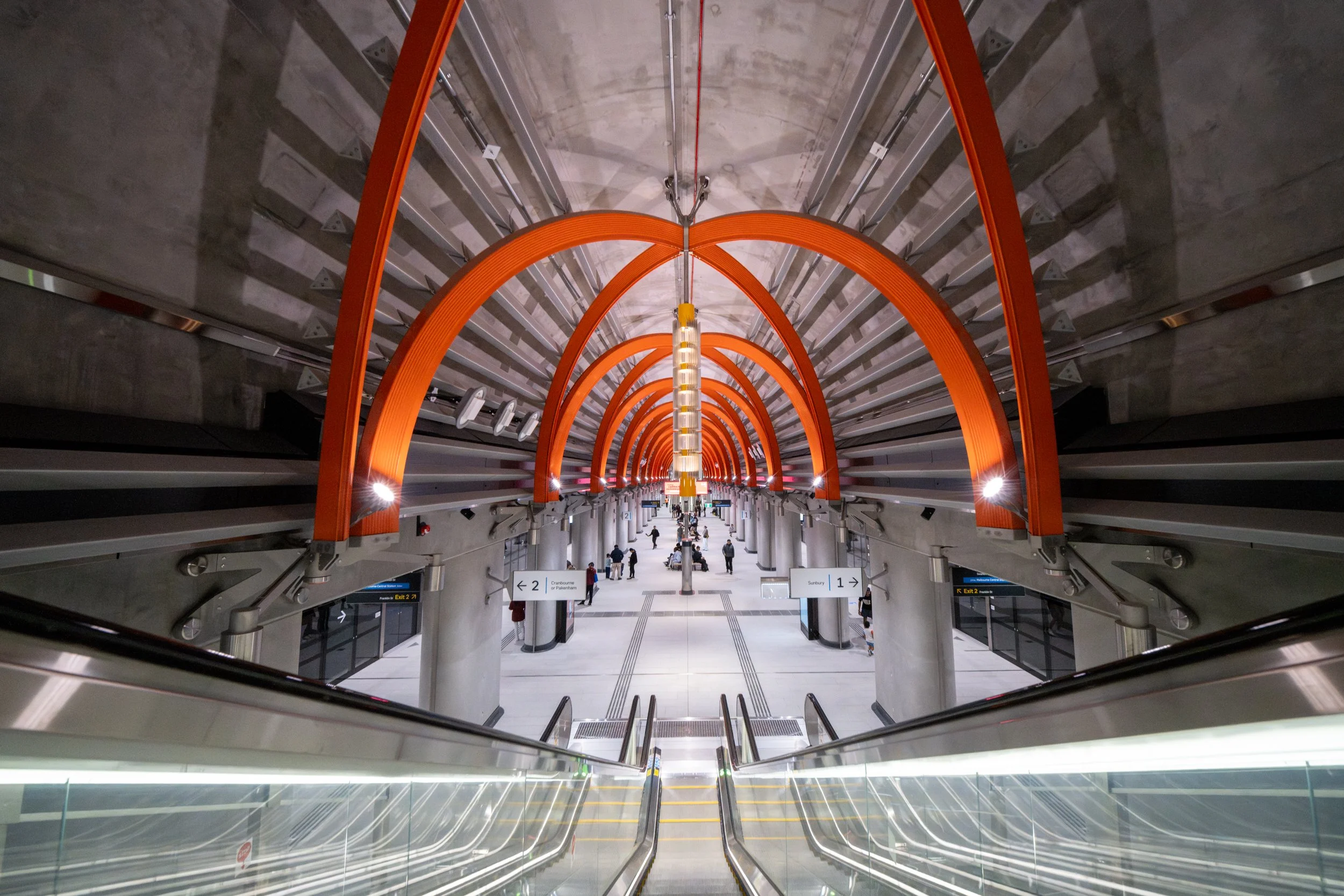
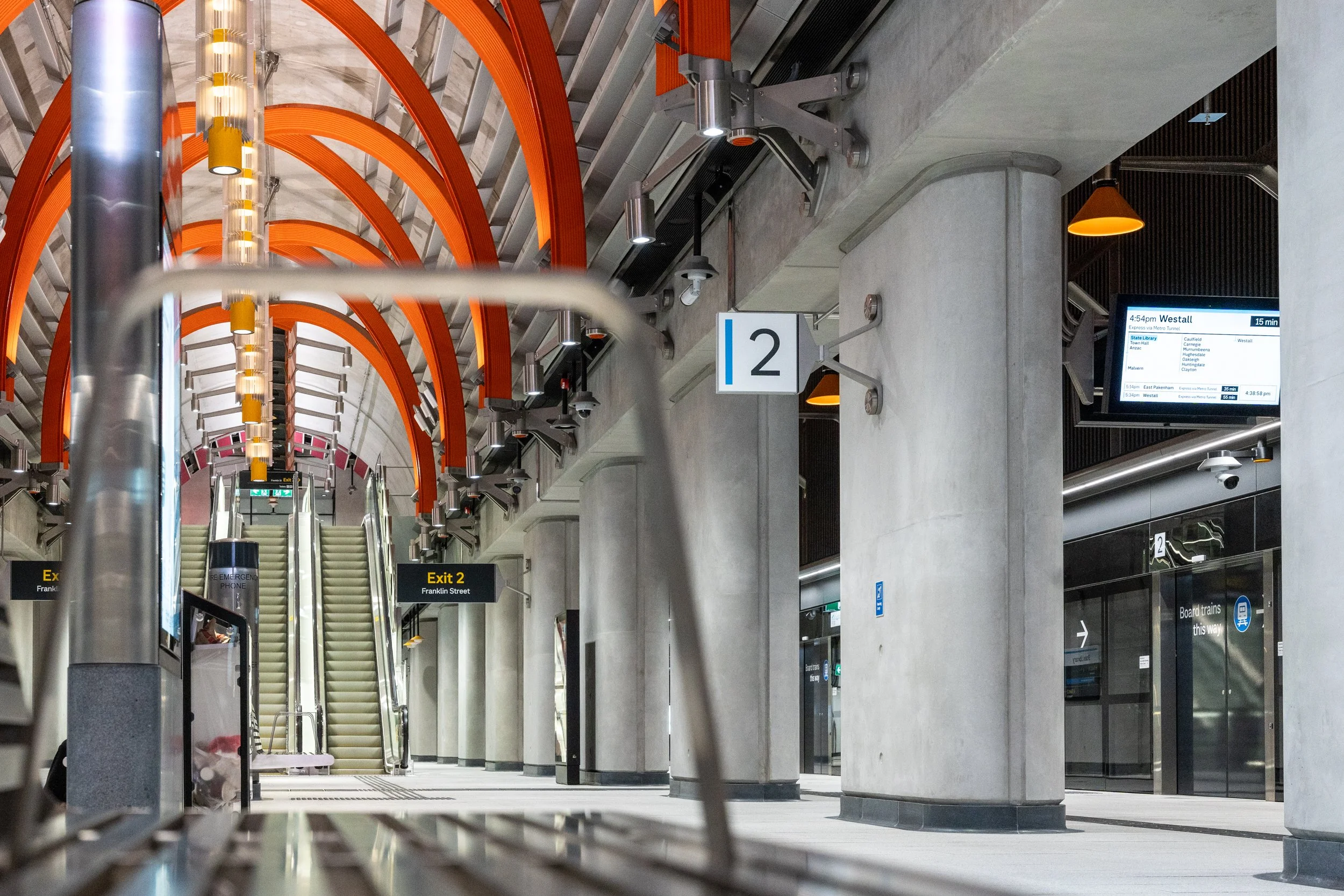
As you move further into the platforms, you’ll see beautiful arched vaults with arching orange beams and stunning light fixtures. There are fabulous images to be had here composing for symmetry, narrowing in on the designs of the lights and arches, or incorporating escalator lights and people into your images.
STATE LIBRARY STATION
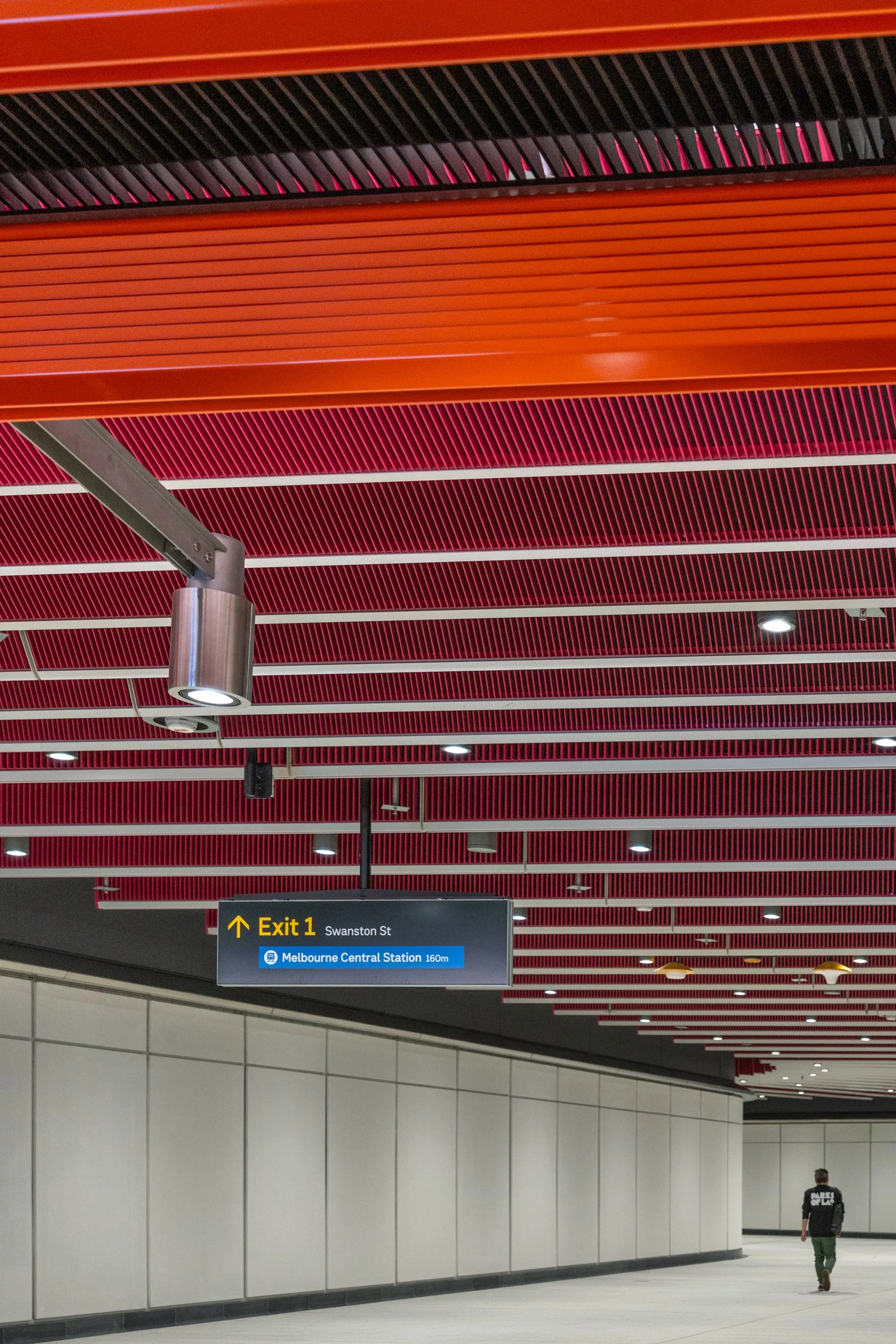
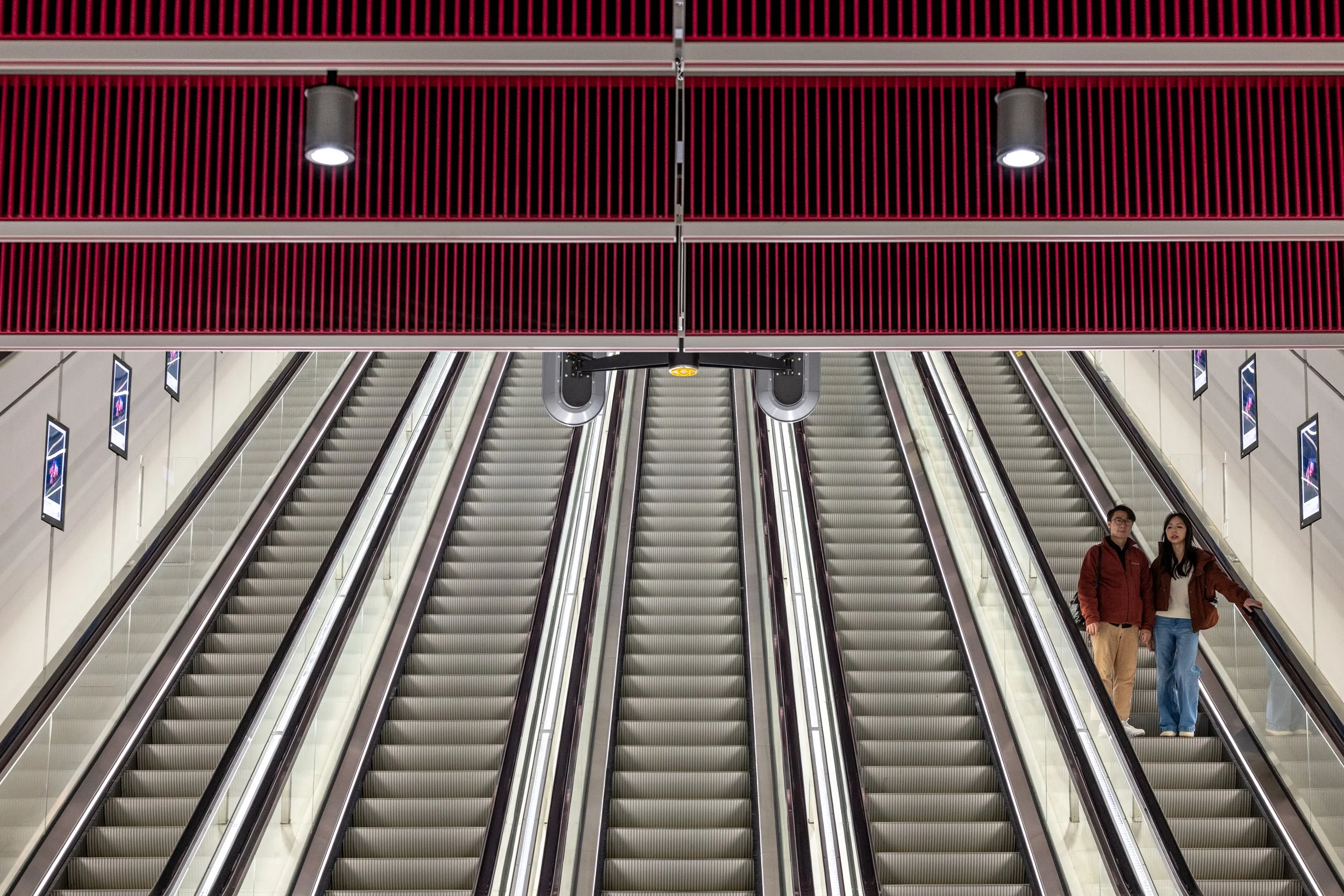
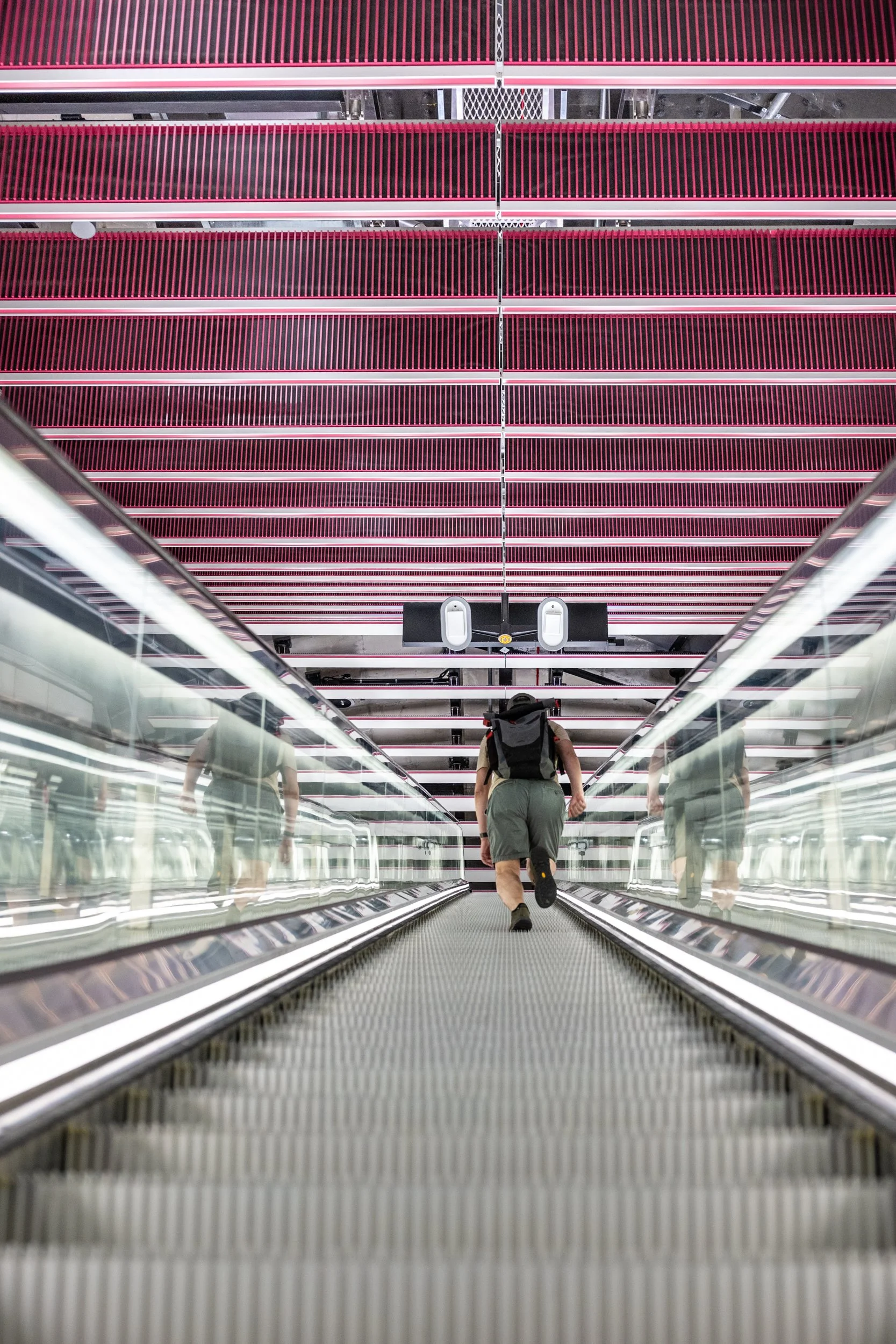
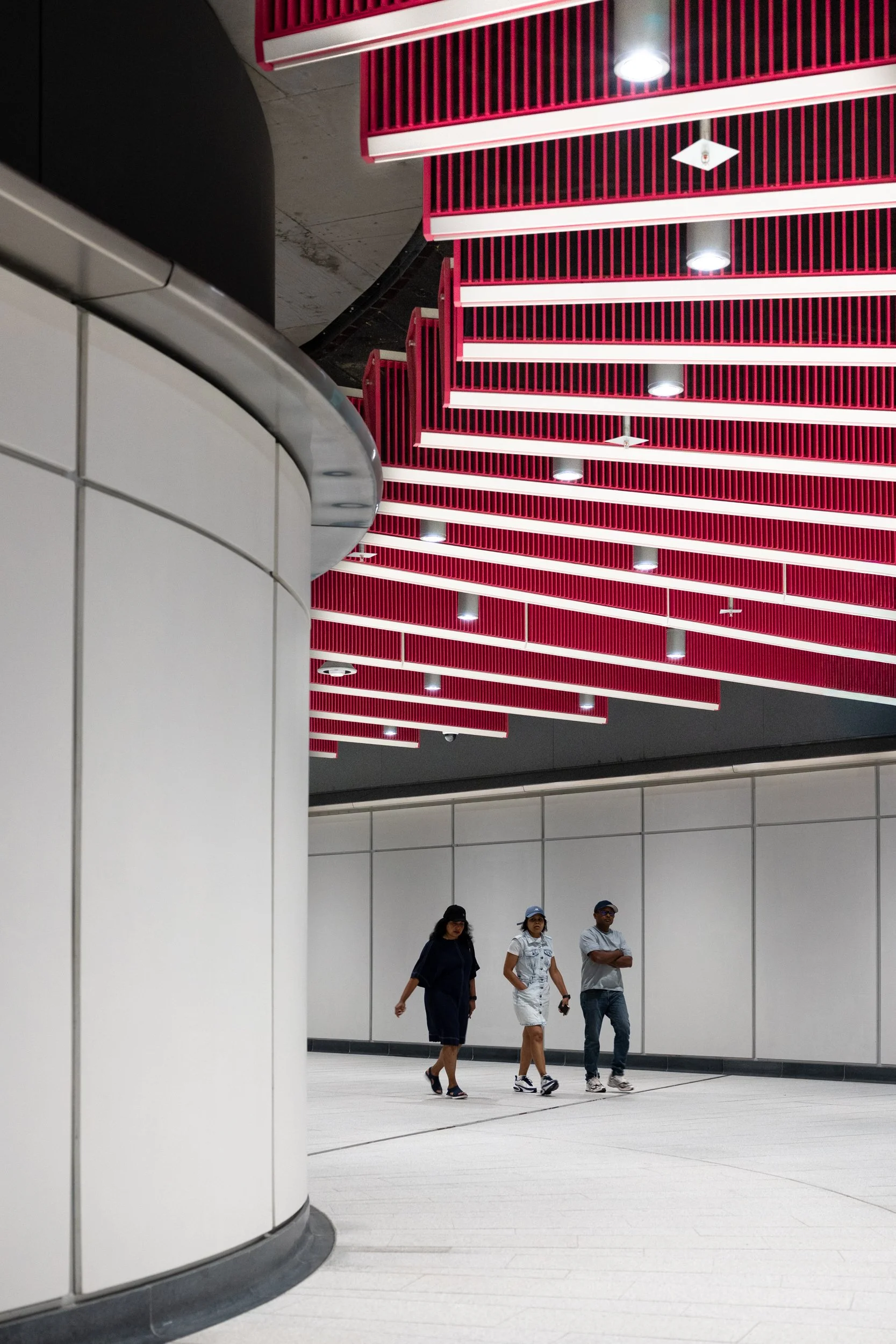
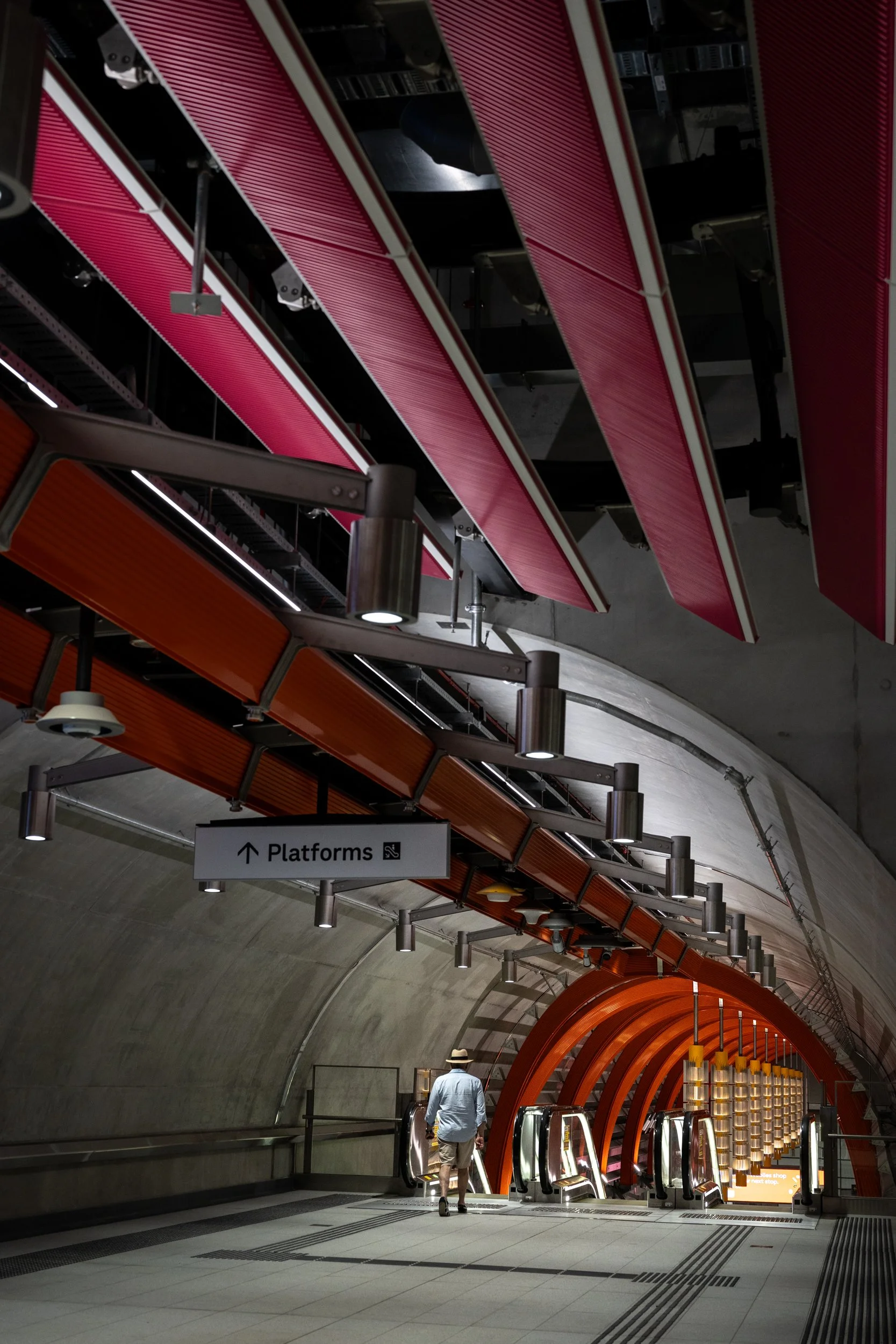
State Library Station is the deepest of all the stations. The design elements on the platforms are very similar to Town Hall Station, although given it’s depth, I found that the ‘way-faring’ colours above the escalators created excellent compositions. In this station I was able to put together a great little series of shots incorporating the pink themes.
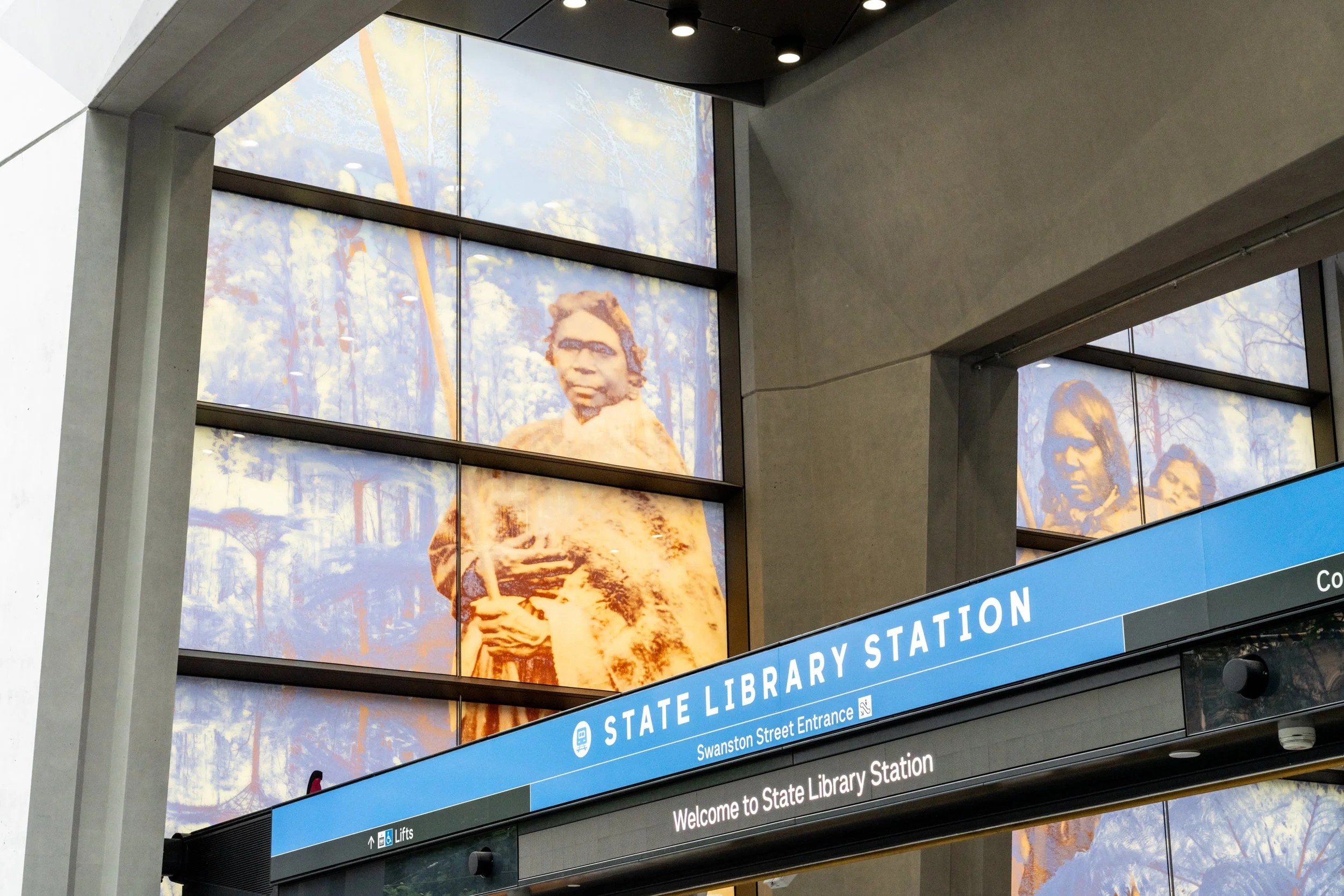
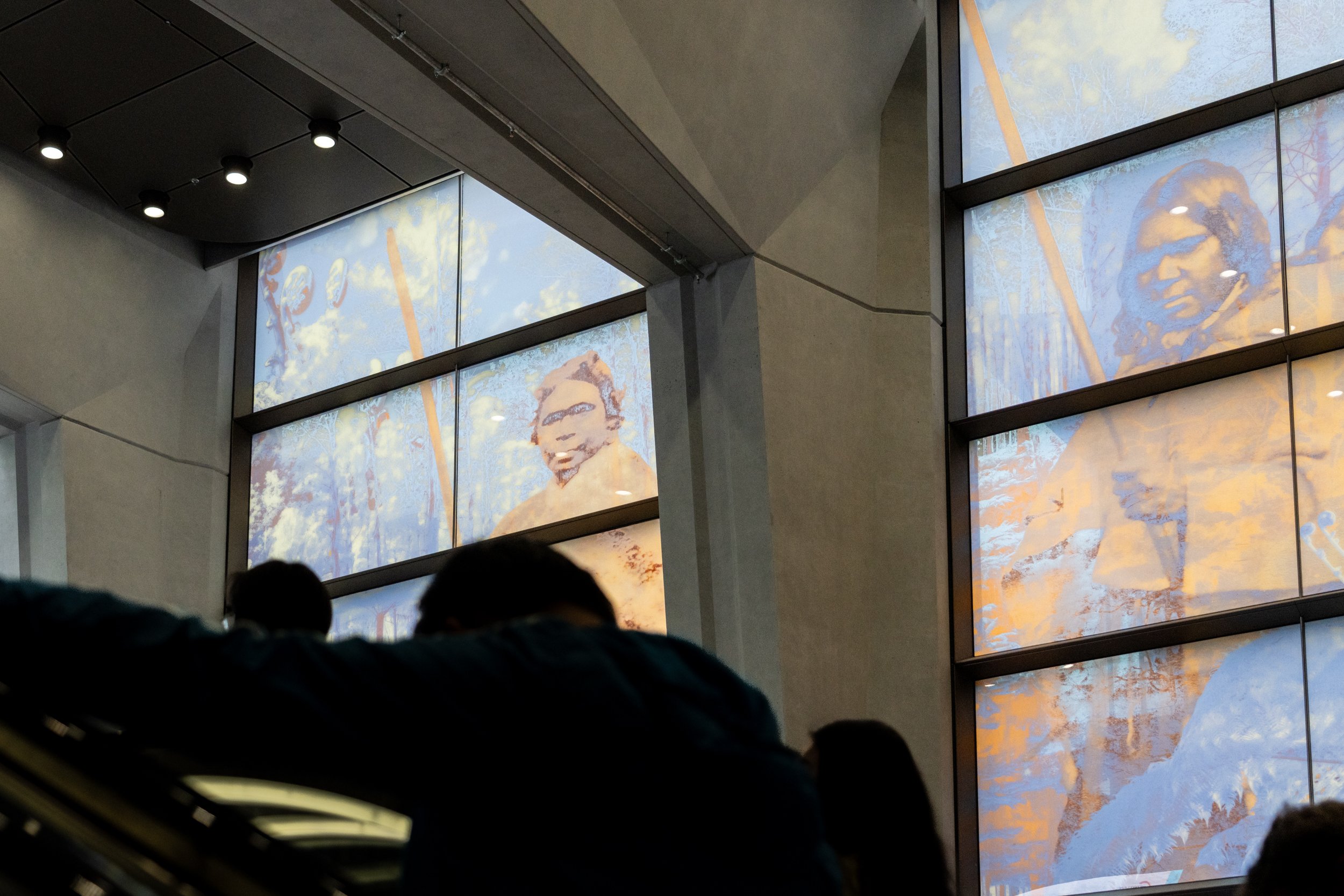
The main entrance over the road from the State Library has large-scale installation titled “Forever” by Danie Mellor, incorporating archival photographic portraits of Wurundjeri Woi-Wurrung women drawn from the library. These will be incredible when shot at the right time of day, illuminated from behind. Perhaps this will only be possible only at certain times of the year or via reflections from nearby buildings - we’ll have to see.
PARKVILLE STATION
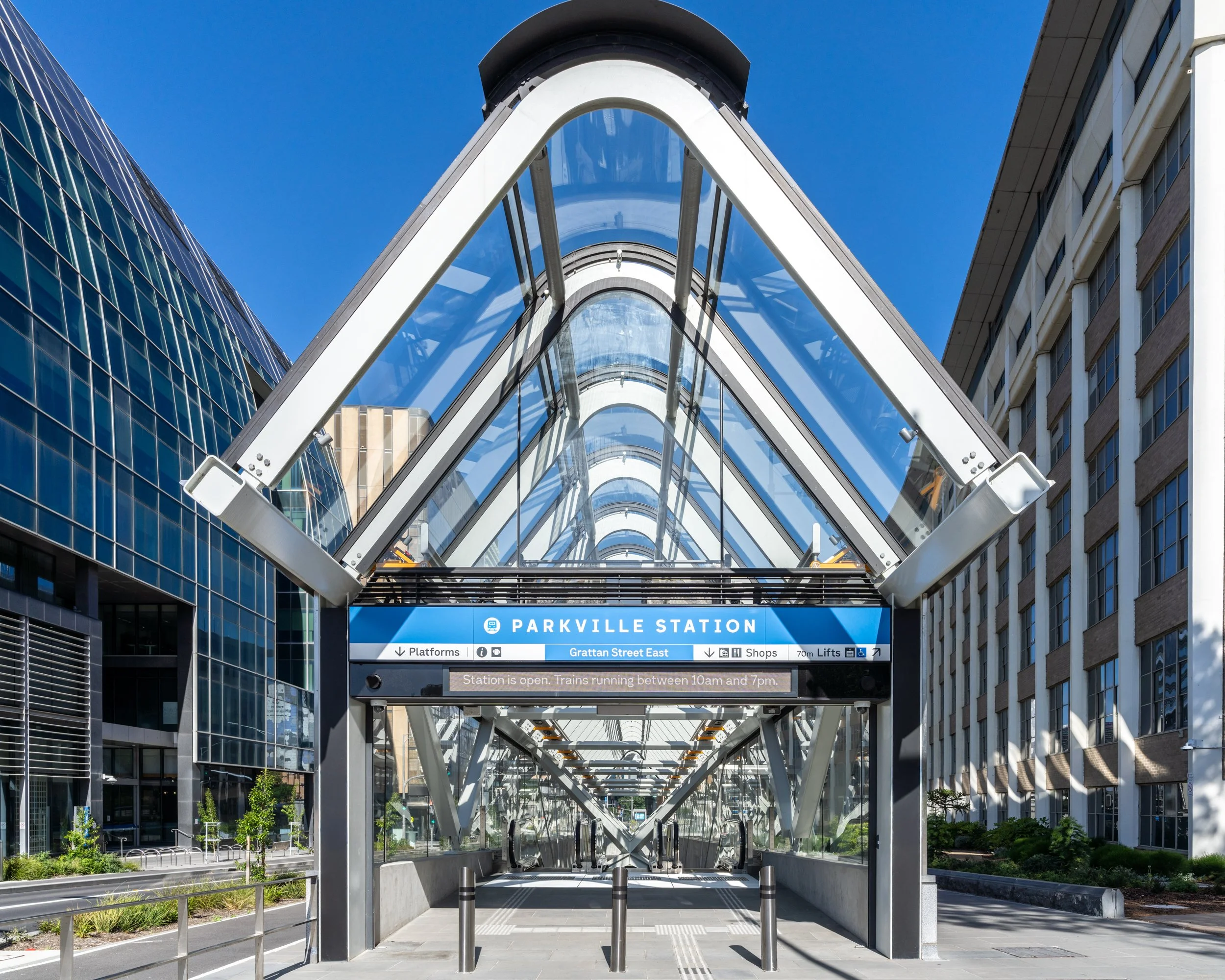
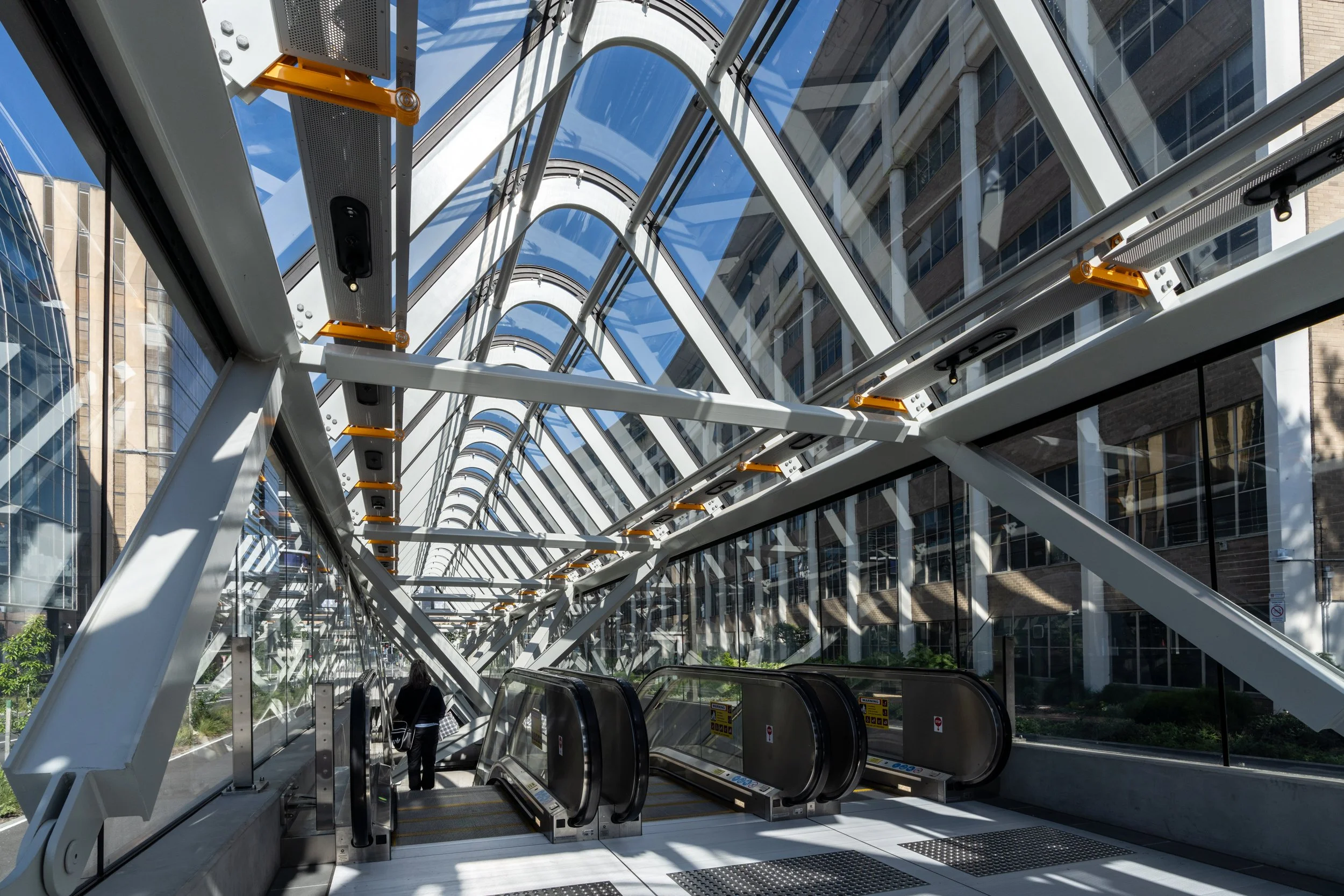
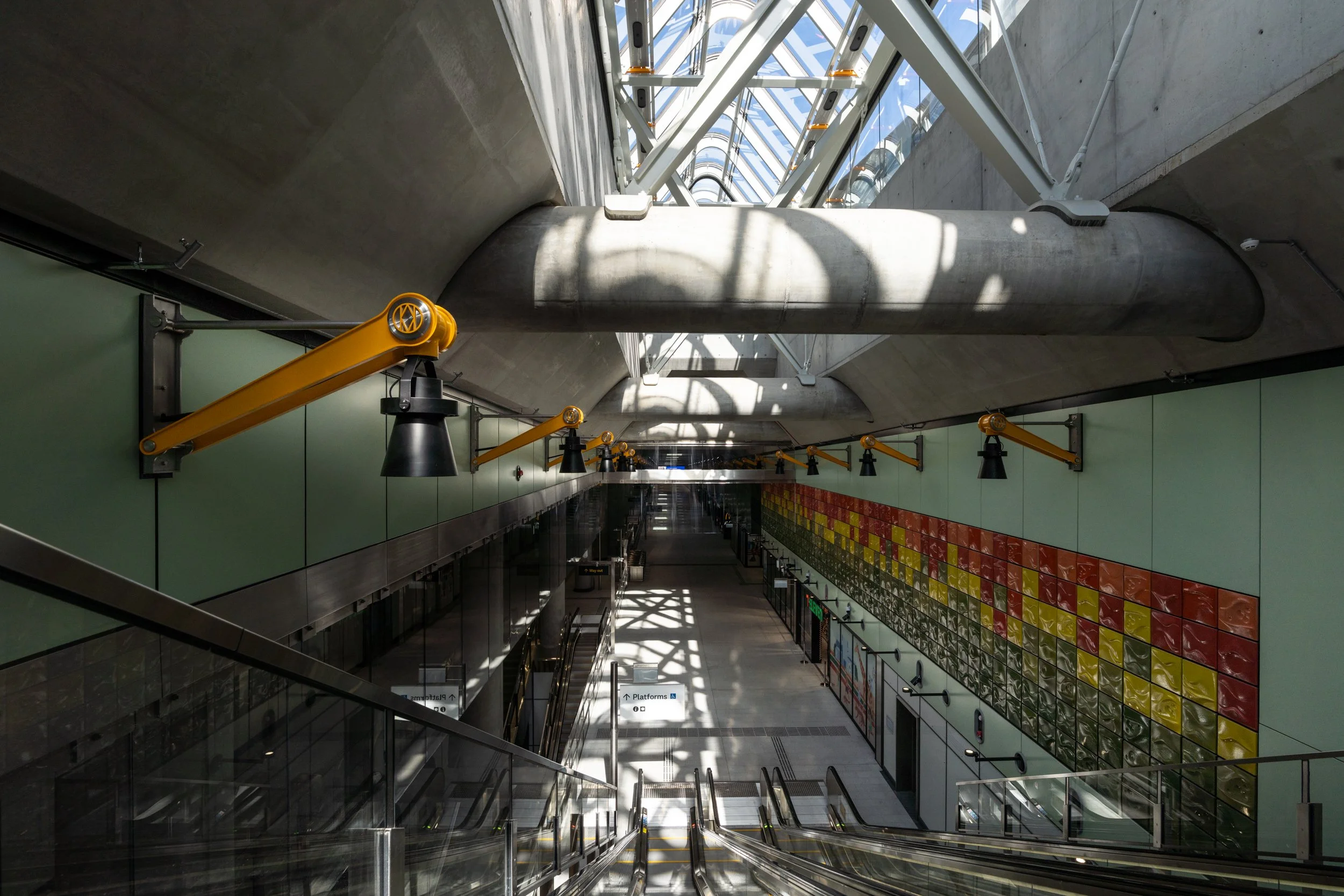
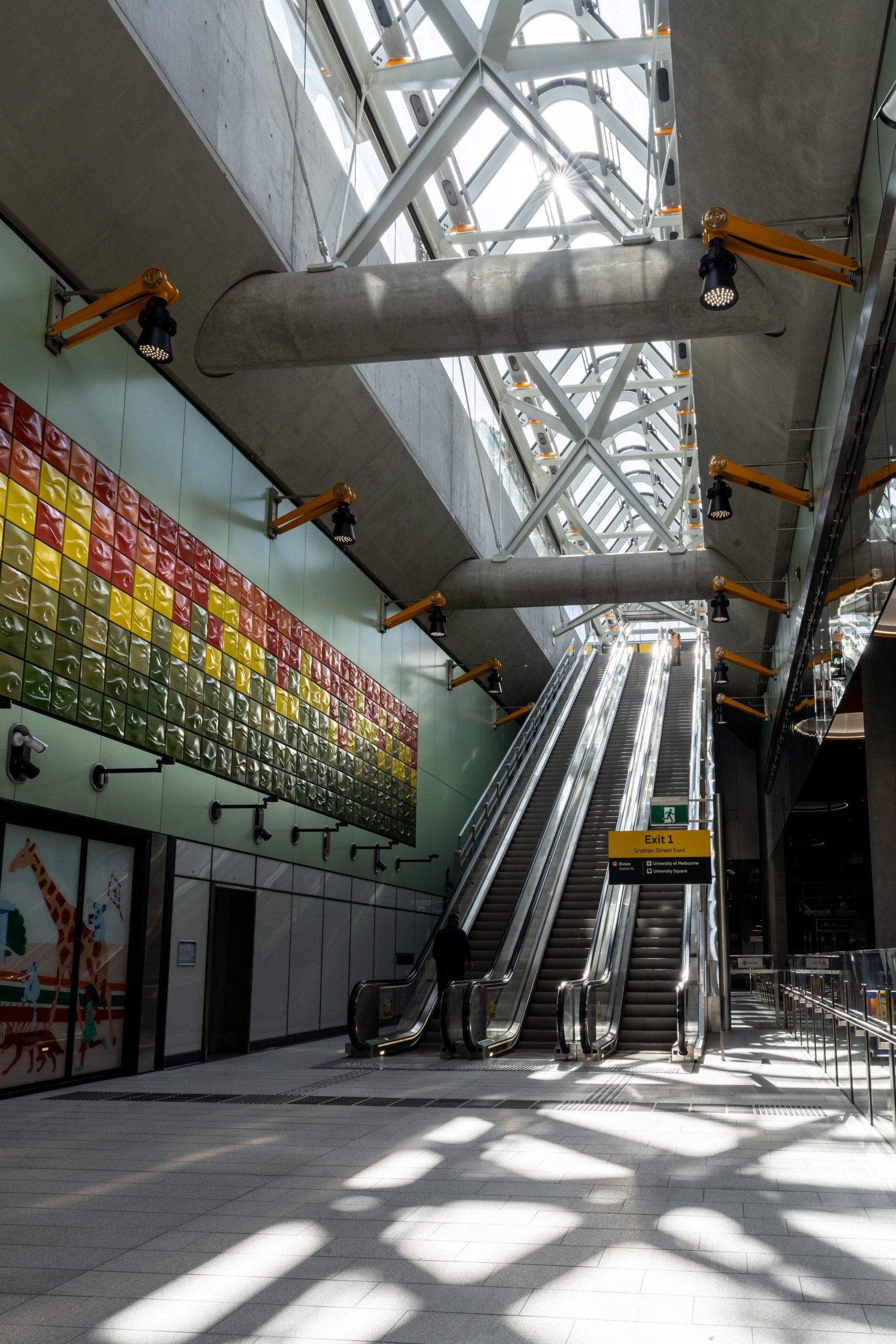
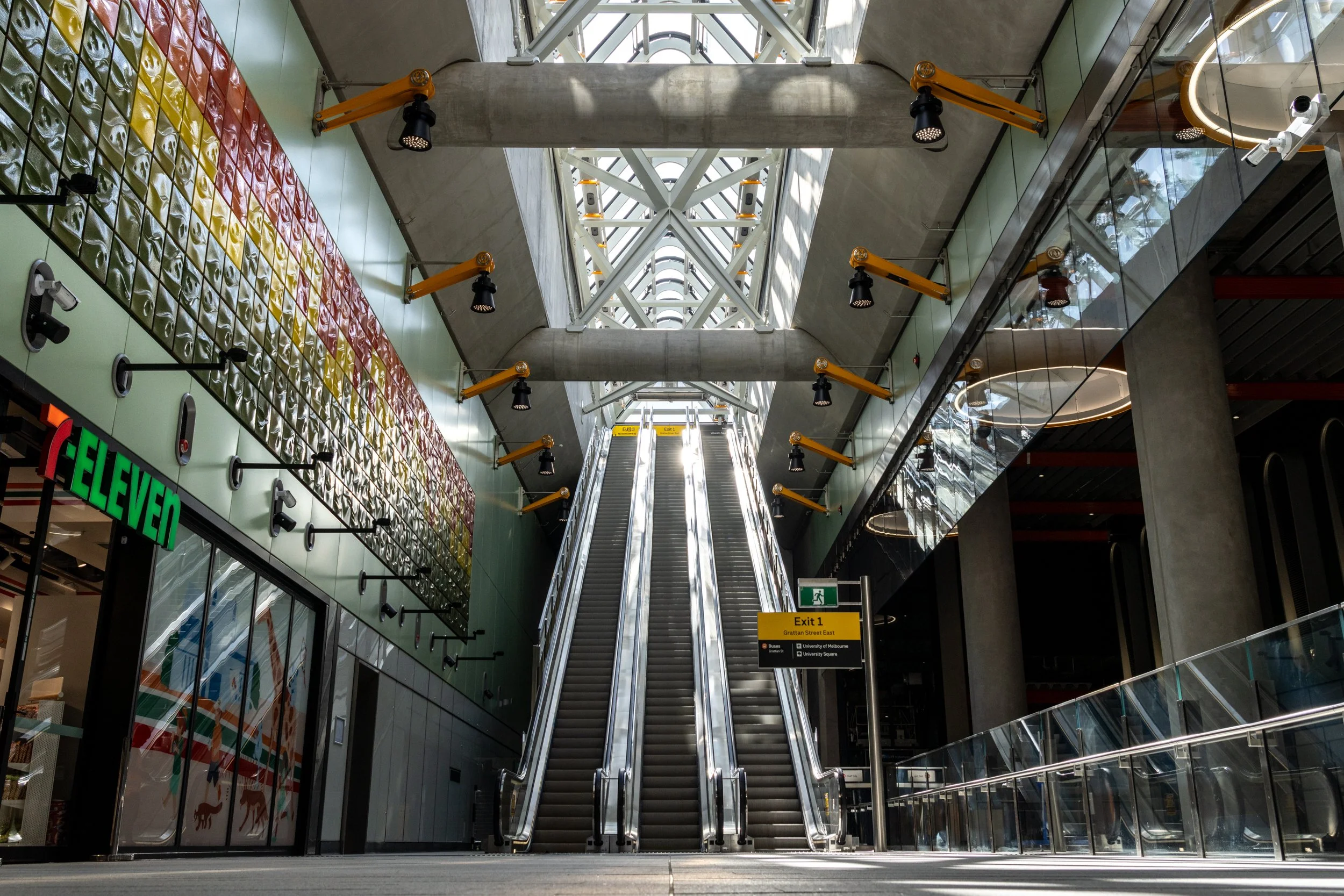
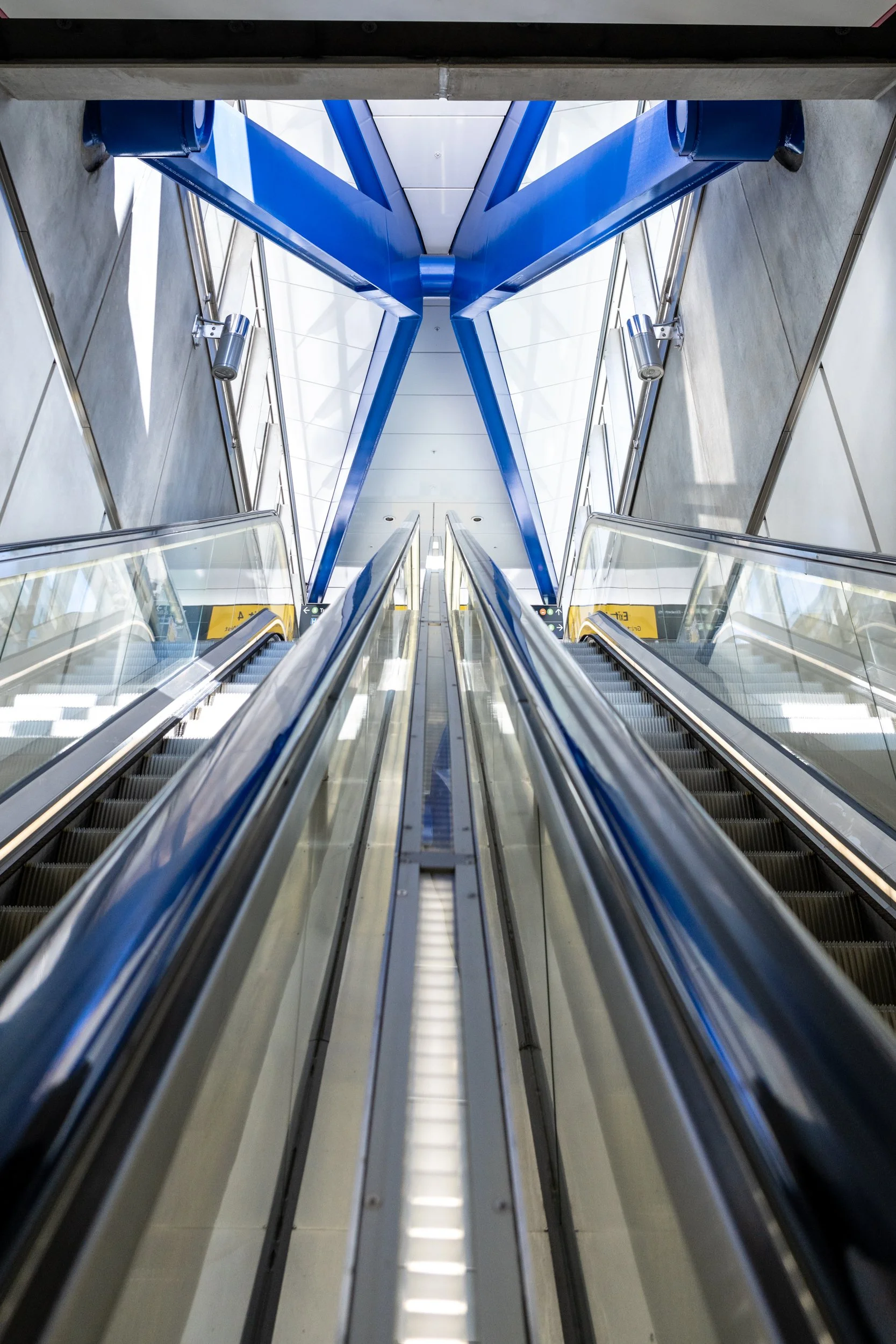
Parkille Station is in the newer campus area of the University of Melbourne. I really loved that the main entrance is sympathetic to some of the amazing deconstructive architecture in the surrounding hospitals and research centres. I felt travelling down the escalator that this was one of the most impressive transitions from above to below ground. Some of the other stations traverse different layers of enclosed concourses and escalators, but this station gives you a sense of SPACE as you descend into it.
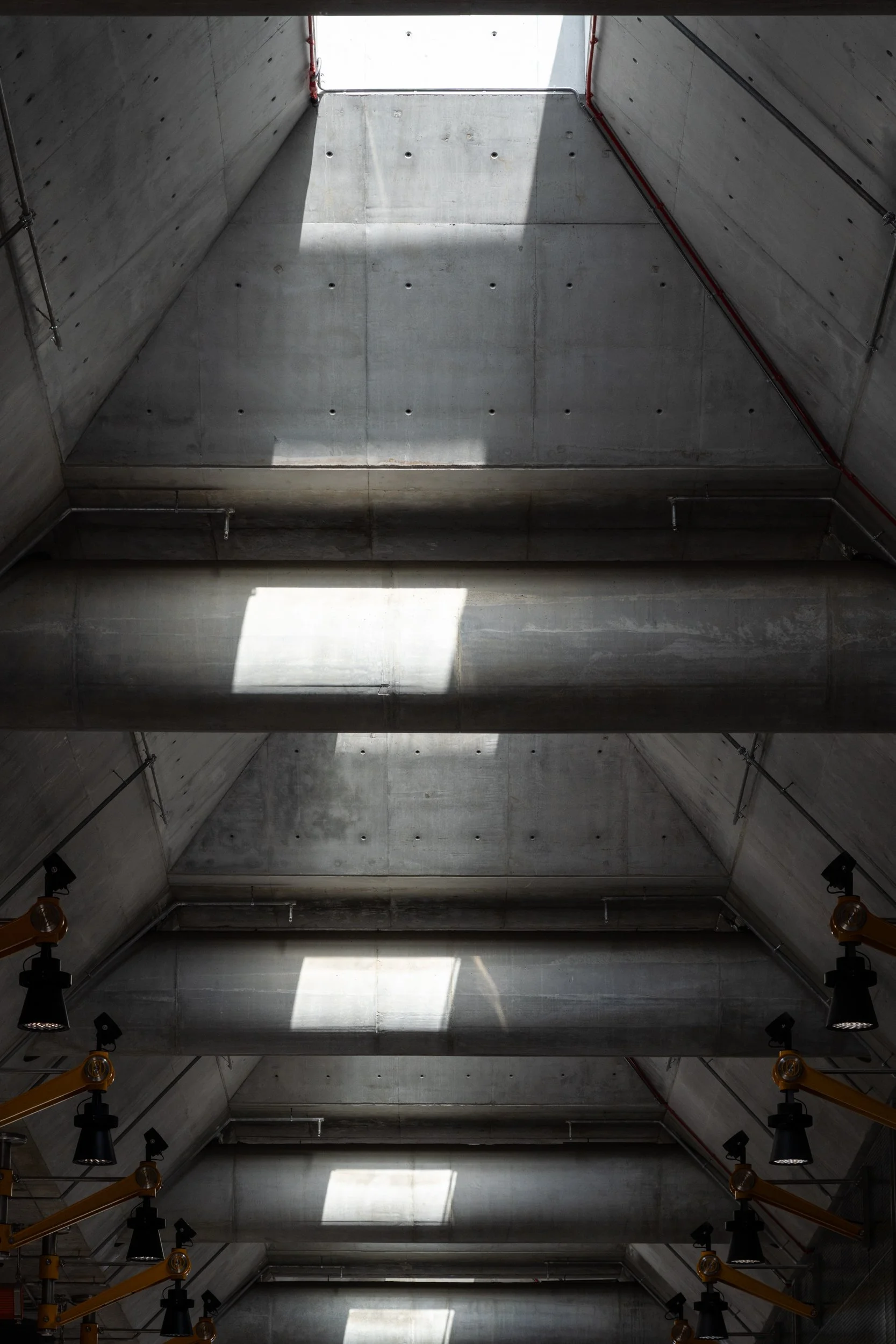
Similarly to Anzac Station, there’s a GREAT opportunity here to play with sunlight spilling from the entrance, of from one of the skylights, creating the ability to capture high contrast images of the light landing on design elements, or of people moving through the light.
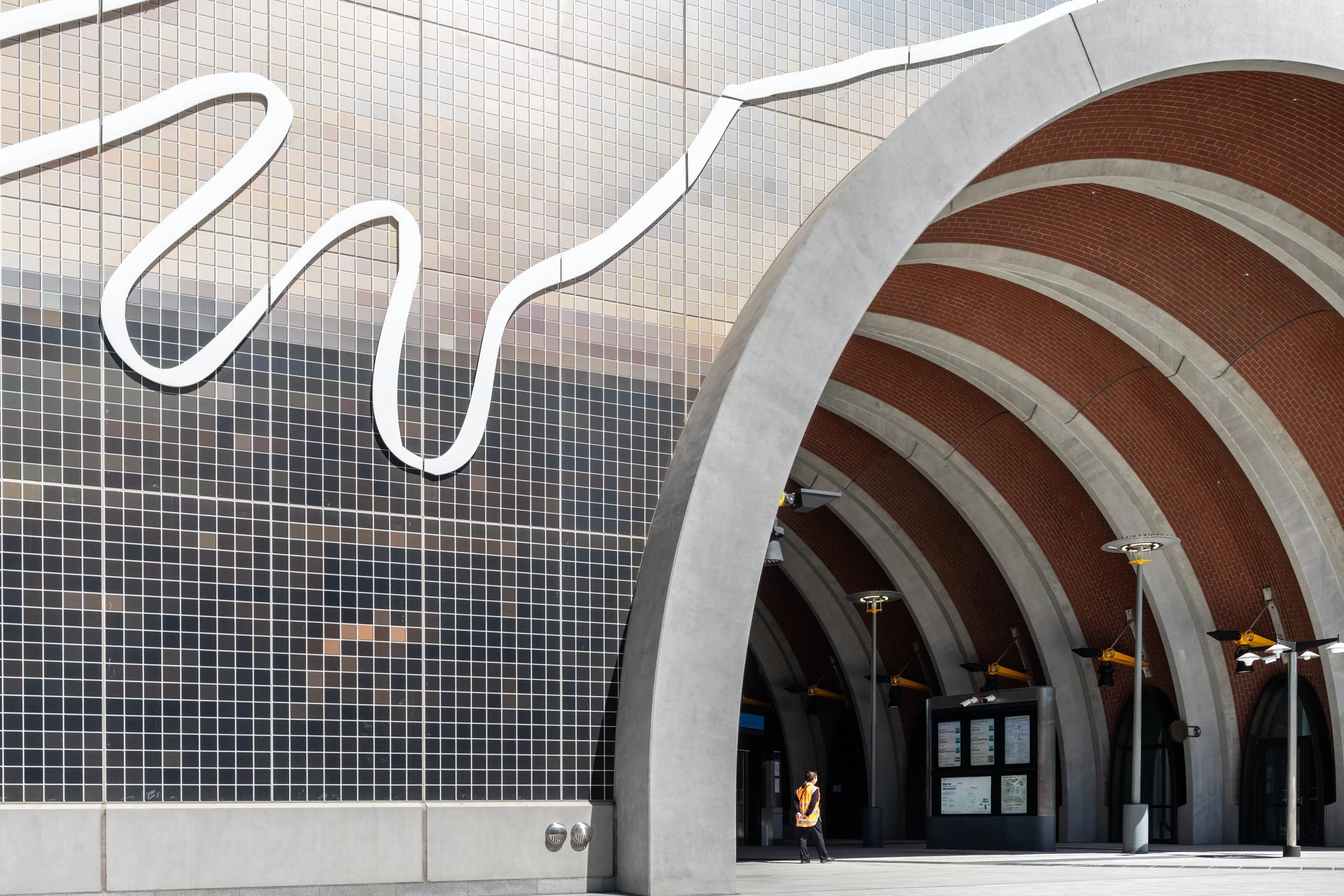
There’s a huge colour tile installation “Vernal Glade” by Patricia Piccinini, the colours carefully selected to reference surrounding parkland, medical and educational institutions. It was selected to foster a sense of calm in a busy transit location.
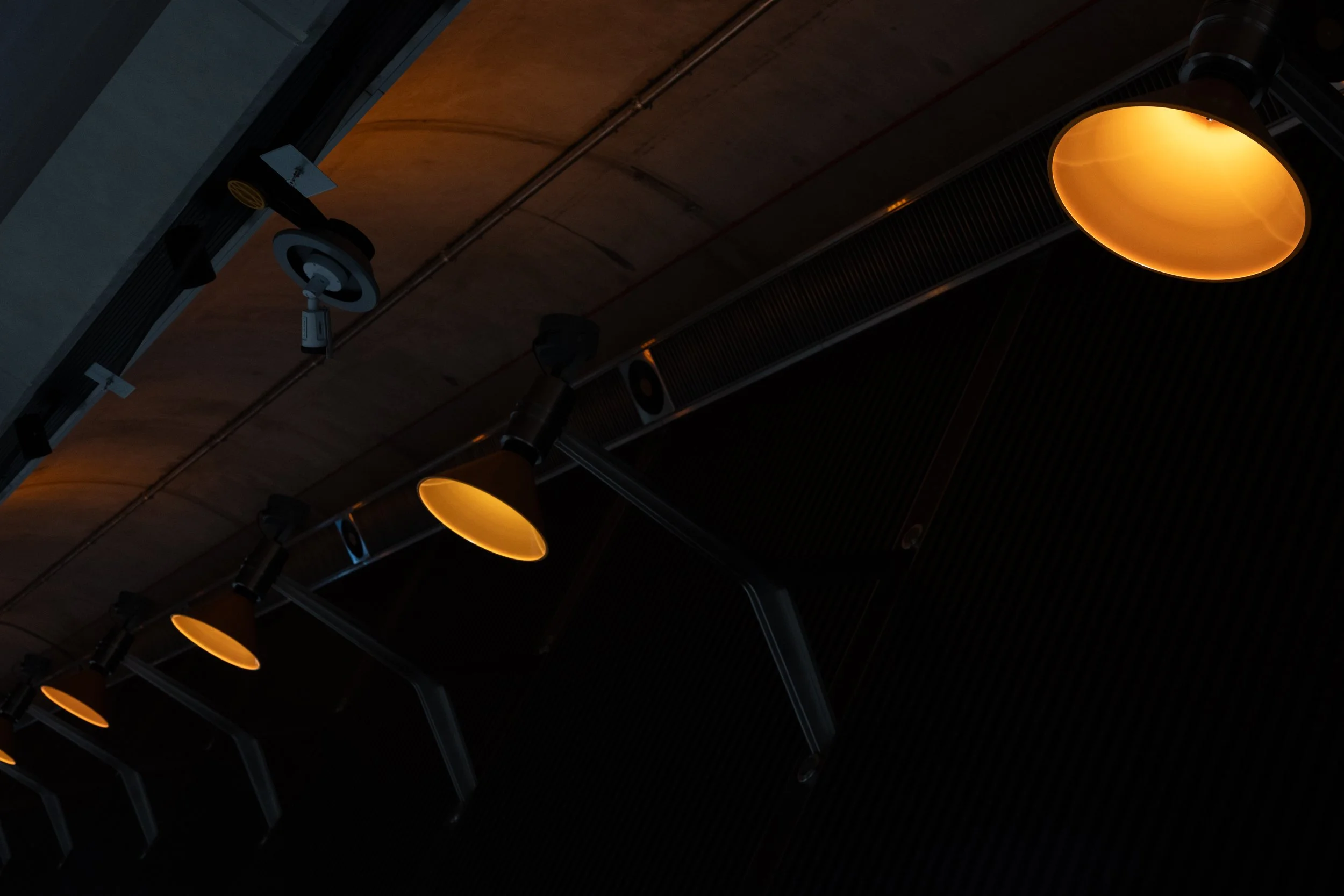
A long wall full of vents, lights and lighting fixtures that again provide for some great compositions based on form and shape.

ARDEN STATION
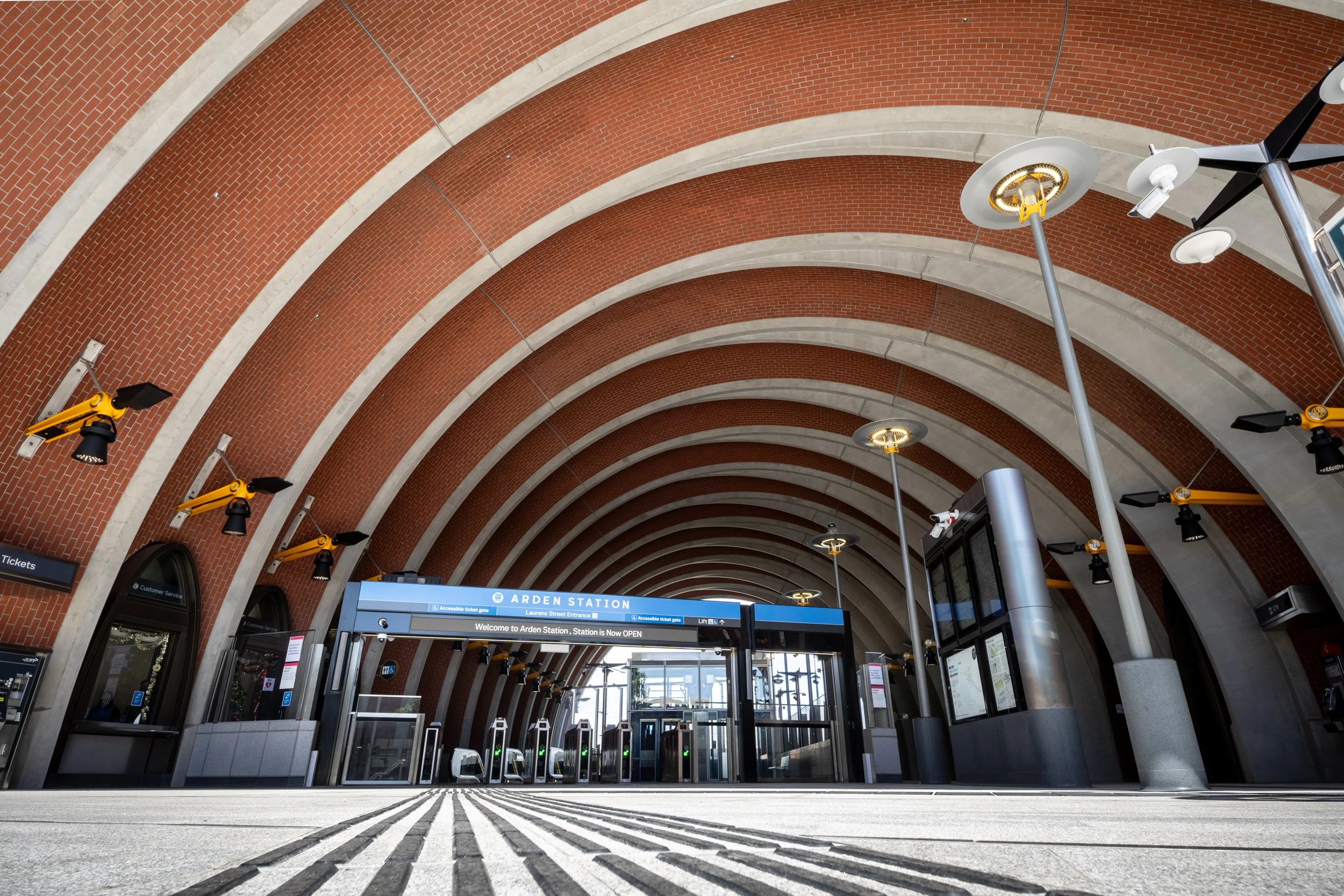
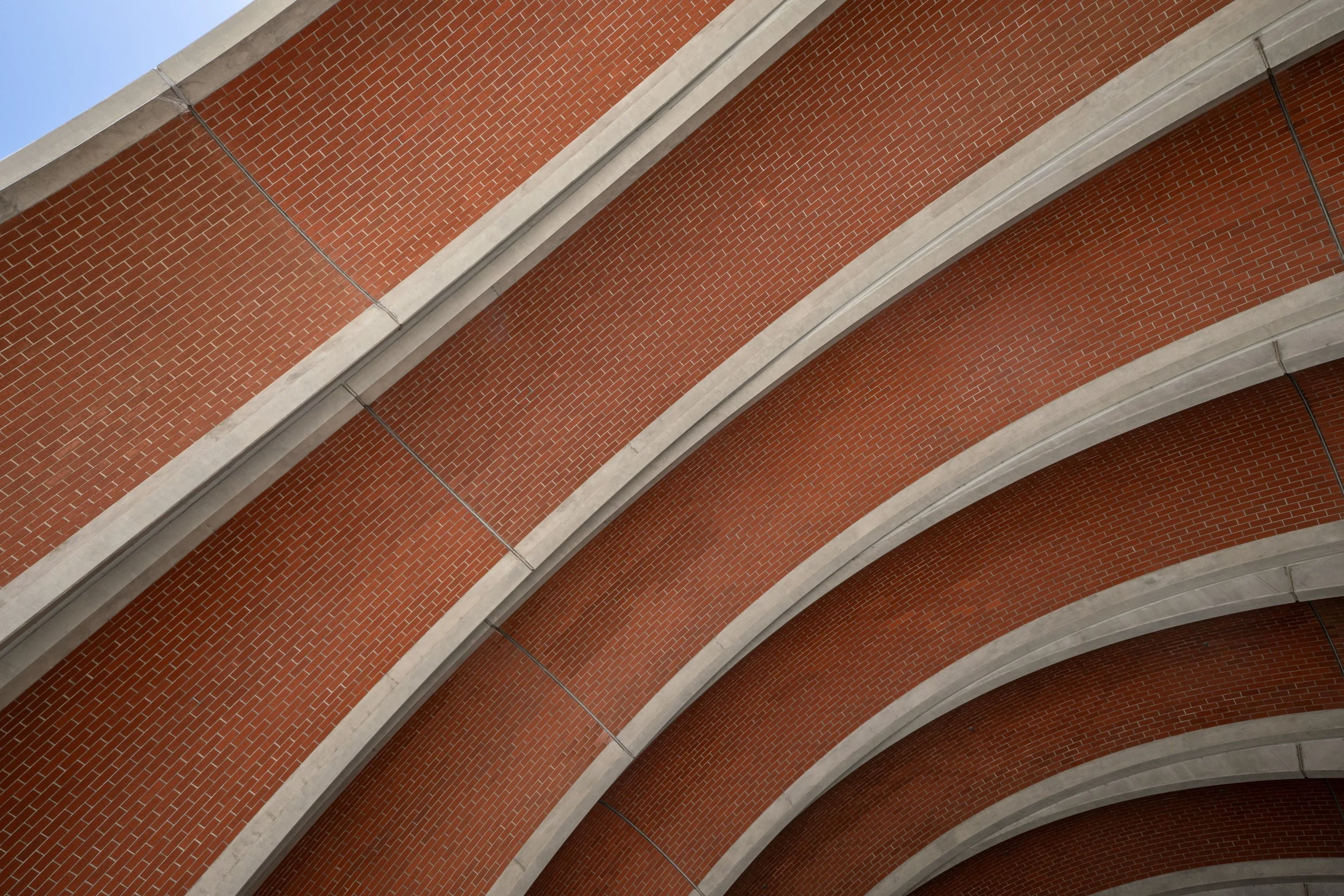
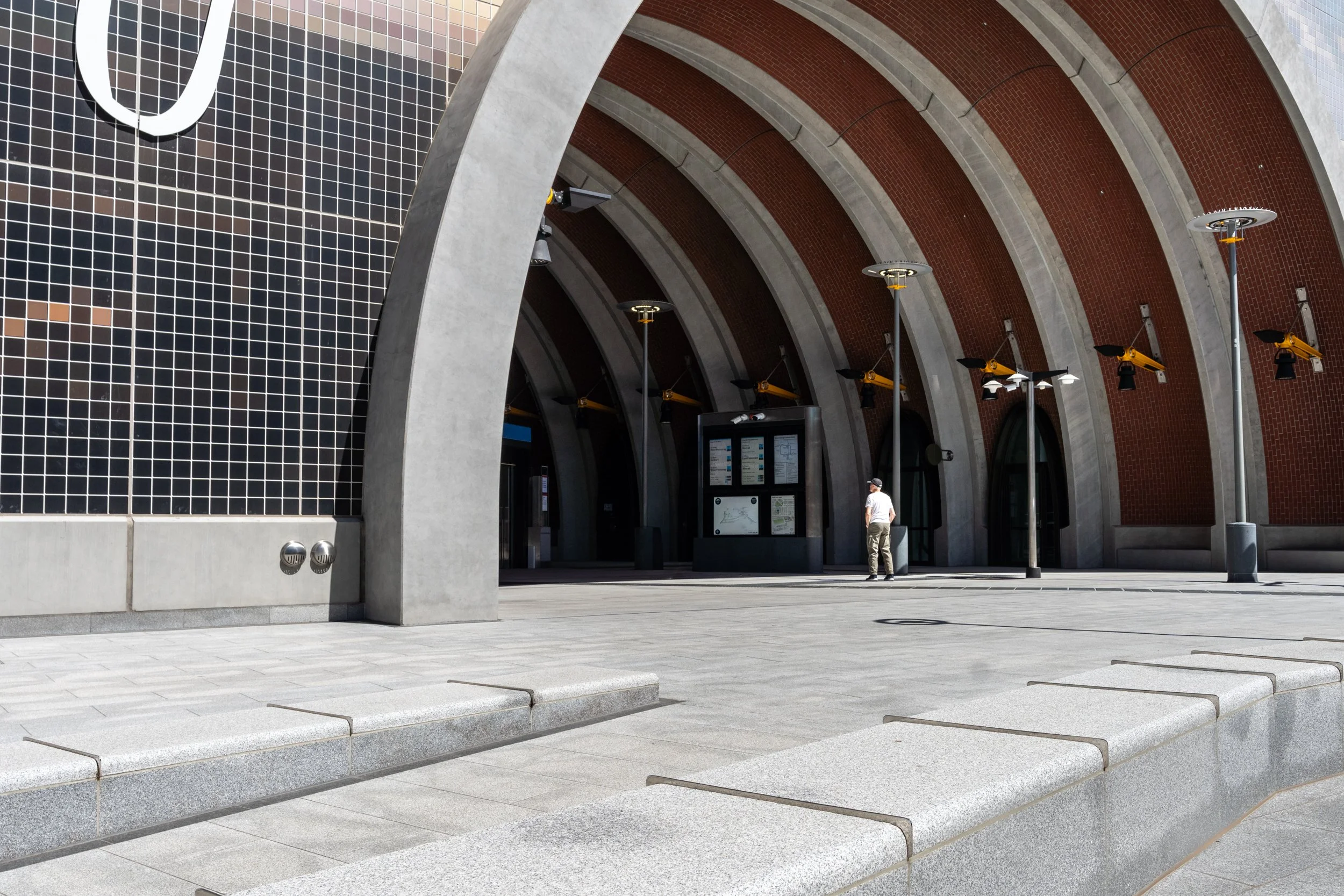
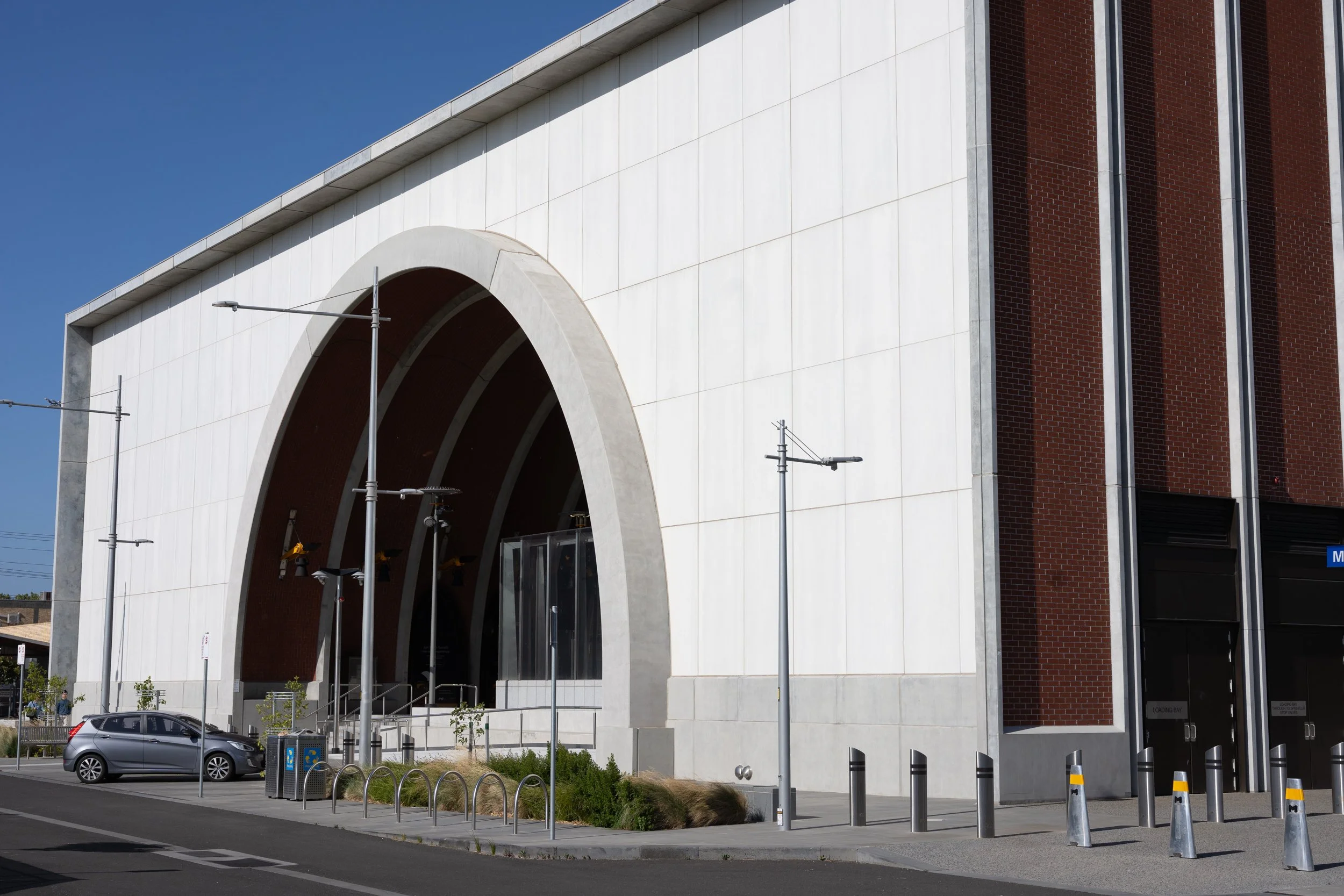
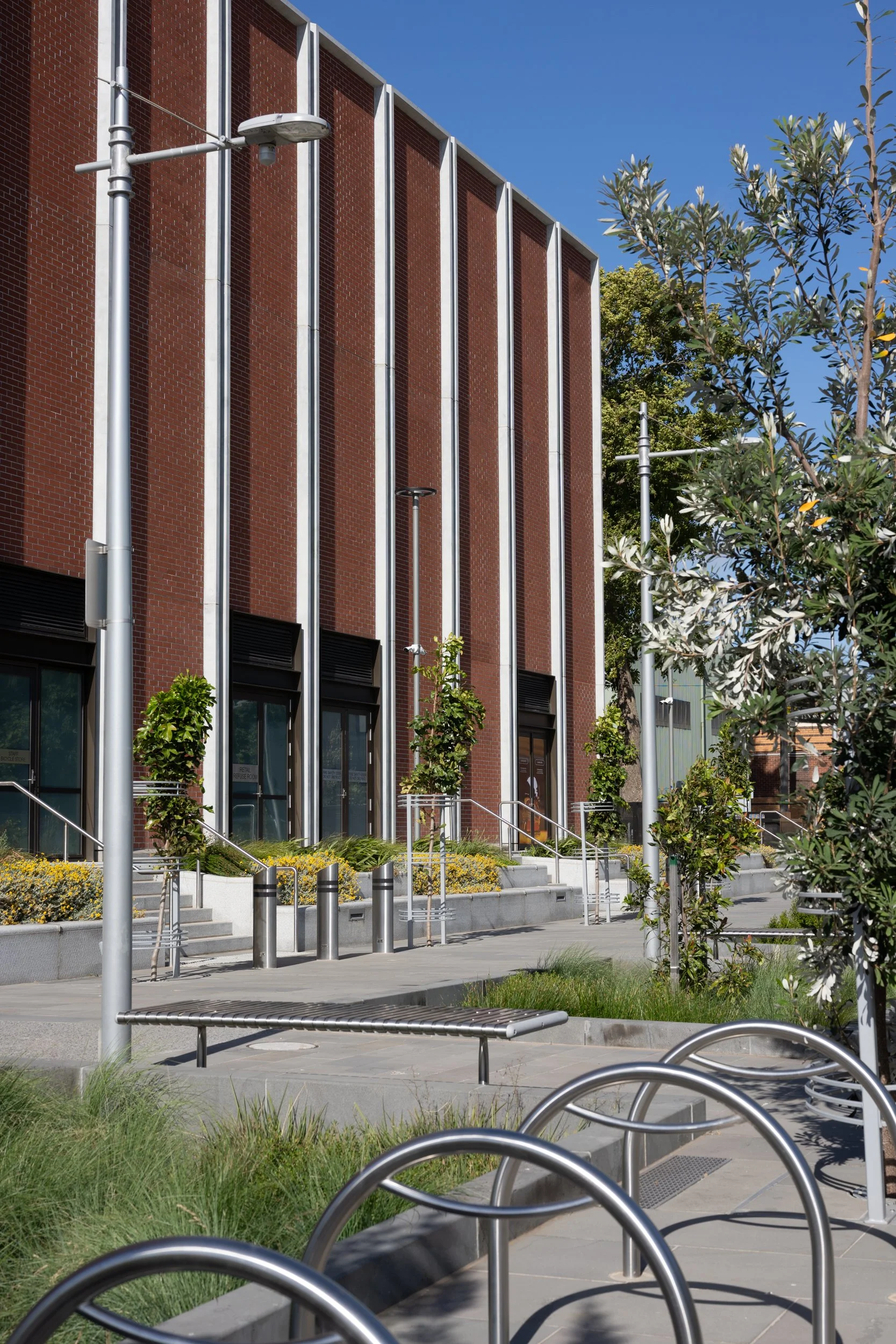
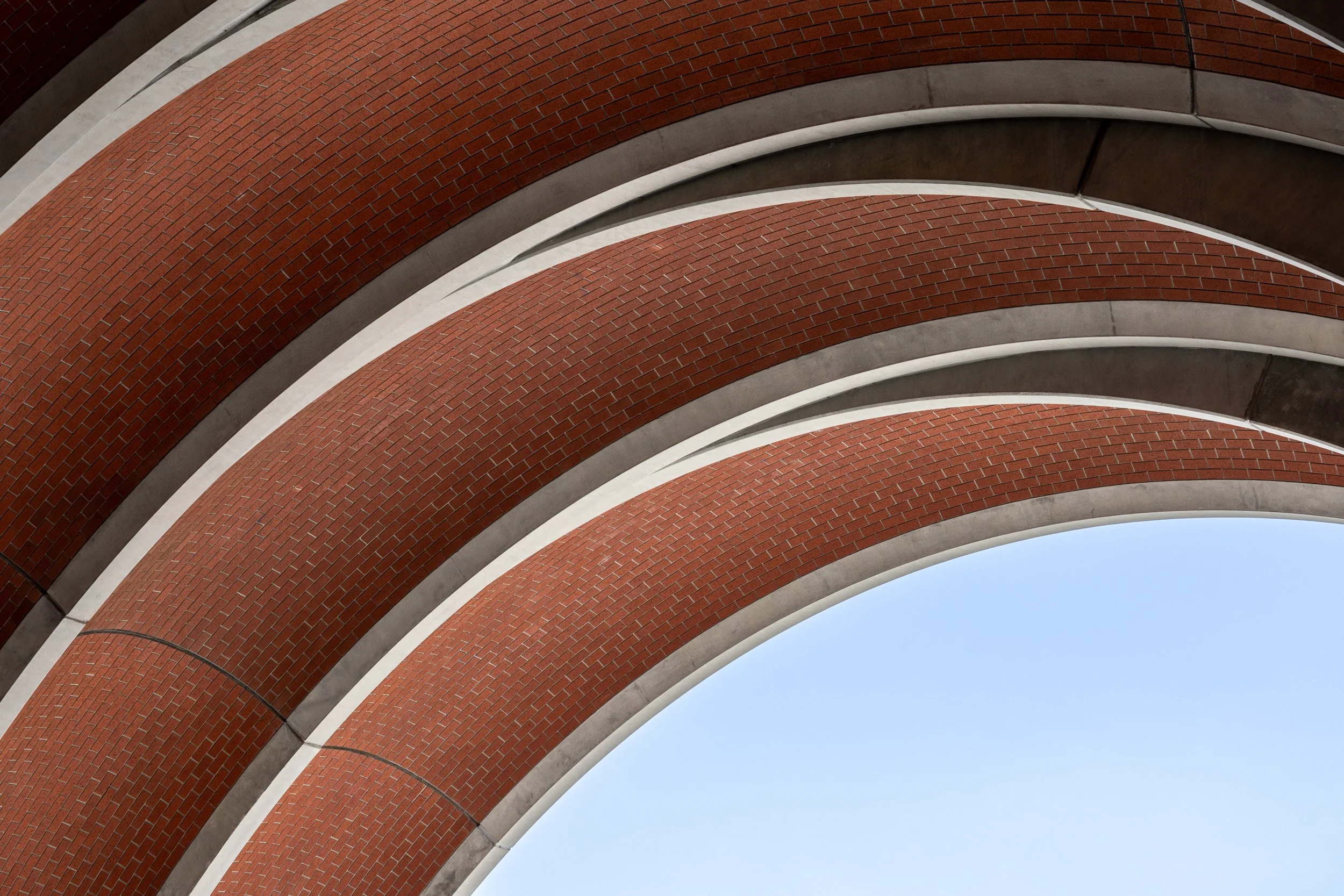
Arden Station feels so different to the other stations (above the ground). The station is a box sitting above ground with an incredible arched brick interior cut through the centre. It’s surrounded by terraces with native plants and trees, and features a huge installation ‘Coming Together’ by Abdul Abdullah on the front entrance, symbolising connections, community and shared city life. The interior of the entrances featuring 15 precast brick archways, referencing the industrial heritage of North Melbourne.
This space is really exciting, and will be set alive by morning sun illuminating the front entrance, and evening sun (depending on the time of year), shining through the rear entrance. The patterns of light and shadow that will form here over the brick texture will be so exciting to photograph. There will be really dramatic opportunities to emphasise the scale of the aches as passengers pass through.
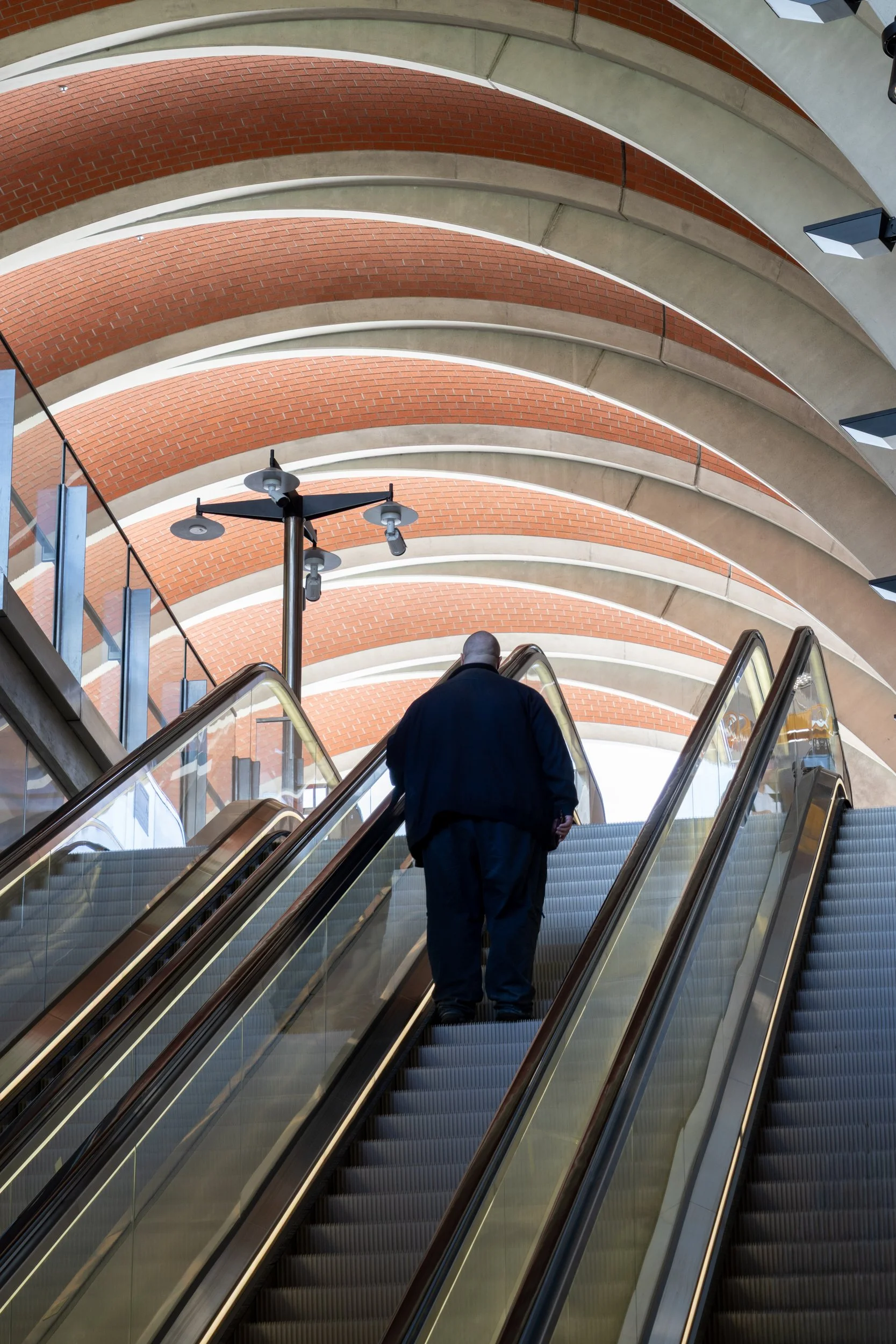
I really really love the view from the final escalator up the arch with the different textures and colours of the materials. Capturing singular passengers coming up the escalator catching the light at different times of day will also make for some killer images.
That’s my impression from a couple of trips around the stations. On each visit I’ve found new images, whether looking for the MM logos on the design elements, looking at the different colours and how they are used, looking at how people transit through the space, and how the entrances interact with the precincts that they are in. This is the kind of photography I love, and having so many new spaces to explore in a place that I can return to again and again is wonderful. It allows me to understand both the physicality of the spaces, and how the population comes to inhabit and use them.