EUR, Rome: The World Fair That Never Happened
Rome, Italy
Images in this blog were awarded as Official Selection and Honourable Mention in the 2023 International Photography Awards
While researching places to photograph on my first trip to Rome, I came across the EUR district. It looked like a wonderful counterpoint to the ancient parts of the city that we would be visiting for a week, and sent my photographic spidey senses tingling! It had a completely different feel to the old city and ruins, and is a powerful monument to another phase of Italy’s history. For a photographer interested in architecture, it is an extraordinary place.
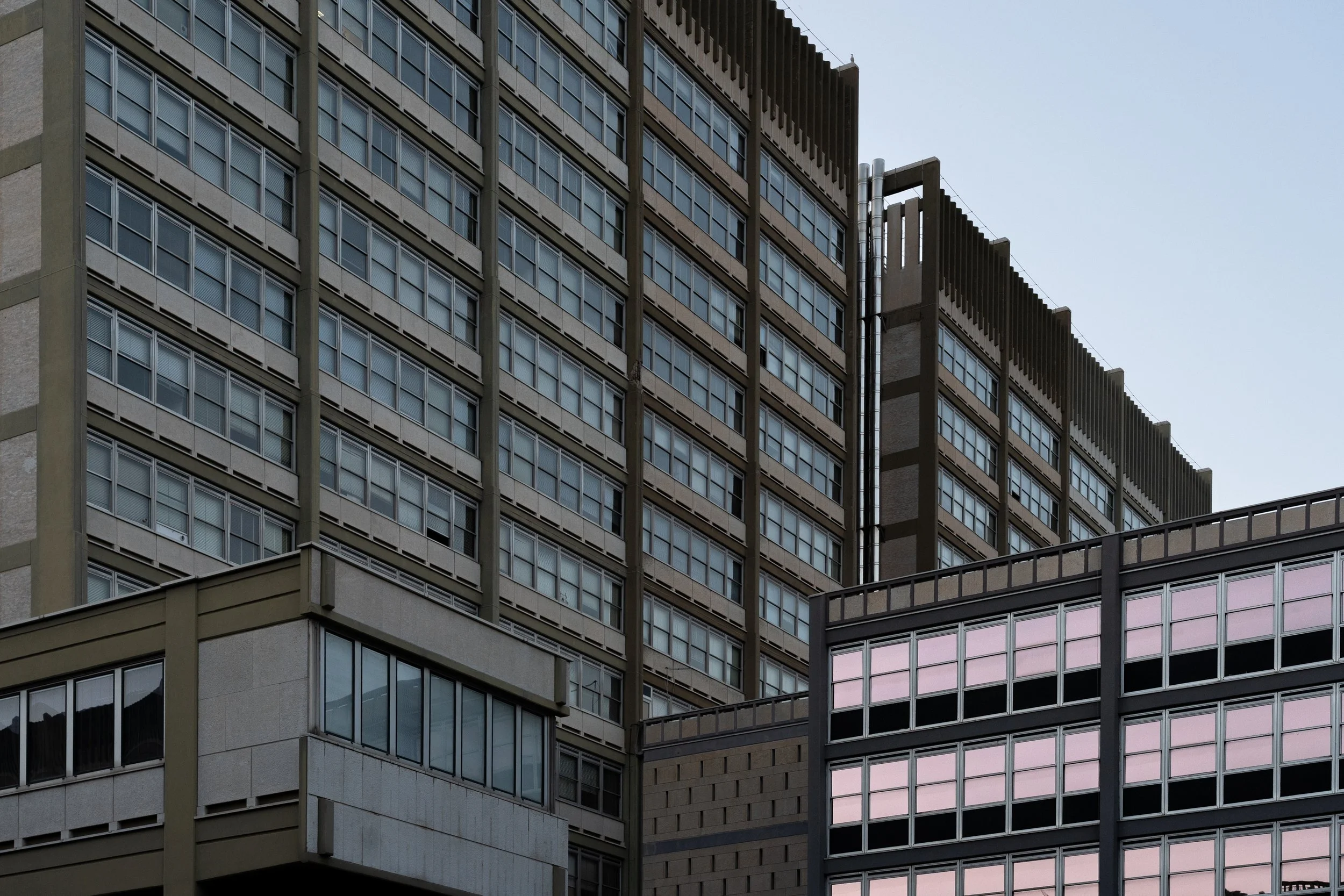
The area is 20 minutes south of central Rome, and not super easy to get to on public transport. It’s reasonably spread out, walkable, but with enough time to spare. I had only around 3 hours to visit, so rented a share bike to zip around to areas that I’d marked out on google maps before hand. The area is such a counterpoint to the crowded and chaotic energy of central Rome. Monumental buildings, huge avenues, colonnades and almost unnervingly ordered spaces, it really speaks to the power that Italy was trying to project in a turbulent period of history.
EUR began as E42 — the site planned for the Esposizione Universale di Roma, a World Fair intended to open in 1942. Conceived during Mussolini’s Fascist regime, the exposition was also intended to celebrate twenty years since the March on Rome and present an idealised vision of a powerful, modern Italy.
The fair never happened.
Construction was interrupted by the Second World War, leaving behind a partially completed new district on the outskirts of Rome. Development resumed after the war and EUR eventually became a functioning part of the city, filled with government departments, businesses, museums, homes and public spaces.
What remains is a fascinating collection of architecture carrying the very specific ambitions of the period in which it was conceived.
Photographing EUR
What struck me immediately was the scale.
EUR was designed around broad avenues, enormous plazas and buildings that often seem almost too large for the number of people occupying them. Classical Roman architectural ideas — arches, columns, symmetry and travertine stone — are stripped back and repeated on a monumental scale.
For photography, that creates an incredible combination of simplicity and repetition.
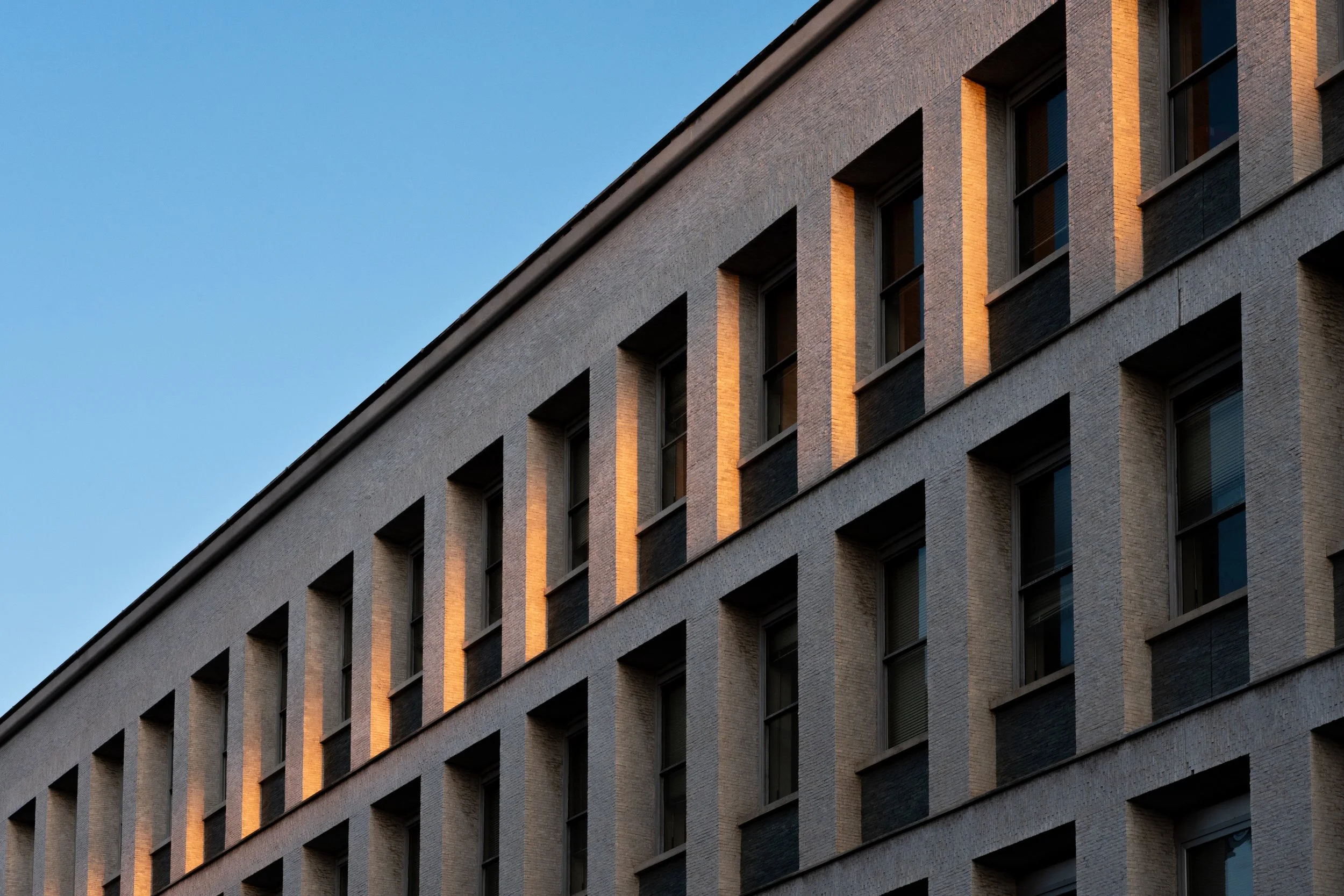
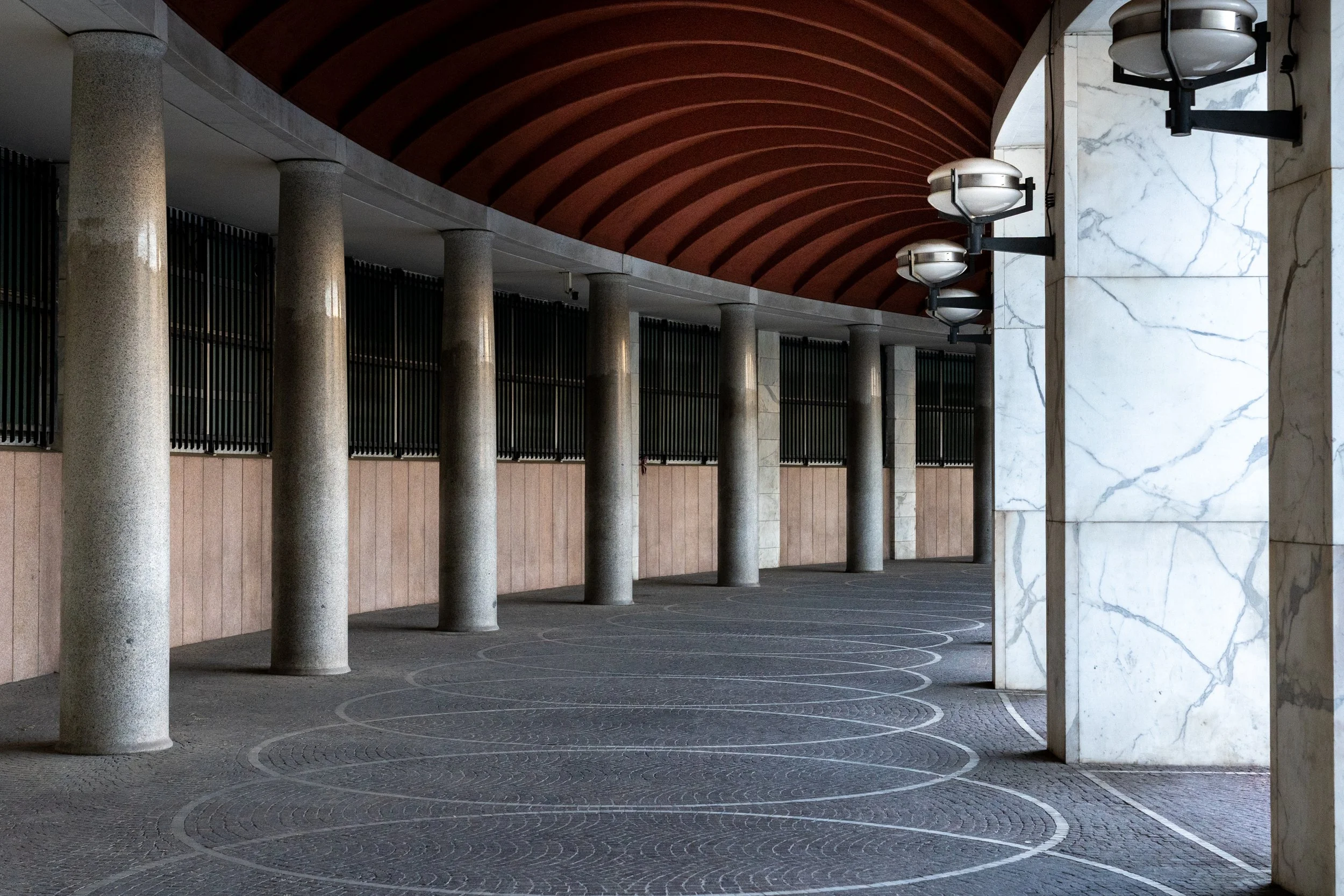
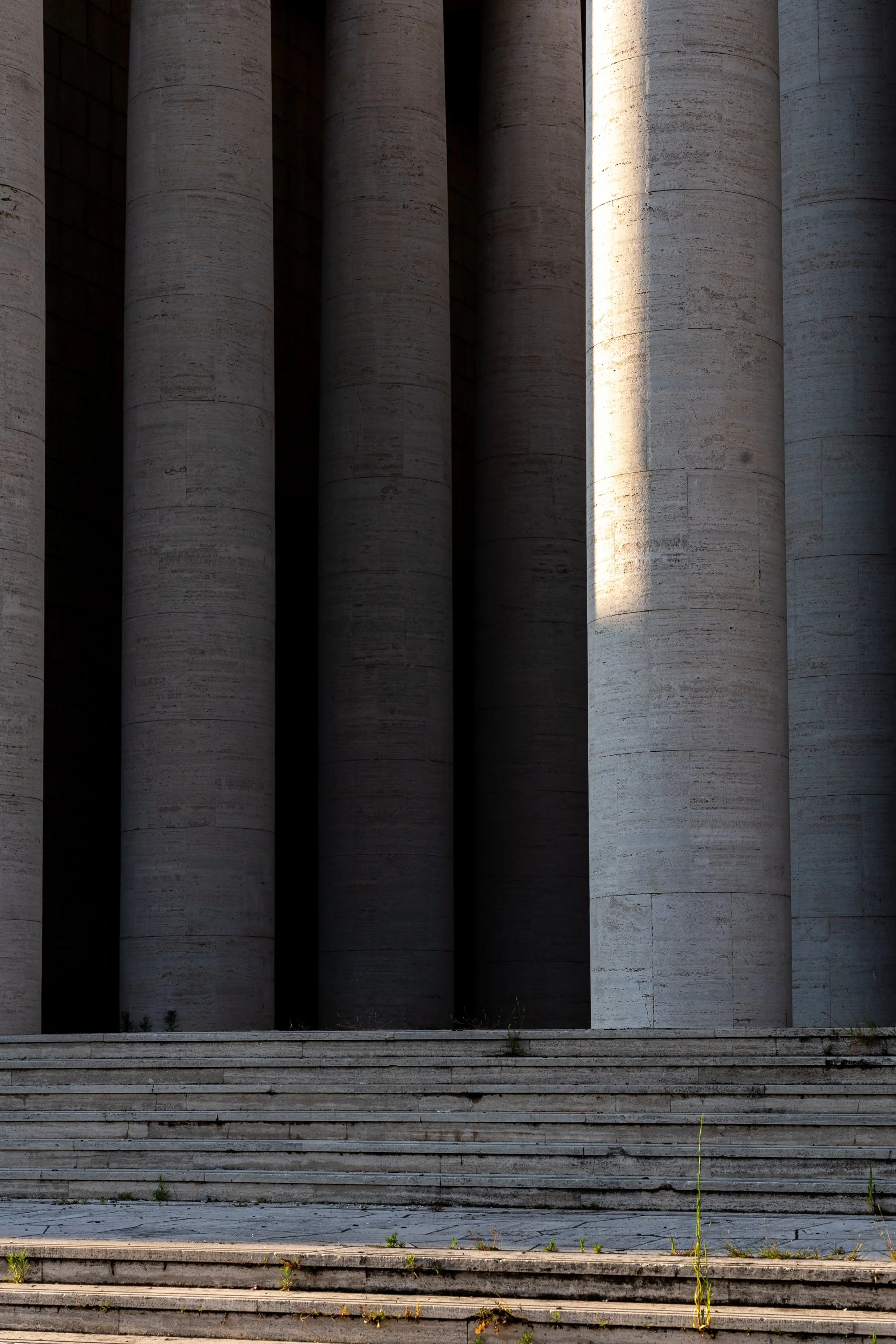
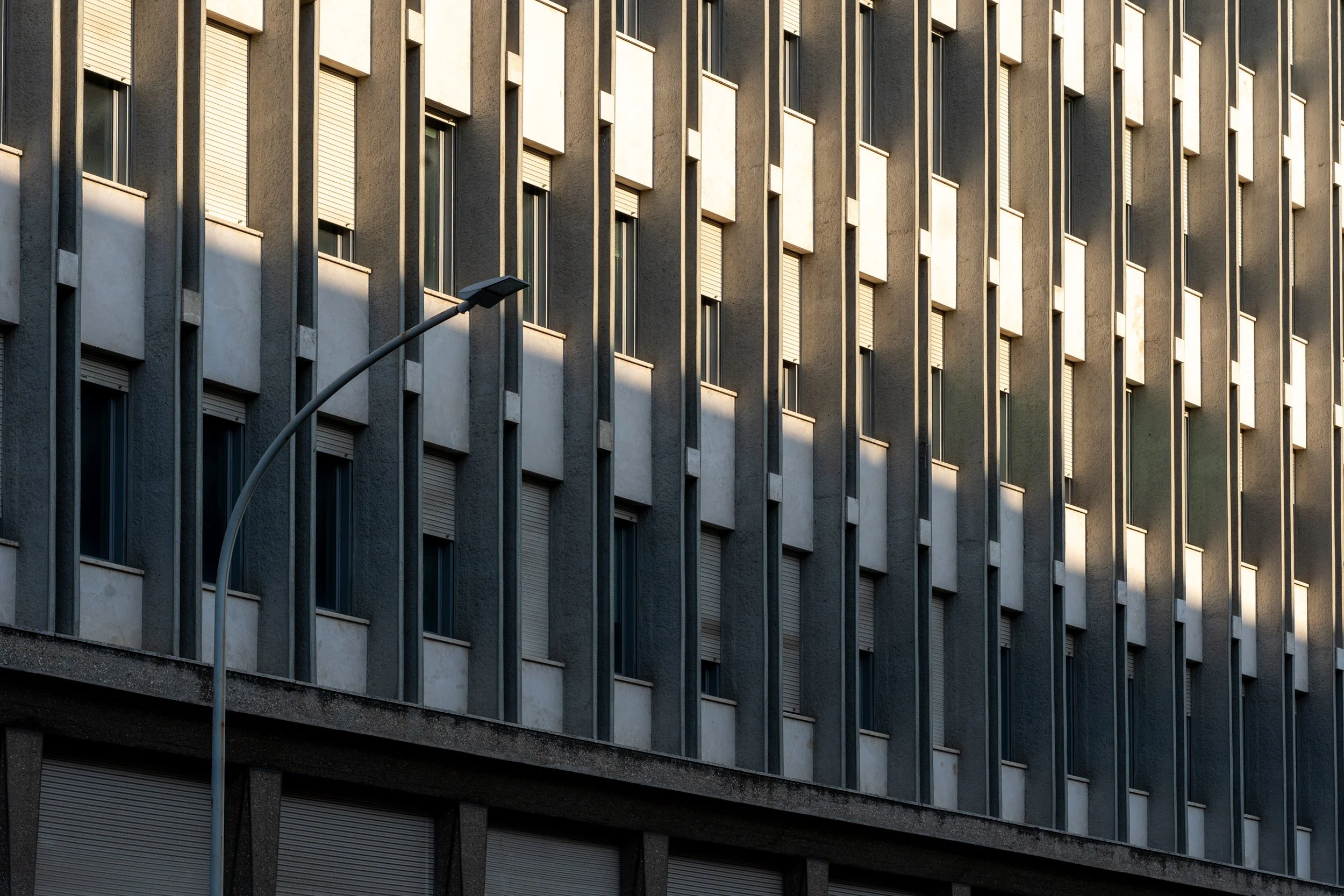
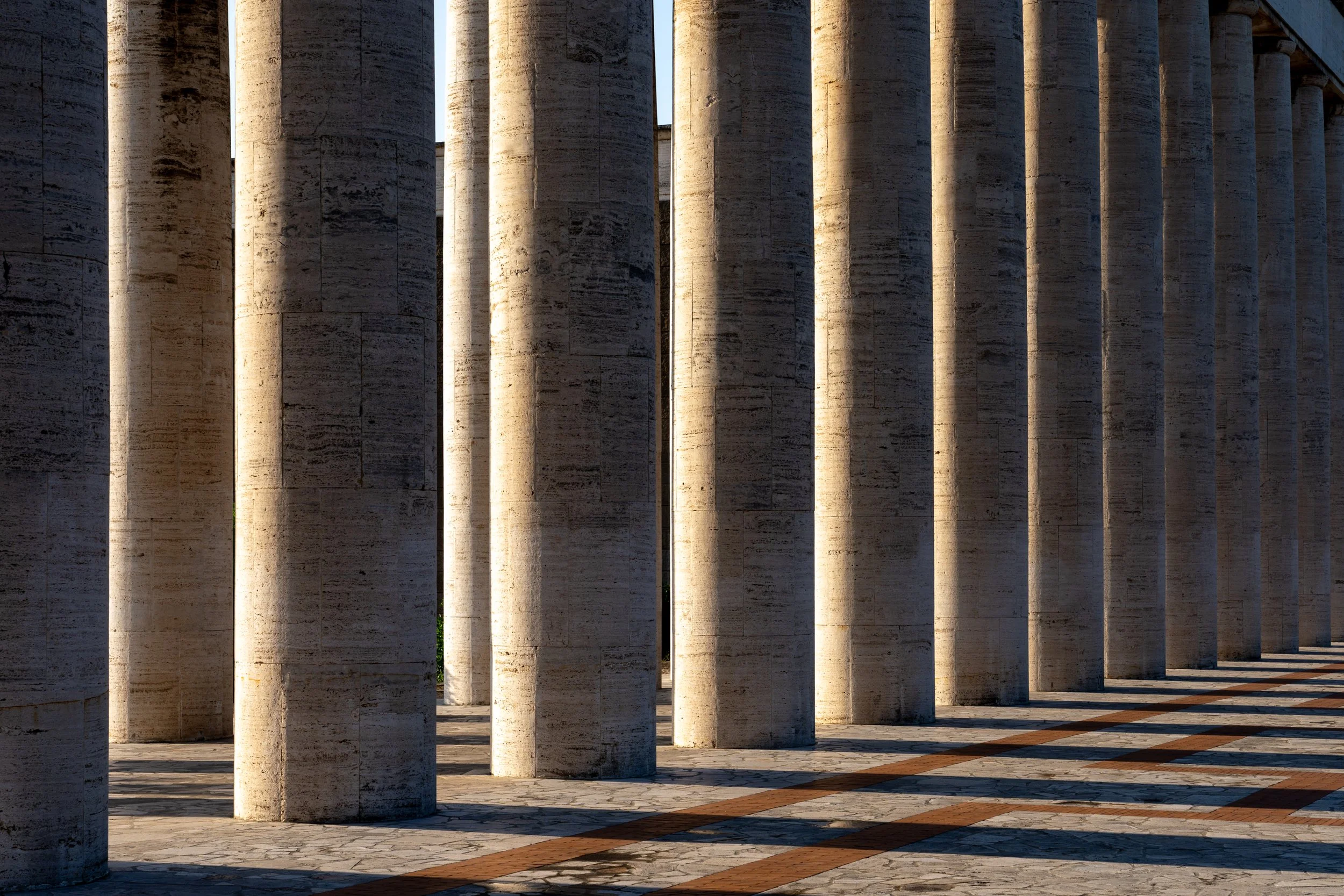
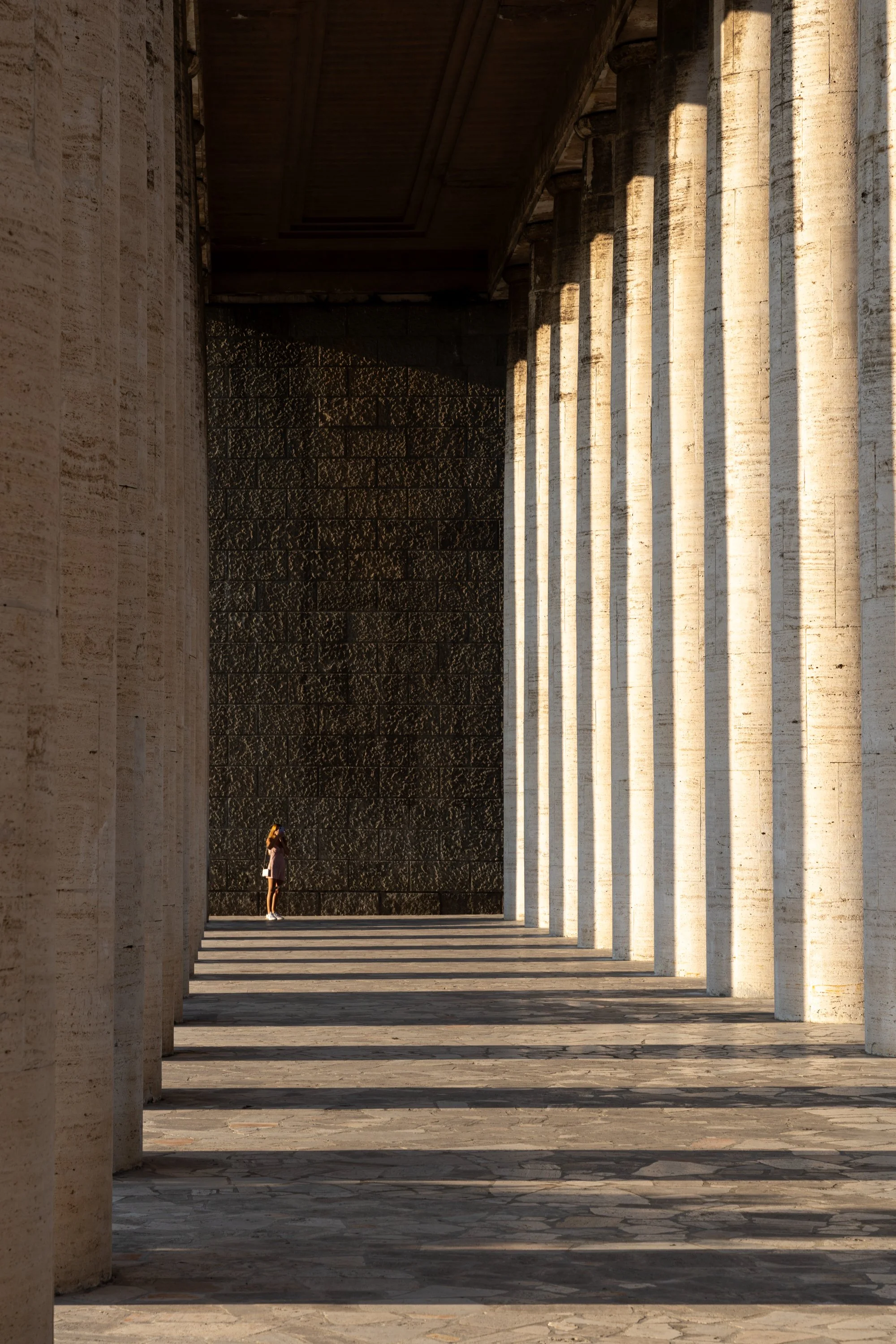
I found myself first photographing the buildings to try and capture the immense scale and presence, and then becoming fascinated by fragments: rows of columns disappearing into shadow, isolated windows, repeating arches, strong lines and the occasional person giving some sense of the enormous scale.
The Mediterranean light also transforms these buildings. I was fortunate to have some beautiful light emphasising the incredible details and bringing the buildings to life.
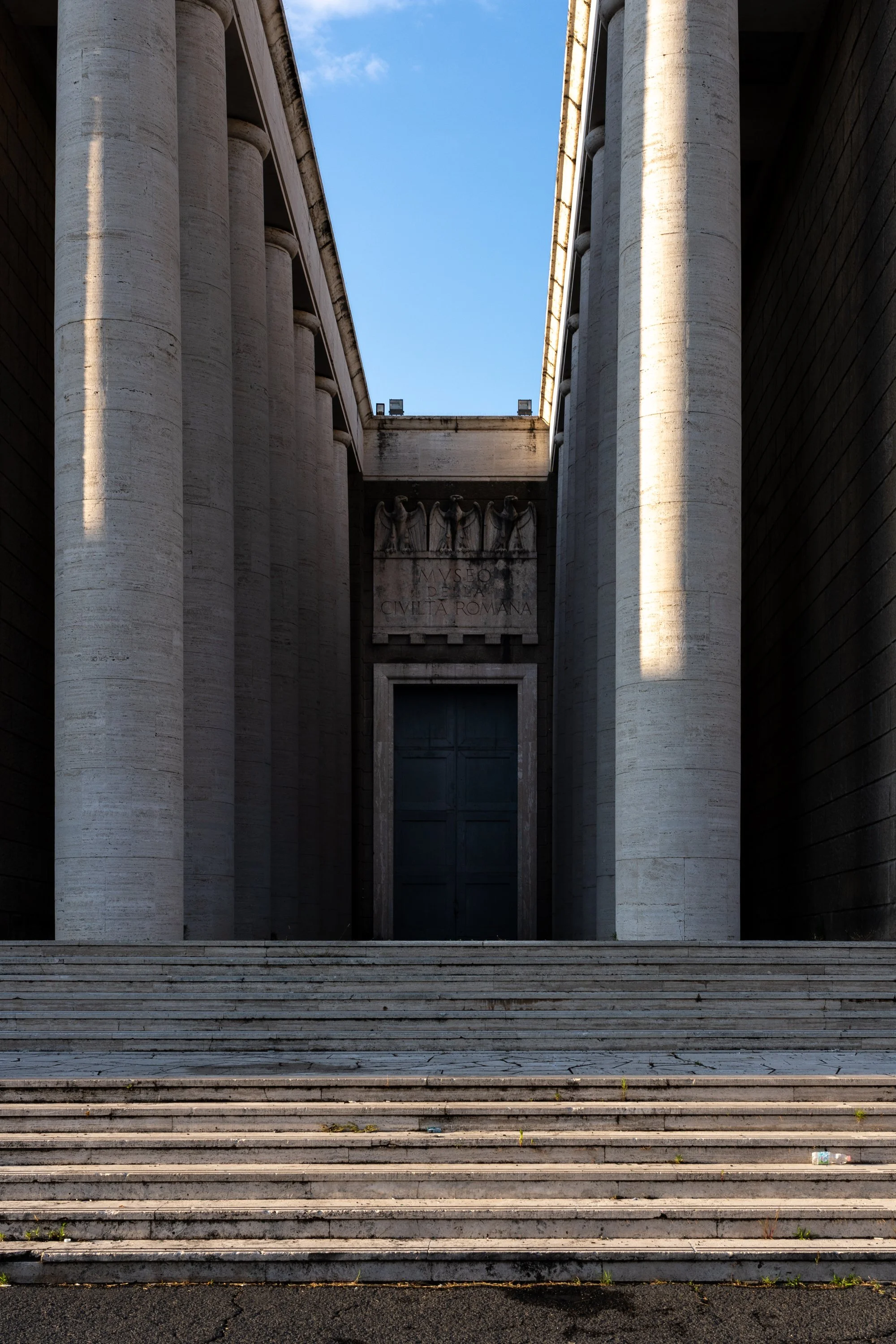
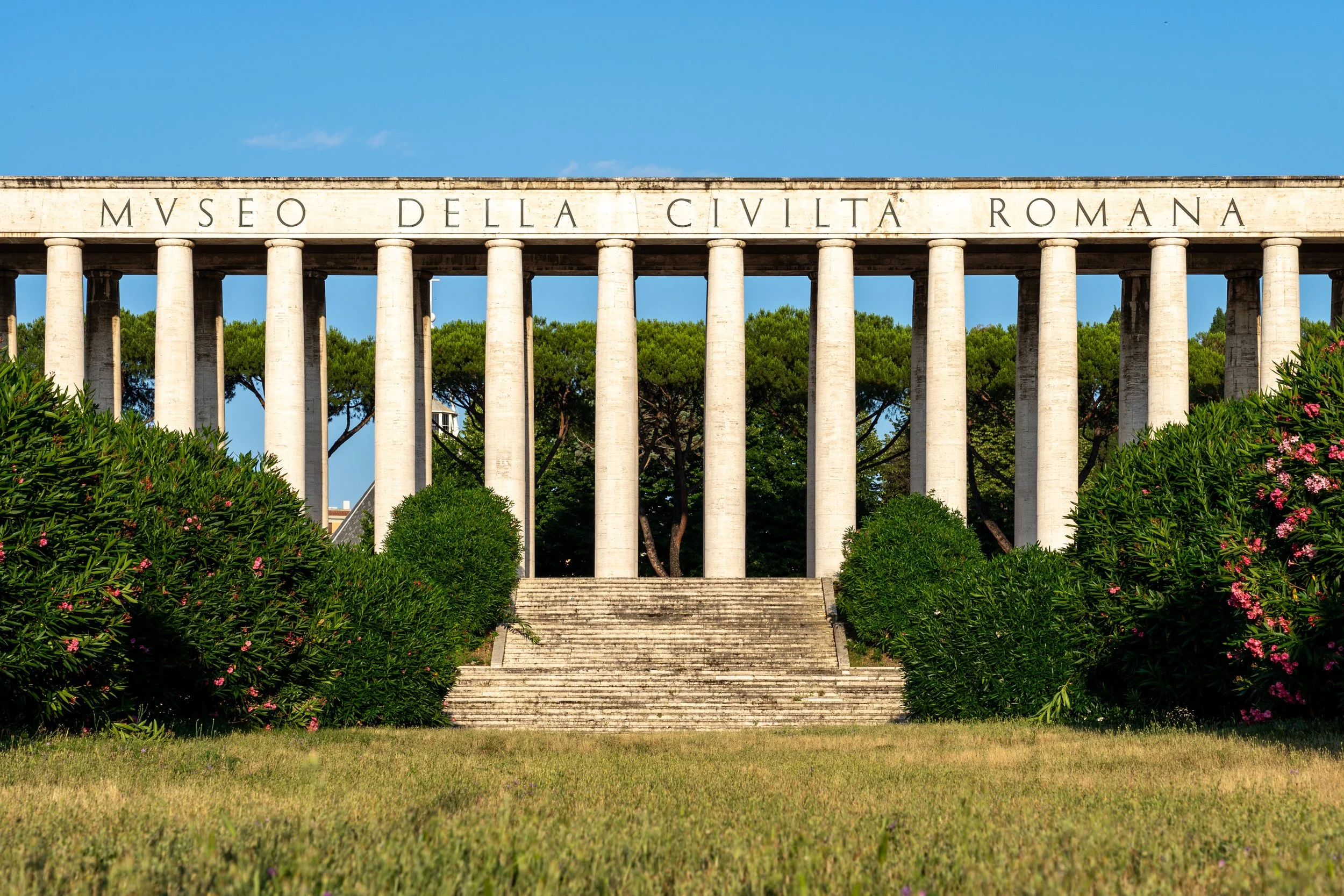
Museo della Civiltà Romana
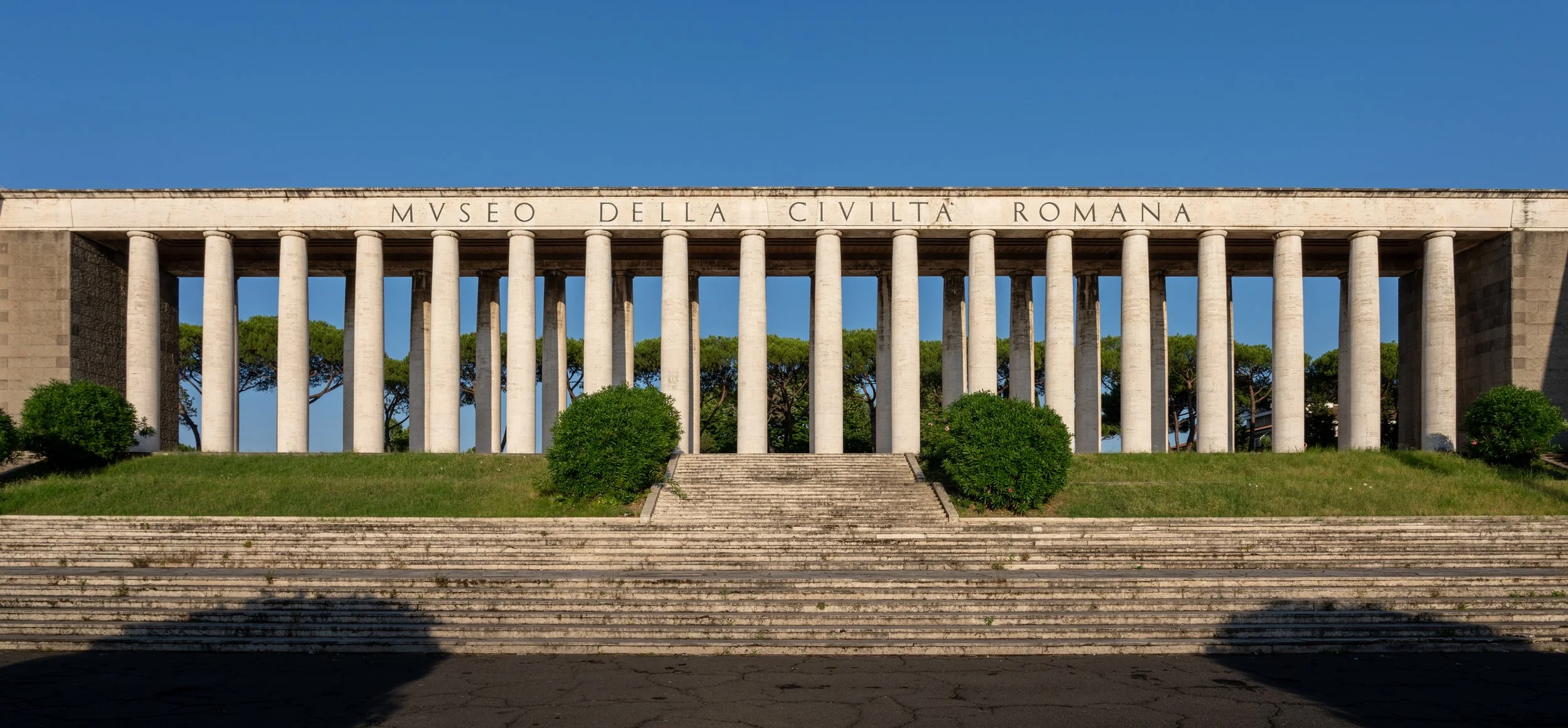
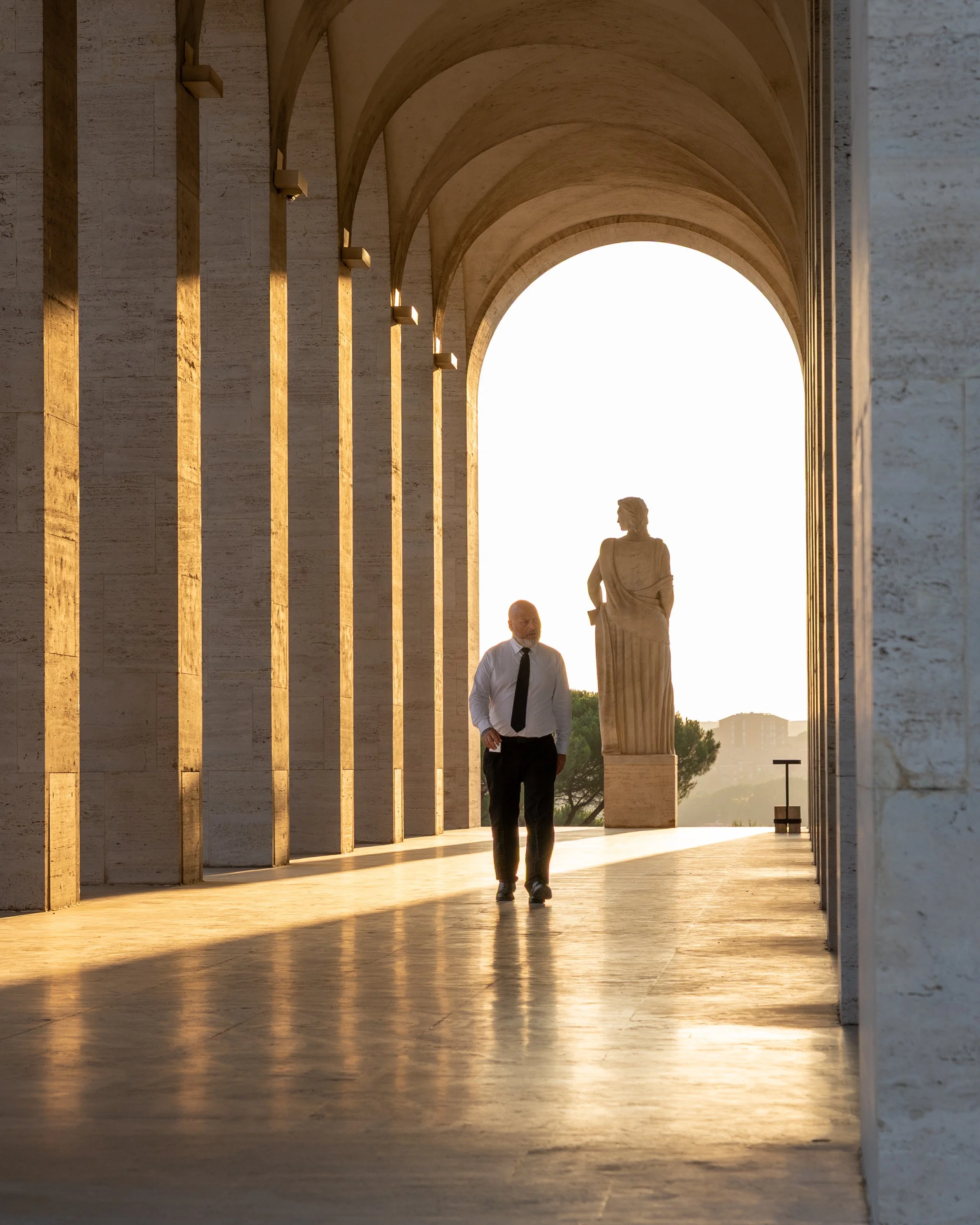
One of the buildings I spent the most time exploring was the Museo della Civiltà Romana.
The museum complex was originally designed for the 1942 exposition by Pietro Aschieri, Domenico Bernardini, Cesare Pascoletti and Gino Peressutti. Its two large wings are joined by an extraordinary sequence of travertine columns surrounding the central space.
The architecture is extremely controlled and theatrical.
Long colonnades create deep shadows and repeated vertical lines, while stairs and openings continually frame views into other parts of the complex. Small human figures almost disappear within the architecture.
It was exactly the kind of environment I enjoy photographing — somewhere where the architecture provides a framework and I can wait for light or a person to complete the composition.
Palazzo dei Congressi
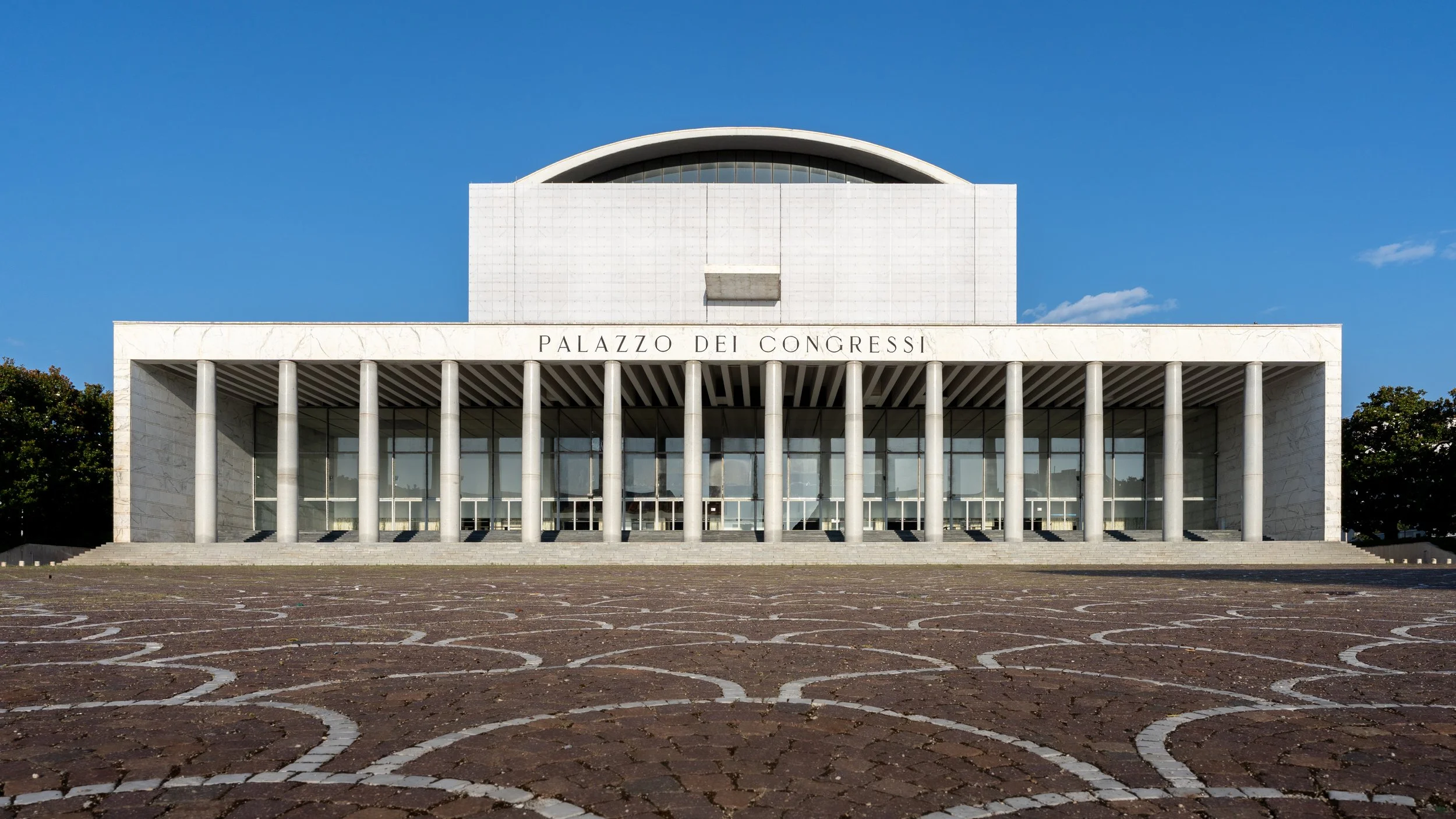
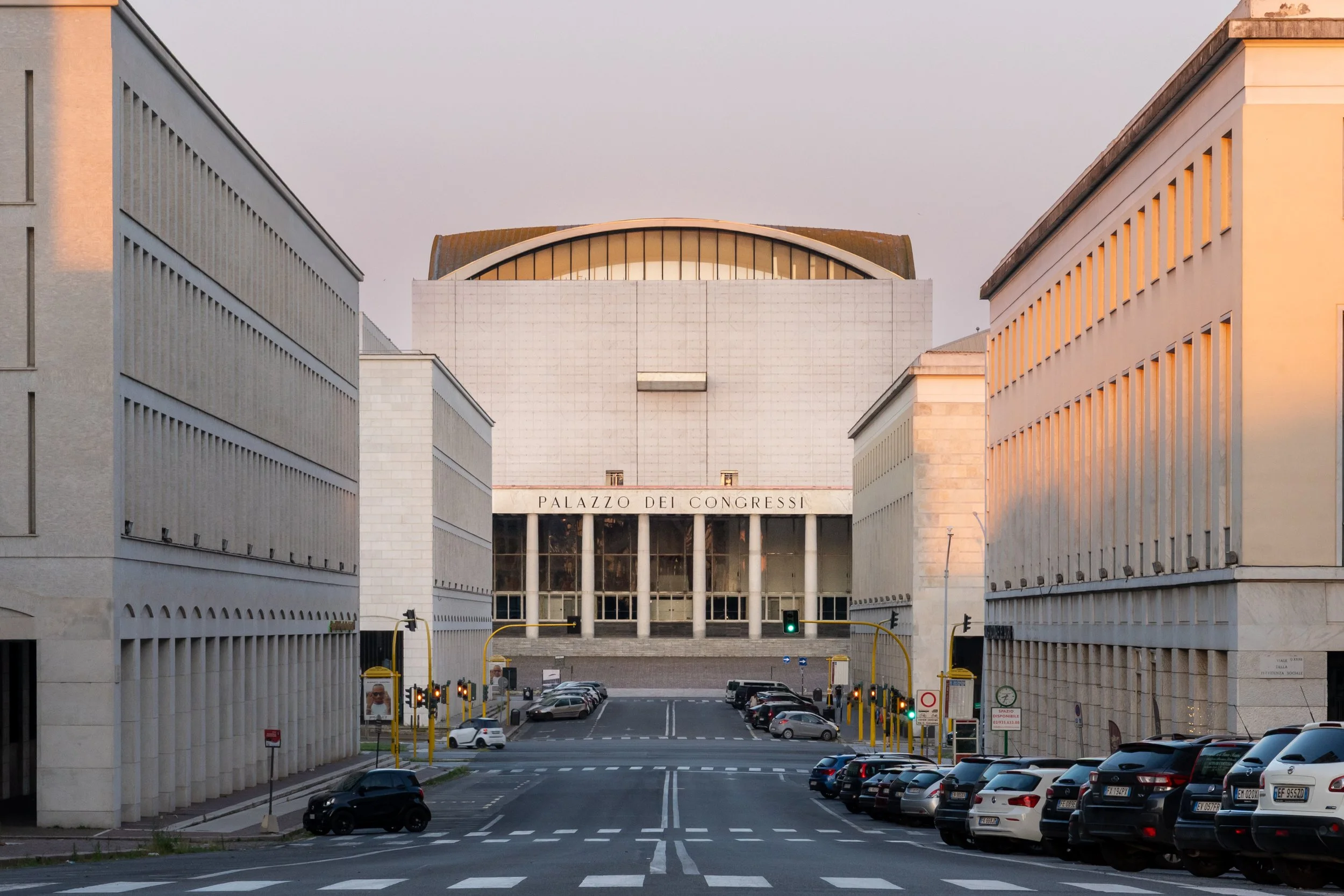
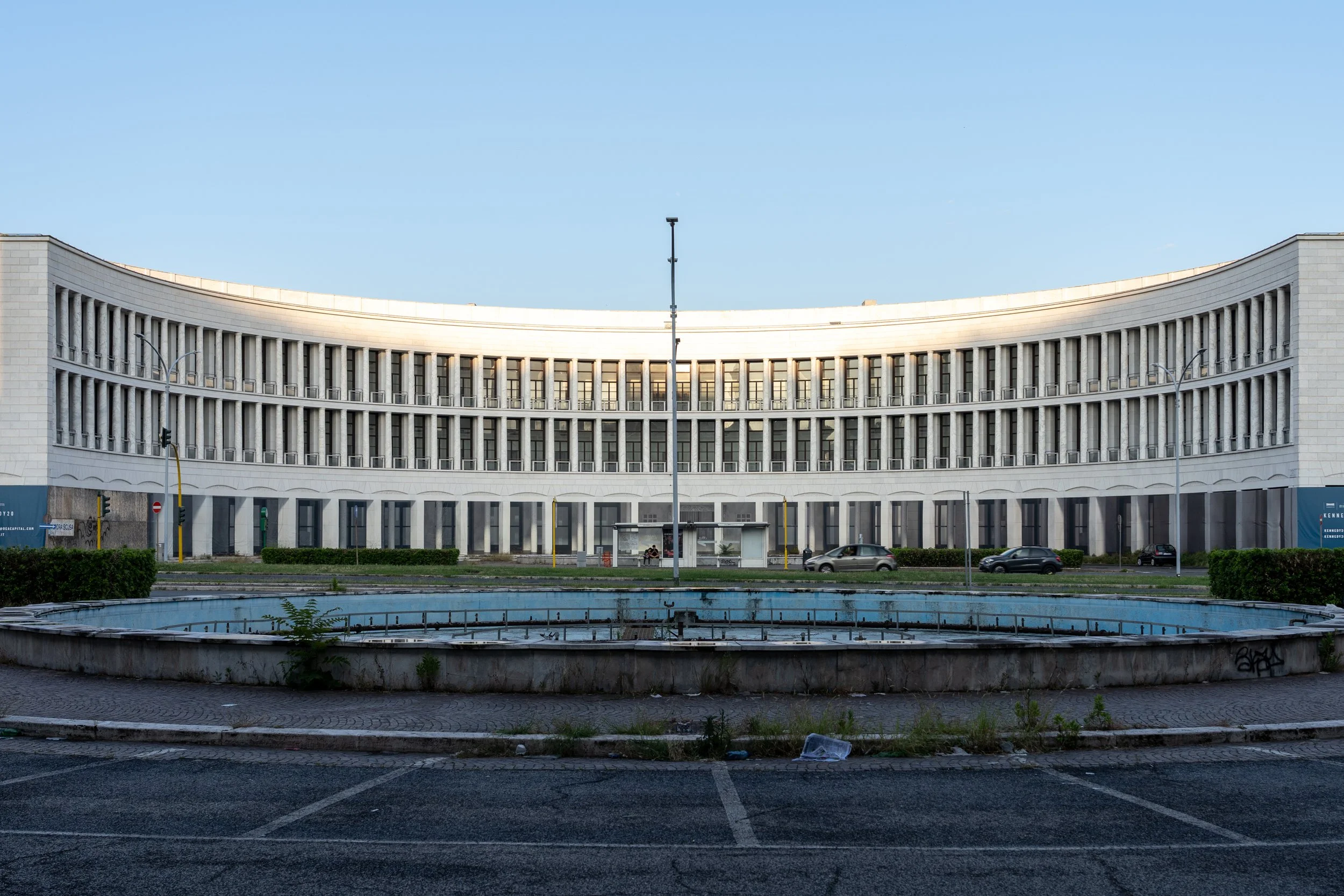
Another of EUR's major buildings is the Palazzo dei Congressi, designed by Adalberto Libera for the proposed World Fair.
Its architecture is a little different from some of the surrounding buildings, combining classical proportions with a particularly restrained modernist simplicity.
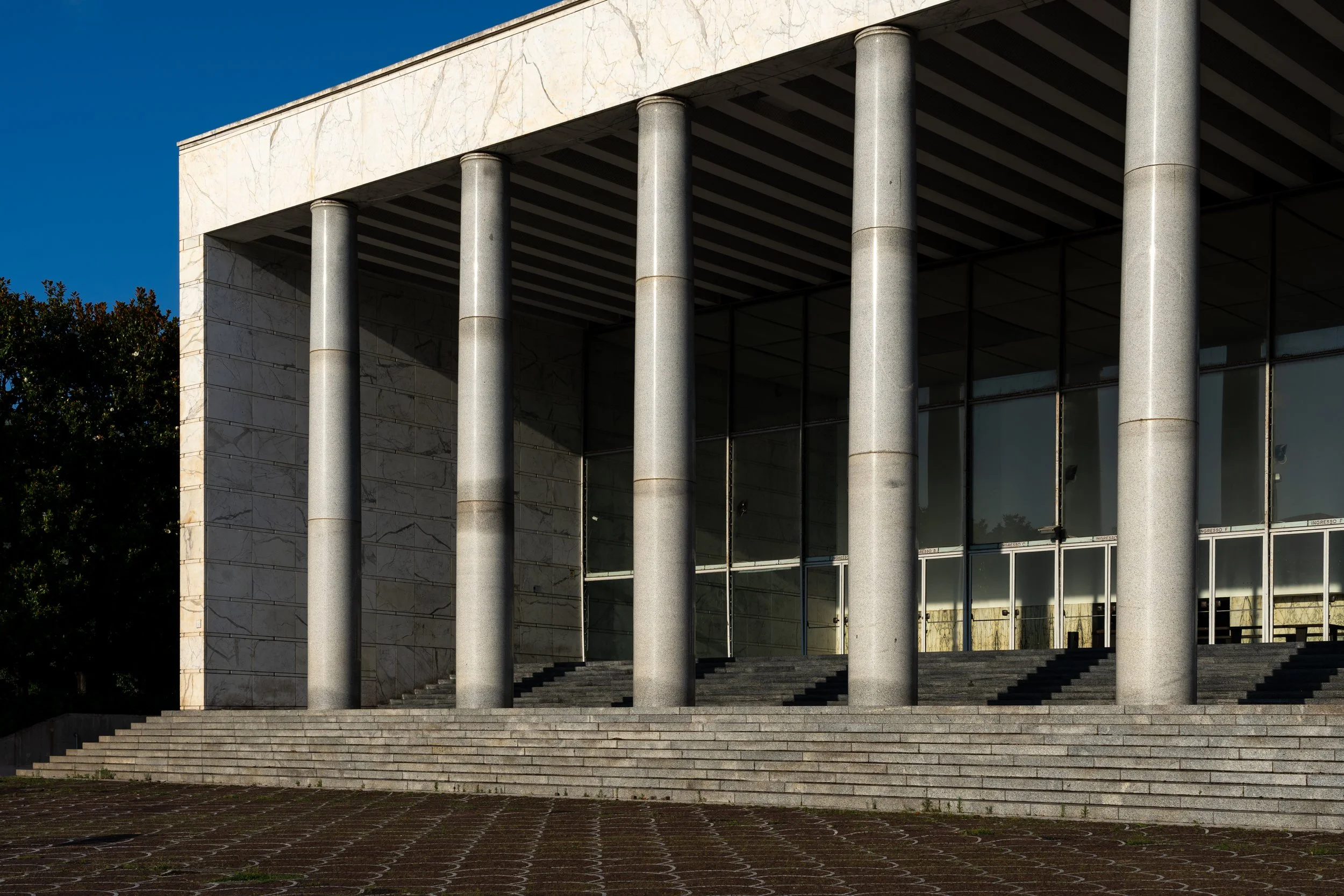
The most striking feature is its monumental entrance portico, where a row of towering columns supports a broad, uninterrupted roofline. Behind it, the main building rises as a simple geometric volume.
There is very little unnecessary detail. Instead, the architecture relies on proportion, repetition and the relationship between solid forms and open space.
The columns create strong vertical lines, while the deep recesses of the portico provide dramatic contrasts between sunlight and shadow. Depending on the angle, the building can appear either monumental or almost entirely abstract.
Like many of EUR's buildings, its construction was interrupted by the war, and it was eventually completed in 1954. It later hosted fencing events during the 1960 Rome Olympics and continues to be used as an exhibition and conference venue.
Palazzo della Civiltà Italiana
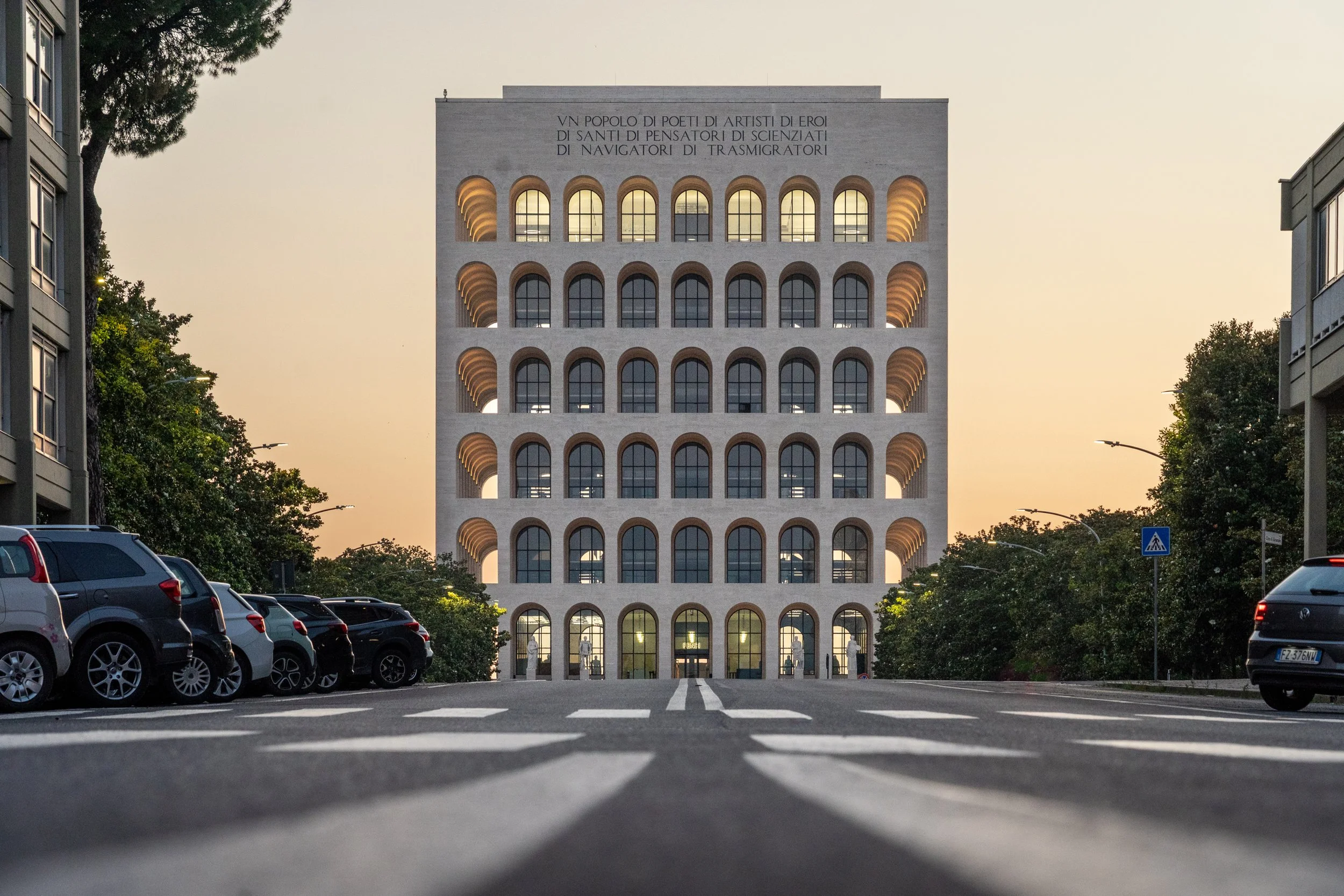
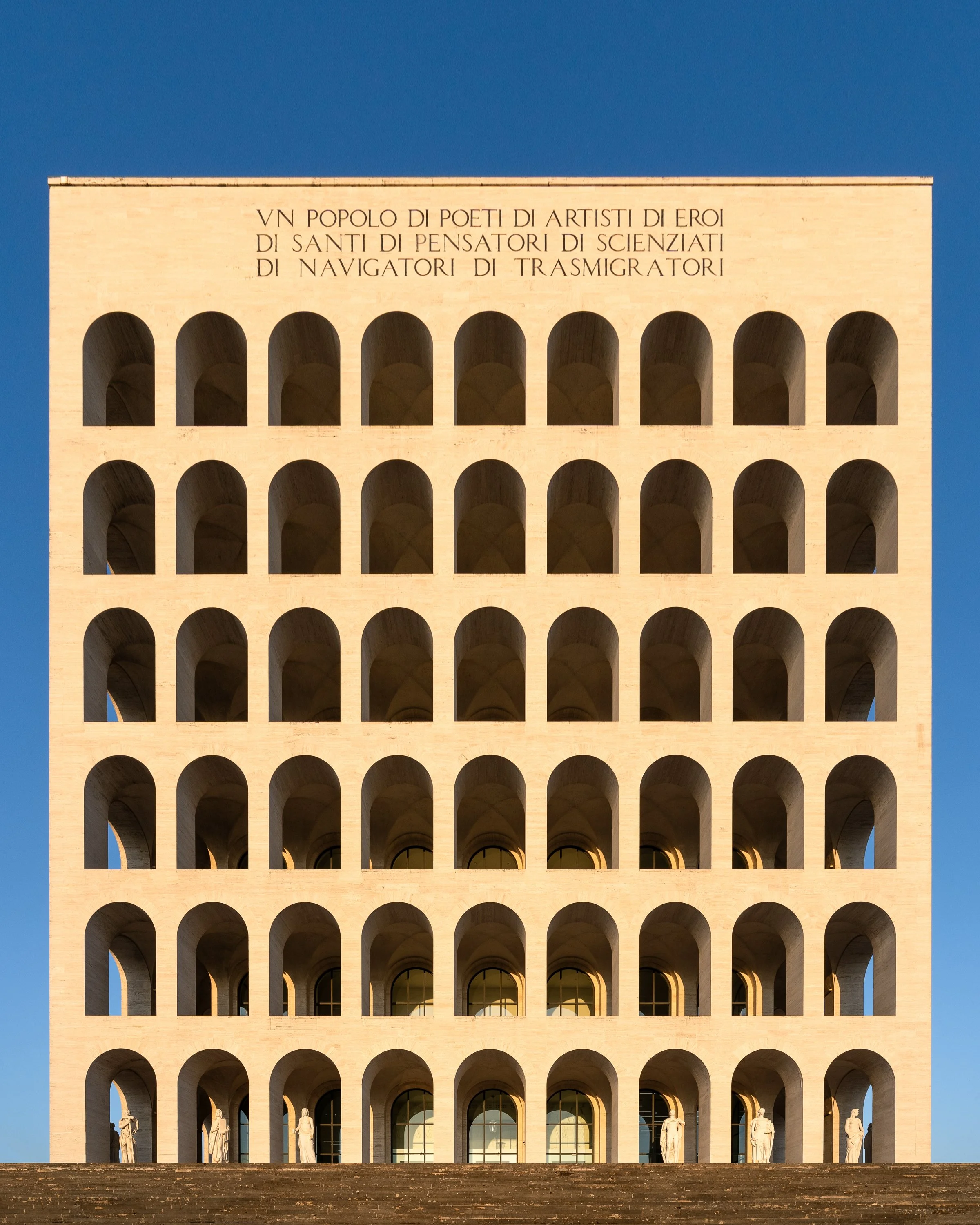
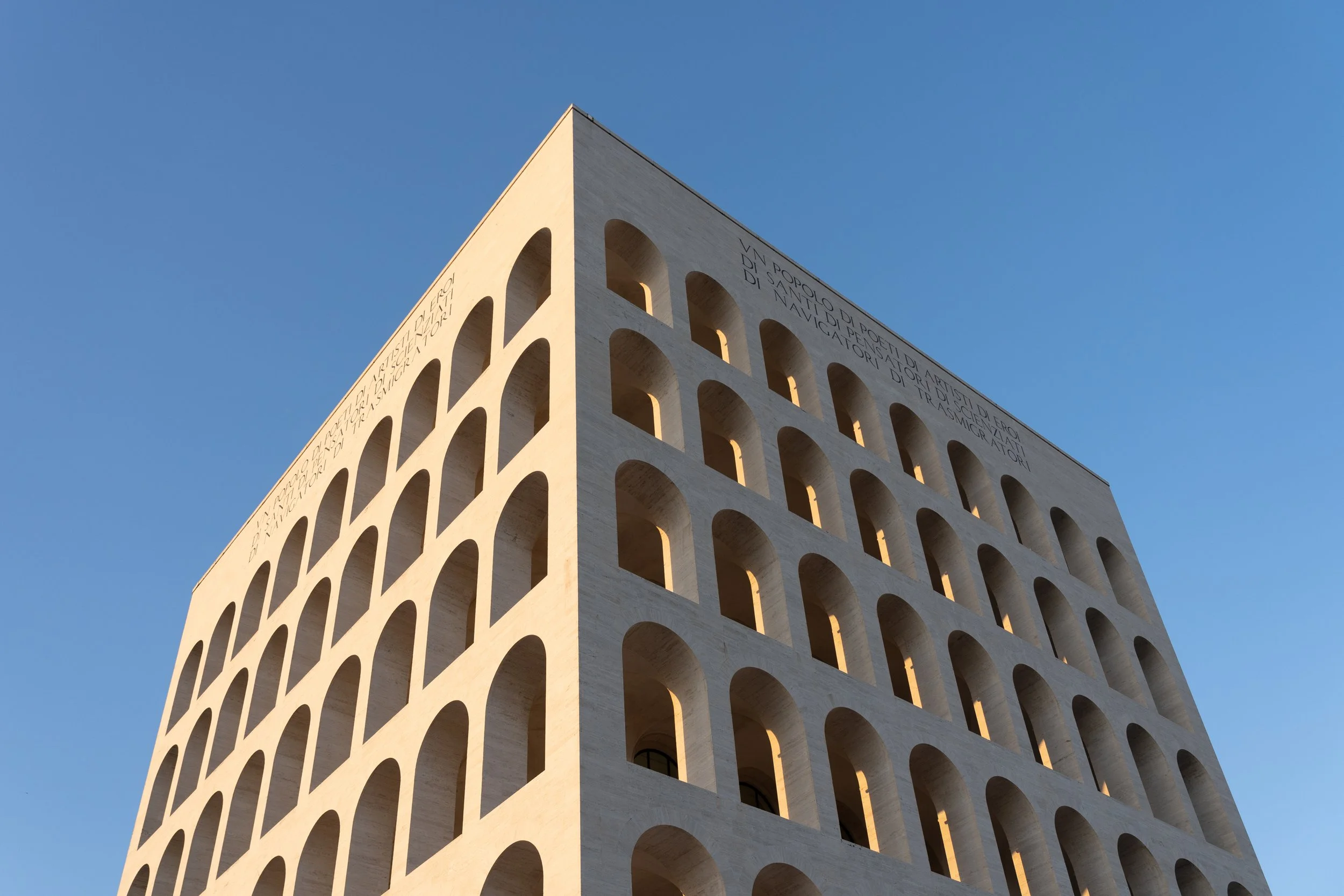
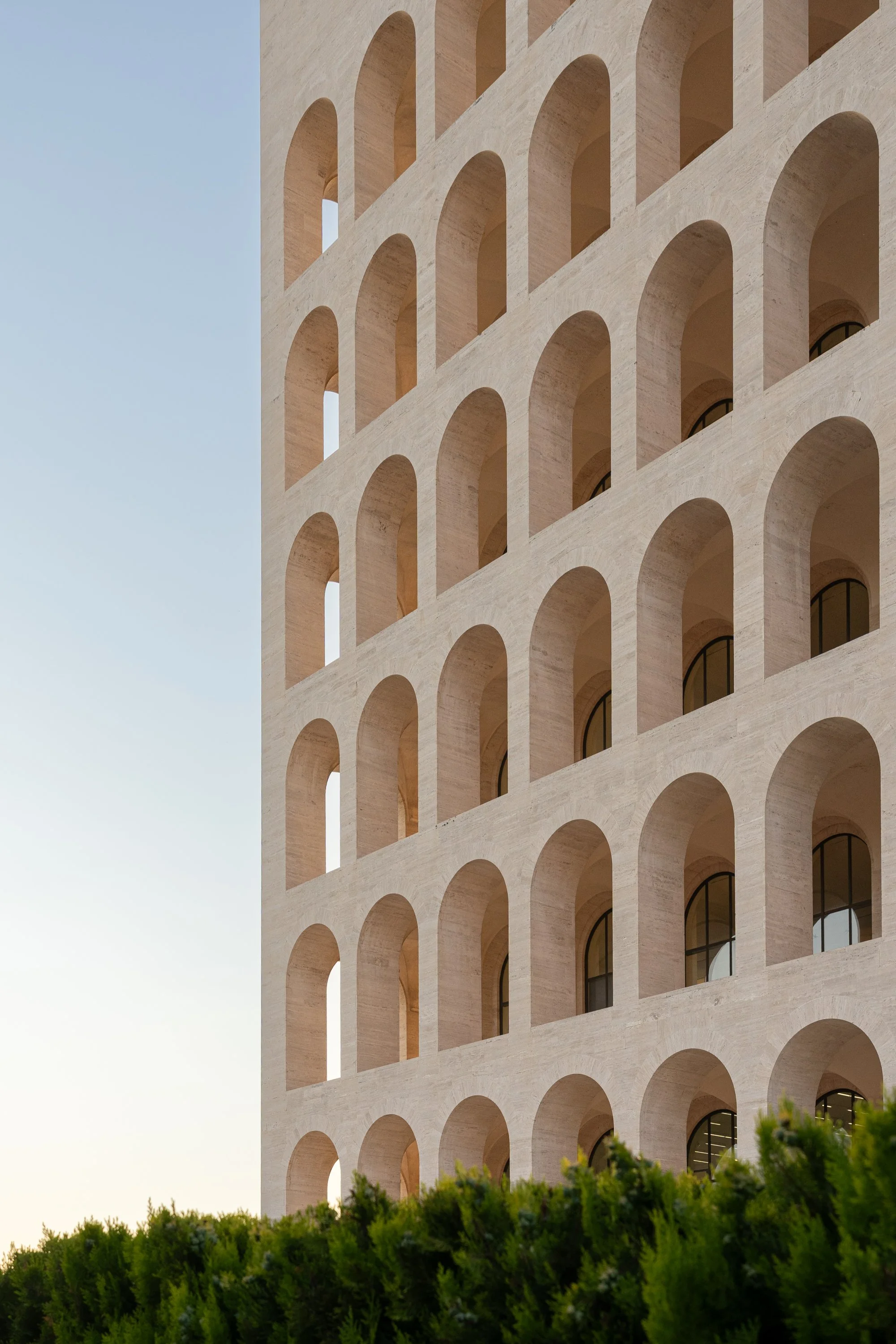
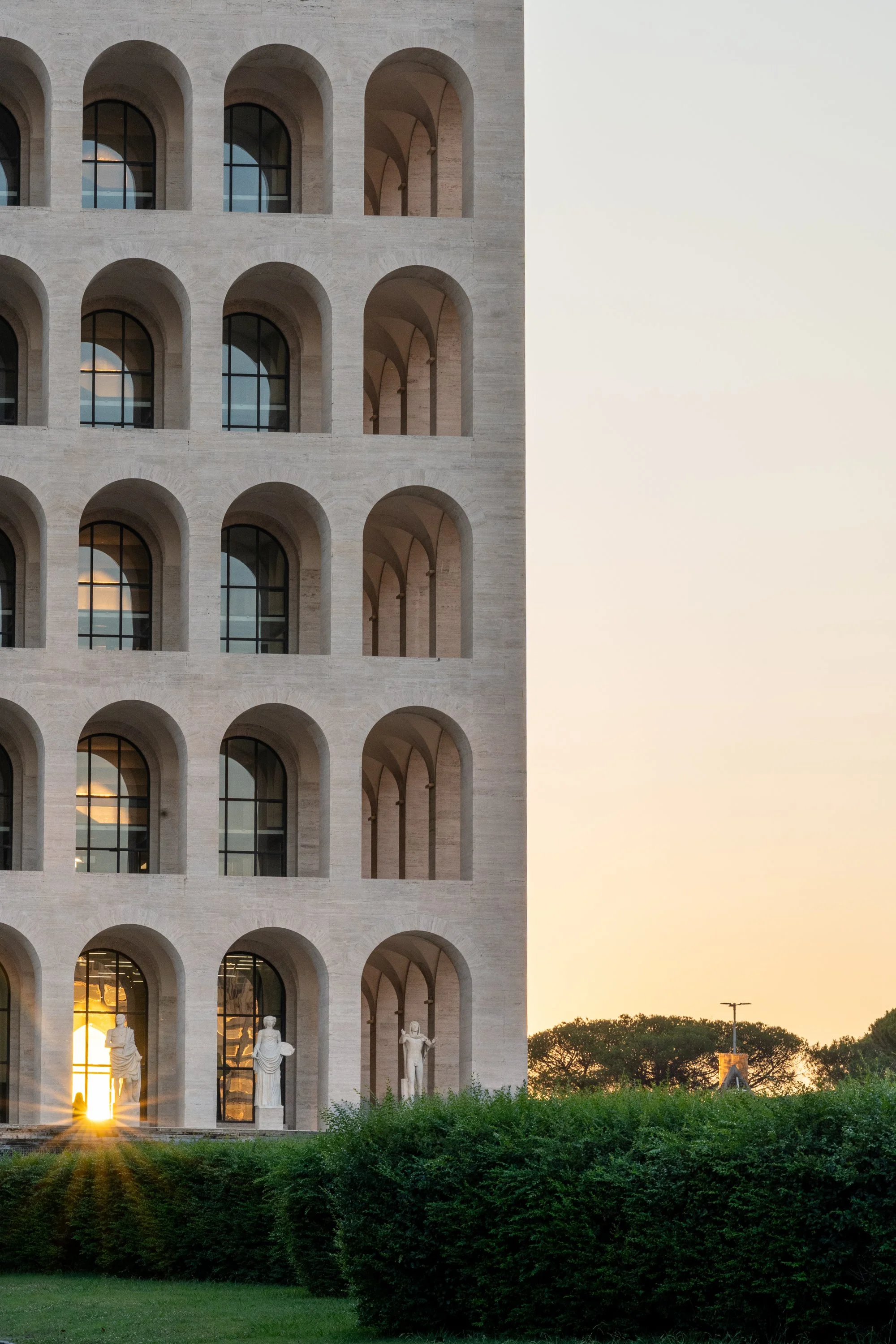
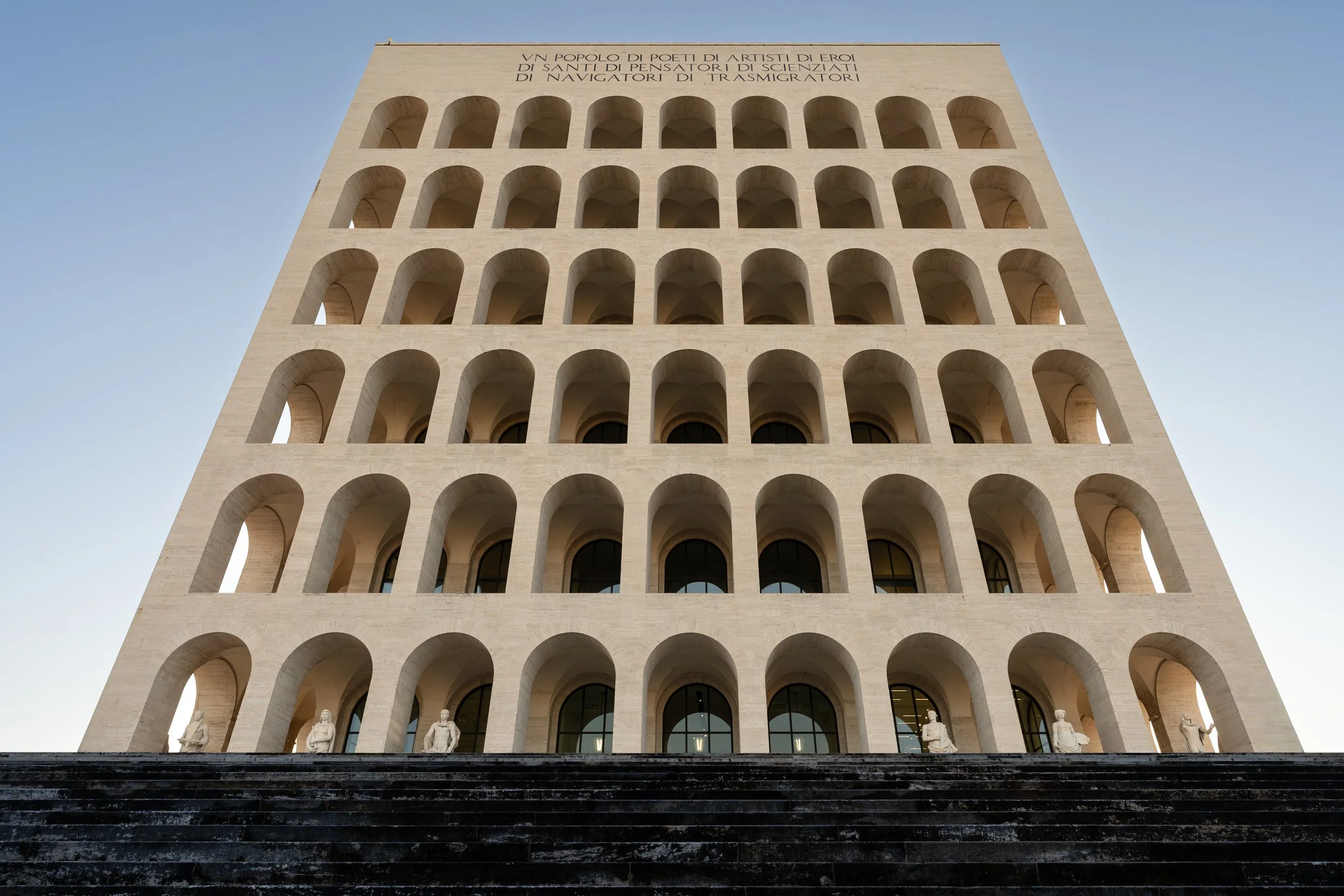
The most recognisable building in EUR is undoubtedly the Palazzo della Civiltà Italiana.
Designed by Giovanni Guerrini, Ernesto La Padula and Mario Romano, its repeated arches earned it the nickname the Colosseo Quadrato — the Square Colosseum.
It is an extraordinary building.
From a distance it appears almost impossibly simple: a white cube punctured by identical arches. There are 216 of them across its four façades, creating a building that changes dramatically depending on how closely you photograph it.
From directly in front it becomes almost an abstract grid. From the corners, the repetition wraps around the building and suddenly reveals its scale.
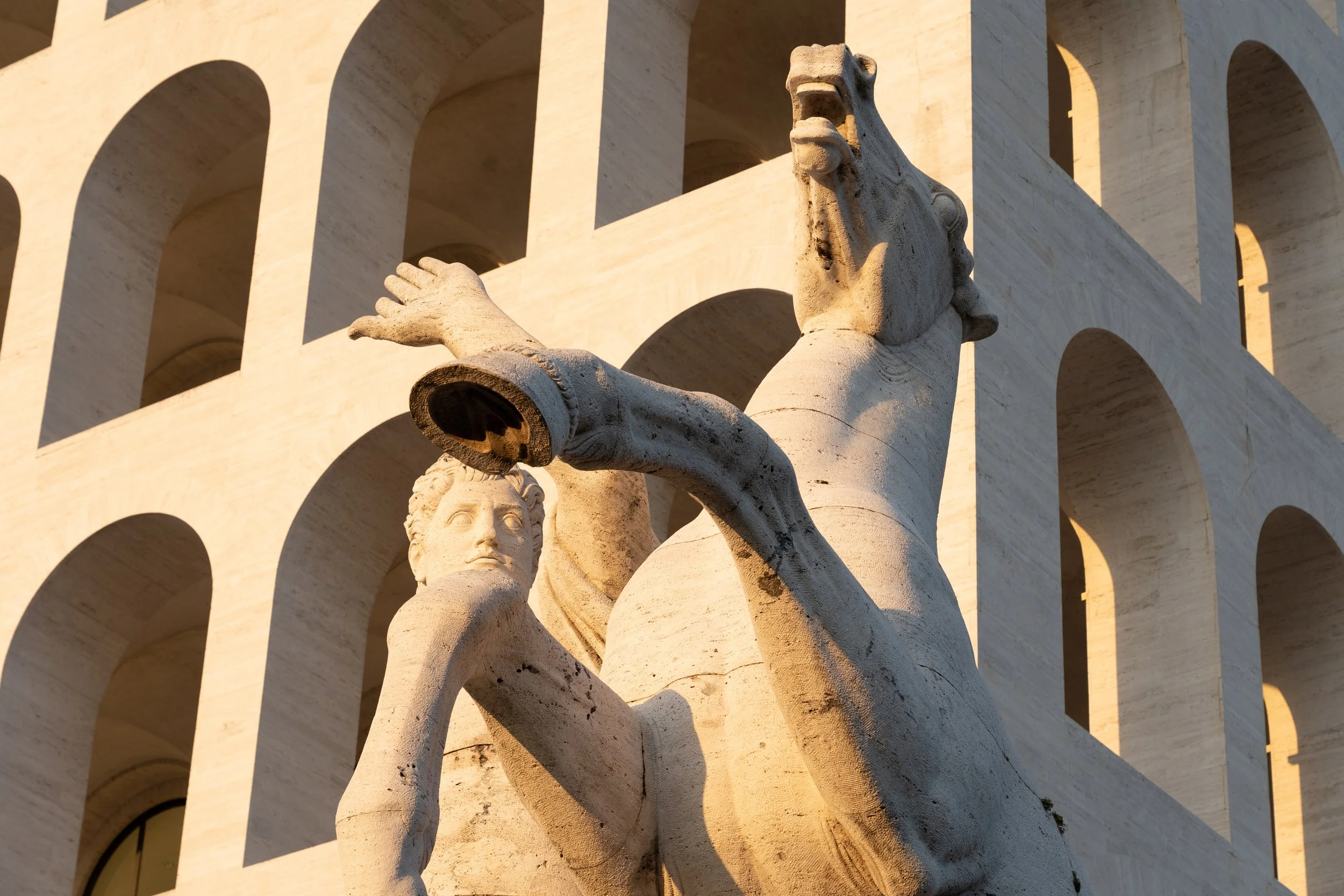
I was particularly interested in photographing it later in the day, when the warm sun began catching one side of the arches while the recesses remained in shadow. This also unfortunately meant that I just missed opening hours and had to capture most of my images from behind barriers and over fences!
There is also a curious story behind the building's extraordinary repetition of arches. Each façade has six rows of nine arches, supposedly corresponding to the six letters in Benito and nine in Mussolini. Whether this was a deliberate tribute to the dictator or simply an architectural coincidence remains uncertain, but it is a fascinating detail in a building so closely associated with the ambitions of Fascist Italy.
Architecture and ideology
There is also an uncomfortable aspect to photographing EUR that is difficult — and probably inappropriate — to ignore.
These buildings are visually compelling, but their monumentality wasn't accidental.
EUR was conceived by a Fascist government as an expression of national power and as a modern continuation of the architecture of ancient Rome. The symmetry, enormous scale and repetition that make the district so photographically interesting were also part of the political language embedded in its design.
Nearly ninety years later, the buildings have acquired lives far beyond their original purpose.
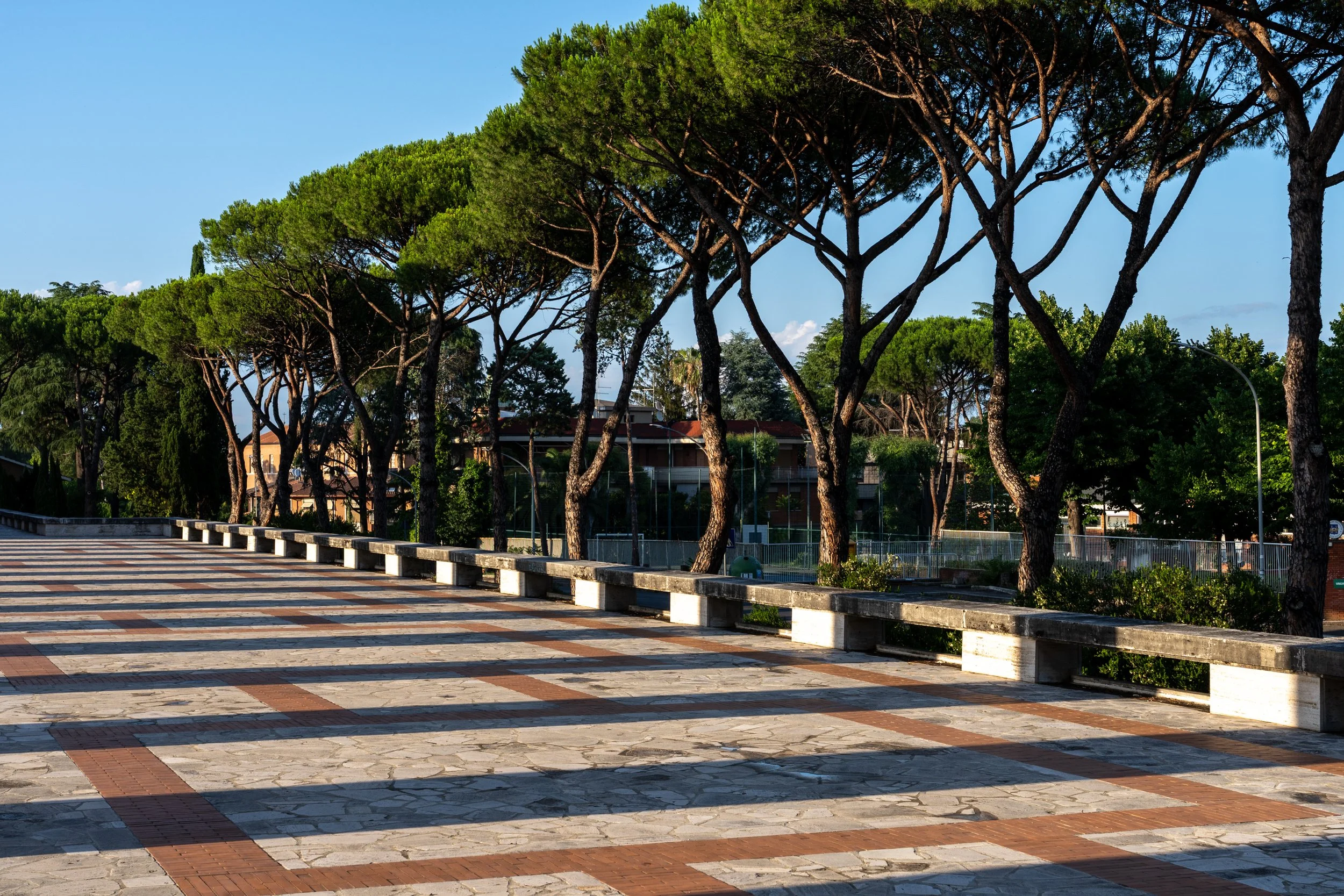
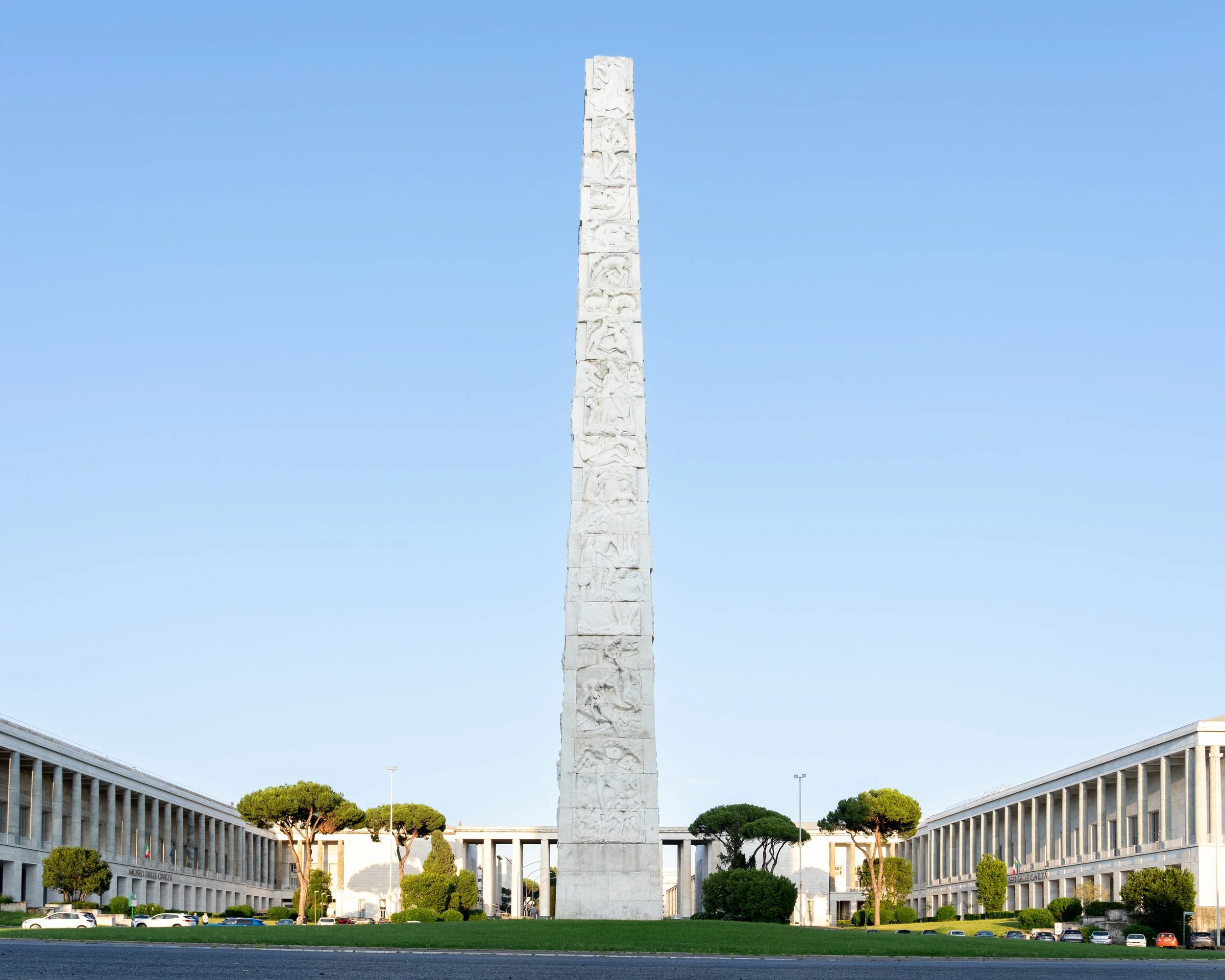
Government offices and museums occupy the monumental palaces. Fendi now has its headquarters in the Palazzo della Civiltà Italiana. People walk dogs beneath the colonnades, cars fill streets conceived for ceremonial processions, and umbrella pines soften spaces originally designed to impress through scale and order.
That collision between intention and contemporary use became one of the most interesting things about the place for me.
Writing this in 2026, it’s interesting to think about the image that Mussolini was trying to project, and comparing it to the multiple construction projects underway in Washington DC.
A different Rome
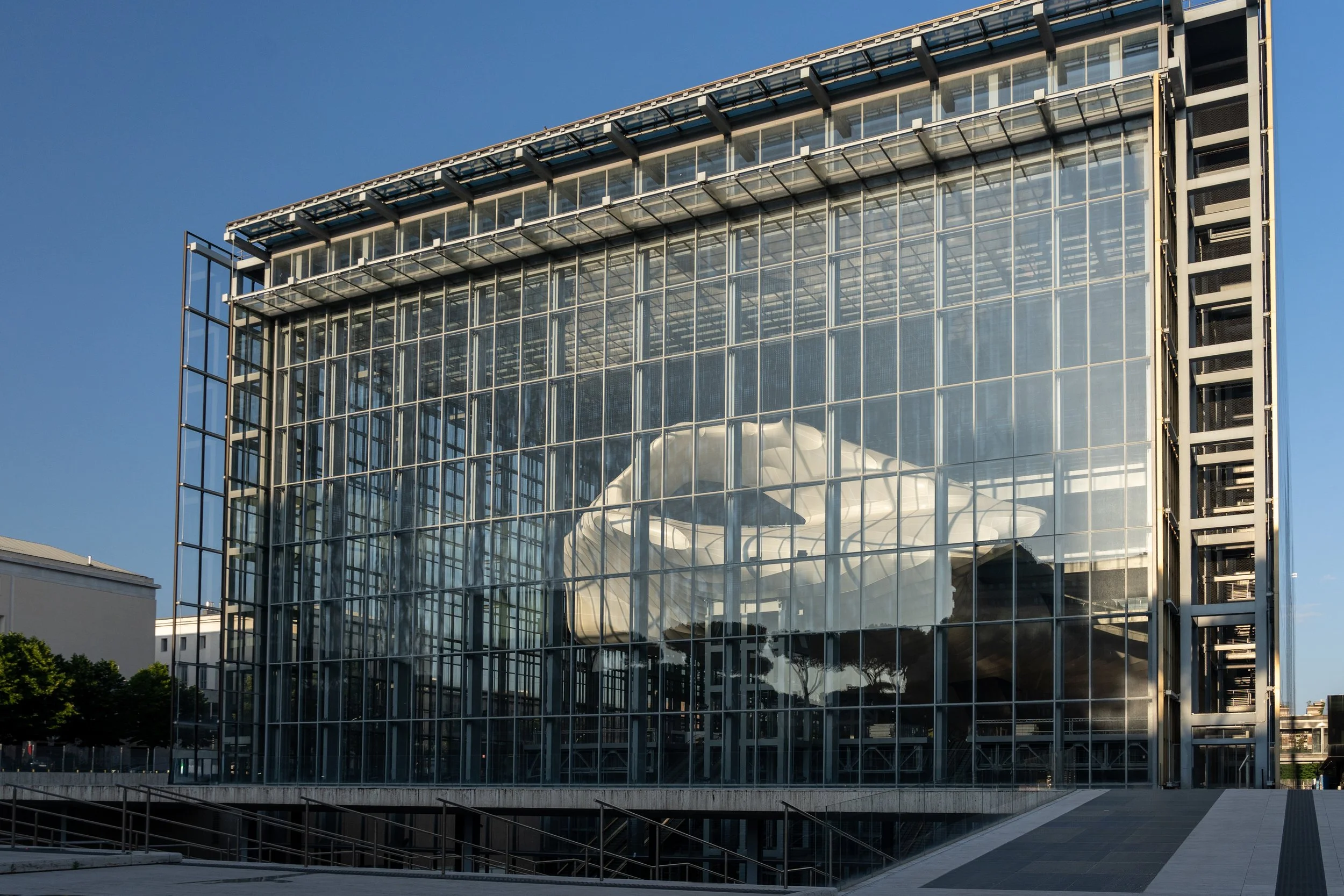
EUR probably isn't somewhere I would recommend to someone making their first visit to Rome.
But if you've already explored the historic centre — or have an interest in twentieth-century architecture — it reveals an entirely different layer of the city.
For me, it was also one of those locations that became more interesting the longer I photographed it.
Initially I was drawn to the obvious subjects: the enormous façades, perfect symmetry and repeating arches. But gradually I started looking more closely at the spaces between them — the light moving through a colonnade, a person crossing an empty plaza, the rhythm of a row of windows, or a single patch of warm evening sun falling across stone.
Those smaller moments ultimately became as important as the monumental buildings themselves.
And that is probably what interested me most about EUR, and these aspects echo many architectural aspects that have attracted my attention in other cities and countries..
It was created to present an idealised vision of a future that never arrived, yet almost ninety years later the architecture remains — repurposed, inhabited and still shaping the experience of this very unusual part of Rome.